
Kardam drone, 8 Aug 2026 - exploded near gas pipeline
A drone crossed into Bulgaria from Romania and exploded near a Trans-Balkan gas pipeline compressor station on August 8, 2026; neither country detected it before impact - no casualties were reported.
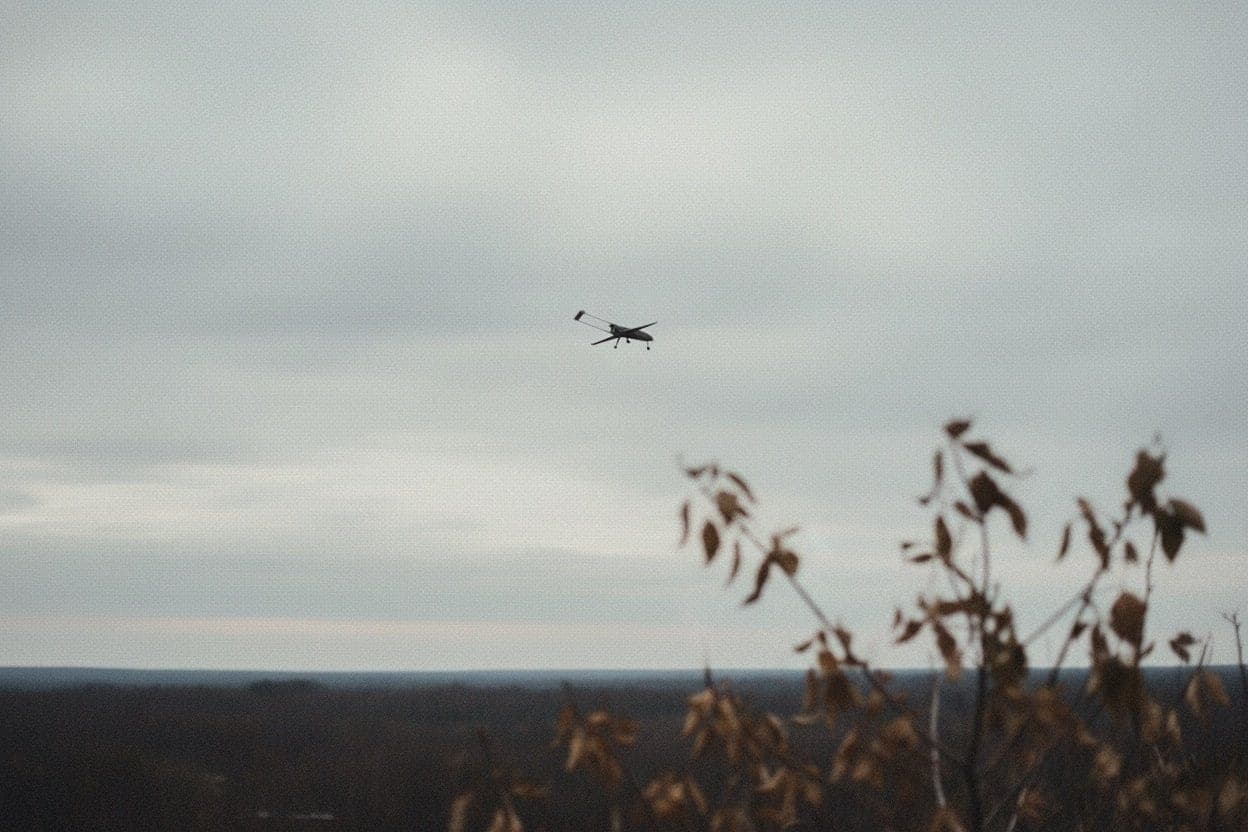
At 8:10am local time (05:10 UTC) on August 8, 2026, a drone crossed into Bulgarian airspace from Romania and exploded in a sunflower field near the former Kardam border checkpoint, in Dobrich Province close to the Romanian border. Bulgarian Prime Minister Rumen Radev said the blast site sat roughly 1,000 meters from Bulgaria's compressor station on the Trans-Balkan gas pipeline - which carries gas from Turkey toward Ukraine - and about 200 meters from Romania's compressor station on the same route. No one was injured, and no damage was reported to the pipeline, the border crossing, or surrounding farmland.
AirVeto's wind-model data for the event window places the atmospheric flow over Kardam at 05:00 UTC pushing south-southwest at 48.8 km/h at 500 meters, close to the drone's crossing altitude.
Neither Bulgaria nor Romania detected the drone before it exploded. Radev said the failure "confirms that the detection and identification of drones remains a challenge," pointing to a delay in the delivery of high-precision radars to the Bulgarian army. Bulgaria's Chief of Defence, Admiral Emil Eftimov, said he believed the aircraft had been diverted off course by electronic-warfare systems and flew a path that stayed outside radar range; he said his Romanian counterpart confirmed Romania had also failed to detect it.
Bulgaria's defence ministry points to a decoy drone, not a warhead
Bulgaria's Defence Ministry said a preliminary analysis of the wreckage indicated the aircraft was most likely a Maya decoy drone, a type widely used by Ukraine's armed forces, and said there was currently no reason to believe the incident was deliberate. Radev, asked directly whether it was a deliberate strike, said that could not be established at this stage - he confirmed only that the drone carried a substantial amount of explosive material, enough to produce a blast audible from a considerable distance.
Ukrainian-type hardware crossing into NATO territory near energy infrastructure, with attribution resting on a preliminary assessment, is the profile Lithuanian and Polish officials have separately warned Russia could exploit for a false-flag strike (see AirVeto's coverage of that warning). Bulgaria's own "no reason to believe deliberate" assessment weighs against that reading for Kardam specifically.
Ukraine's foreign ministry said it was in close contact with Bulgarian authorities. "We can say with certainty that the Ukrainian Armed Forces did not intentionally direct any assets toward Bulgaria," spokesman Georgiy Tykhyi said. He tied the incident to Russia's war on Ukraine. Bulgaria's foreign minister, Velislava Petrova, summoned Ukrainian ambassador Olesya Ilashchuk over the incident; the two are due to meet on 9 August.
Bulgaria is reinforcing the border after a run of Romanian intercepts
Bulgaria's Defence Minister, Dimitar Stoyanov, said the country had already stepped up airspace surveillance after 31 July, when Romania's air force began shooting down drones that crossed into its territory - three in three days by early August, at least one confirmed as a Shahed-type. Stoyanov said Bulgaria had since added surface-to-air missile systems, Cougar helicopters and Su-25 aircraft to its border posture, along with additional radar stations. Radev said security at strategic sites and surveillance along the Bulgaria-Romania border would be increased further in response to this incident.
Kardam sits on the Vertical Gas Corridor, the route carrying liquefied natural gas from Greece through Bulgaria, Romania, Hungary, Slovakia, Moldova and on to Ukraine. Democratic Bulgaria MP Ivaylo Mirchev said the incident should be investigated as a possible attempt to reach critical infrastructure in a NATO member state, calling for "greater security, stronger coordination among allies, and an even faster push to achieve energy independence for Bulgaria and the region."
The same week, Germany logged two separate drone incidents
The Kardam incident lands in the same week as two unconnected drone sightings in Germany: an explosives-laden drone was found next to a Ukrainian cargo plane at Leipzig/Halle Airport on 4 August, and a German military spokesperson said two drones were spotted over a Bundeswehr site in Mechernich, North Rhine-Westphalia, that stores parts for US-made Patriot air-defence systems. Neither German incident has a confirmed link to Kardam, but the cluster has intensified debate in Berlin and Brussels over whether NATO's members are prepared for the drone incursions accompanying Russia's war on Ukraine.
This reconstruction is based on reporting by Reuters, Bulgaria's official news agency BTA, Euronews and Al Jazeera, and on AirVeto's wind-model data for the event window.
Wind conditions over Kardam on 8 August
At 05:00 UTC on 8 August, close to the drone's entry into Bulgarian airspace, the 500 m layer over Kardam showed a strong flow pushing south-southwest at 48.8 km/h. At 2,000 m the flow eased slightly, pushing south at 47.3 km/h; at 3,000 m it strengthened again, pushing south-southwest at 49.1 km/h - a consistent push toward the south through the lower atmosphere at the time of the crossing. How AirVeto builds this field, and where it is reliable, is described on the methodology page.
Kardam is roughly 1,500 km south of the Suwałki Gap AirVeto tracks by default - a reminder that the drone pressure facing NATO's eastern flank runs the length of the Black Sea coast, not just the Baltic approaches.
Sources
- Reuters via Yahoo News - Bulgaria says drone explodes in its airspace, no damage (8 Aug 2026)
- BTA - Drone Breaches Bulgarian Airspace, Explodes near Romanian Border (8 Aug 2026)
- Euronews - Ukraine denies targeting Bulgaria as drone explodes near pipeline, Kyiv promises inquiry (9 Aug 2026)
- Al Jazeera - Bulgaria, Germany drone incidents raise security fears amid Ukraine war (8 Aug 2026)
- Methodology