
Drones strike Rēzekne oil depot, trigger Latvia political crisis
Two drones struck the Rēzekne oil-storage facility in Latvia on May 7, 2026, damaging four fuel tanks and triggering the resignations of the defence minister and prime minister.
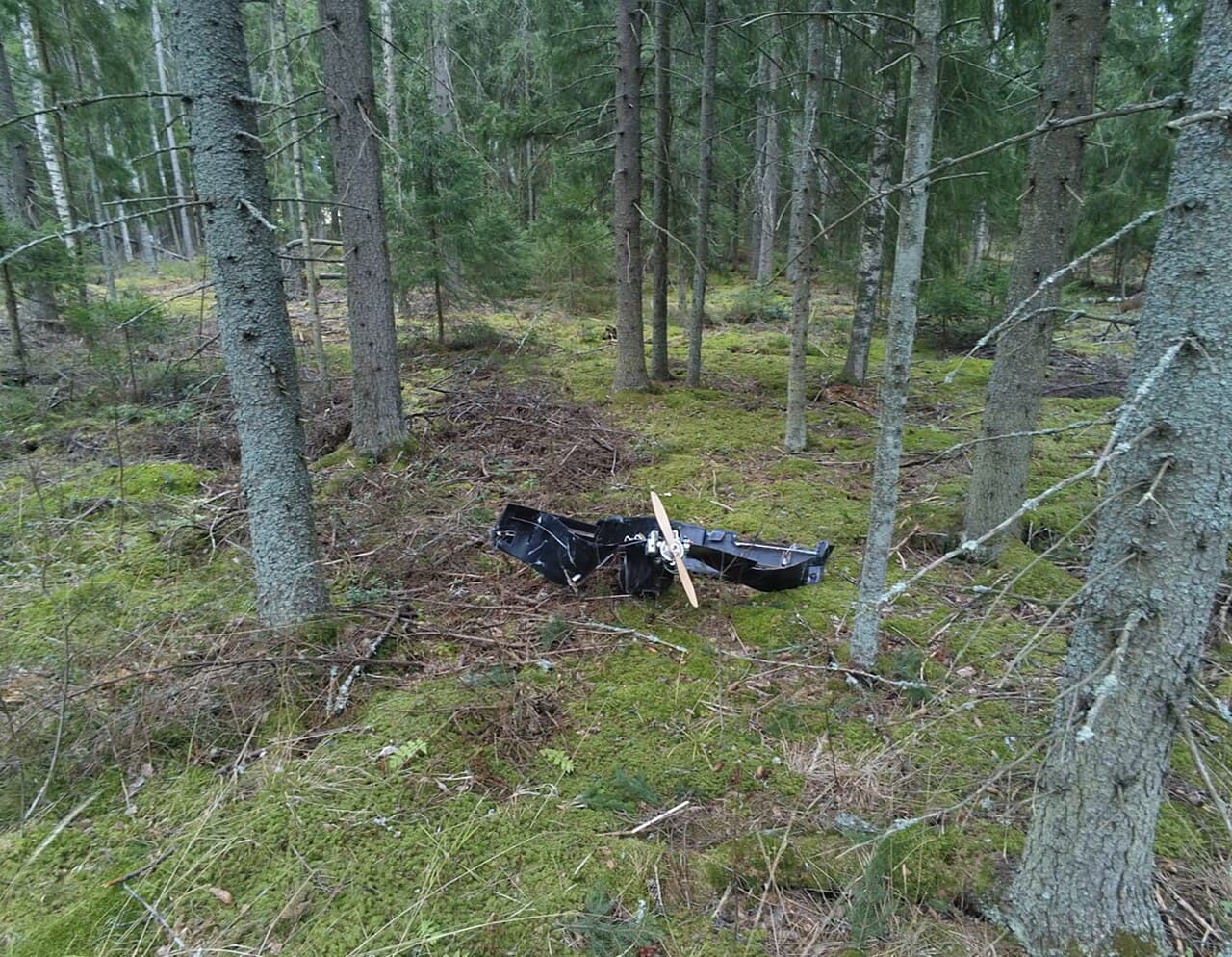
In the early hours of Thursday, May 7, 2026, multiple military drones entered Latvian airspace from the direction of Russia and crashed in Latgale, in the country's east. The Latvian National Armed Forces (NBS) confirmed that three drones crossed into Latvian territory; two crashed on Latvian soil and the third changed course and returned to Russia. NBS commander Kaspars Pudāns said on 8 May that the technical equipment used to detect drones had failed, and the NBS could not rule out the possibility that a further drone had also entered the airspace.
The crashes occurred while Ukraine was conducting an overnight long-range drone strike on Russian targets, with the Ust-Luga and Primorsk Baltic-coast oil export terminals understood to be among the intended targets.
Timeline of the morning
- 04:09 local - Mobile-network cell-broadcast air-threat alerts issued in Ludza and Balvi districts at the request of NBS.
- 04:43 local - Alert extended to Rēzekne district.
- ~05:30 local - NBS confirmed publicly that two drones had crashed on Latvian territory; police, fire, and NBS units deployed to the sites.
- ~08:25 local - Air-threat alert formally lifted; NBS said "the possible threat to Latvian airspace has ended."
Flights were restricted up to approximately 6 km altitude in the eastern border region during the morning. French Rafale fighter jets on NATO Baltic Air Policing duty were scrambled during the alert window.
The Rēzekne oil-depot strike
One of the impact sites was the East-West Transit oil storage facility in Rēzekne, about 40 km west of the Latvian-Russian border. Residents reported hearing explosions in the pre-dawn hours.
Initial reports described a single drone striking the facility, but a State Police follow-up investigation announced on 8 May found that two drones had struck the depot, not one. Four empty fuel tanks were damaged; a small smouldering fire (~30 m²) was extinguished by State Fire and Rescue Service crews. No injuries were reported, as the tanks involved were empty.
Latvian authorities did not attempt to shoot the drones down. NBS commander Pudāns and Defence Minister Andris Sprūds initially explained that engagement safety criteria had not been met - no assurance that debris would miss civilians or critical infrastructure. Sprūds later partly reversed that stance publicly, saying that drones "must be shot down" and that the responsibility for doing so rested with the armed forces commander and himself as political leader.
The second crash site - Viļāni area
A second drone crash was confirmed by NBS, with the wreckage believed to have come down in the Viļāni area west of Rēzekne. The exact location took longer to pin down. Latvian State Police Deputy Chief Andris Zellis said on the morning of 7 May that the second site had not yet been identified; State Fire and Rescue Service operational chief Kristaps Koplbergs suggested Viļāni as the likely vicinity, and search teams worked the area through the day. As of the days immediately after the incident, public reporting still described an "ongoing search" for the precise crash point.
Schools closed; public messaging
Schools were closed in Rēzekne and Ludza municipalities; classes in Balvi district switched to remote learning. The State Police opened criminal proceedings under Chapter 10 of the Criminal Law (crimes against the state); the case was subsequently transferred to the State Security Service (VDD).
Police repeatedly asked the public not to share photos or video of the wreckage on social media, citing both the value of the material to the investigation and an active Russian-origin disinformation campaign. State Police separately opened proceedings under Section 231 of the Criminal Law against the spreading of false rumours about the incident - including, for example, a fabricated claim that a Ukrainian drone had caused a fire in an apartment building in Kurzeme.
Drone origin and the An-196 "Lutyi" identification
Latvian officials' initial statements stressed that the drones entered Latvian airspace from Russia, but their origin had not been definitively confirmed, and the investigation did not rule out the possibility that captured Ukrainian drones could have been used by Russia as a provocation.
Within hours, however, Latvian Defence Minister Andris Sprūds told reporters that the drones had probably been launched by Ukraine against Russian targets and had fallen accidentally on the wrong side of the border - consistent with the March 2026 Lithuania / Latvia / Estonia drone-crash pattern.
The Russian Ministry of Defence, in a statement on 7 May, said its radio-reconnaissance assets had detected six UAVs in Latvian airspace at 03:20 Moscow time; signals from five drones disappeared in the Rēzekne area around 04:00; the last drone was shot down by Russian air defence at 04:41 Moscow time near Likhachevo, ~78 km southeast of Pskov. Russian MoD said wreckage examination identified the aerial target originating from Latvian airspace as an An-196 "Lutyi" - a Ukrainian long-range strike UAV.
The "Lutyi" identification is consistent with Latvian armed forces drone-expertise commentary: Modris Kairiss, head of the Latvian army's Autonomous Systems Competence Centre, told LSM that long-range drones with embedded target-recognition logic may strike visually similar structures when their primary navigation fails - suggesting the Rēzekne oil tanks may have been hit because they resembled the Ust-Luga/Primorsk targets the drones were programmed against.
Janis Sarts, director of NATO's Strategic Communications Centre of Excellence (StratCom CoE) in Riga, advanced a related interpretation: that the drones, after Russian electronic warfare jammed their navigation, made an "autonomous decision" to strike a similar-looking oil terminal in Latvia. Ukraine has publicly attributed the deviation to Russian electronic interference rather than autonomy failures.
Political consequences - Sprūds out (10 May), Siliņa out (14 May)
The 7 May incident set off the most serious Latvian political crisis of 2026.
- 8 May: Latvia First, the National Alliance, and the United List announced they would demand Sprūds's resignation. Sprūds had already faced a removal vote in the Saeima in early April that was defeated 50–43.
- 10 May: Defence Minister Andris Sprūds resigned, three days after the strikes. PM Evika Siliņa had said publicly that Sprūds had lost her trust and that of the public, and asked him to step down.
- 13 May: Andris Suvajevs, leader of the Progressives party (Sprūds's party and Siliņa's coalition partner), said "the government is incapable of acting, and there is no turning back." Progressives withdrew their support for the centre-right governing coalition.
- 14 May: PM Evika Siliņa announced her resignation, citing the loss of her parliamentary majority. "I led this government because people needed stability," she said. "I am stepping down, but I am not giving up. And I am not leaving."
The resignations came roughly five months ahead of scheduled Latvian parliamentary elections and crystallised public frustration with Latvia's air defence readiness - in particular, that warnings about drones in the air were only issued after one had already crashed in Rēzekne.
Regional context
The 7 May strikes are the most consequential entry in a 2026 sequence of Ukrainian-launched drones falling into Baltic NATO airspace after deviating from missions against Russian targets, principally the Baltic oil export hubs:
- March 23, 2026 - Lake Lavysas, Varėna district, Lithuania. Ukrainian drone crash. Plan «Skydas» activated. Per the Centre for Eastern Studies, the drone likely veered off course during a strike on Primorsk, possibly because of Russian electronic warfare.
- March 25, 2026 - Auvere power station, Estonia and Krāslava district, Latvia. Two Ukrainian drones from Russia; one struck the chimney of Estonia's Auvere power station ~2 km from the Russian border, the other came down in Dobročina village, Krāslava municipality in Latvia.
- March 29, 2026 - Finland. Two drones fell near Kouvola in eastern Finland; the Finnish Air Force identified one as a Ukrainian An-196. One carried an unexploded warhead later destroyed in a controlled detonation. Ukraine apologised for the incident.
- March 31, 2026 - Estonia / Latvia. Foreign drone activity detected near both eastern borders.
- May 3, 2026 - Virolahti, Finland. An unmanned aerial vehicle was observed near Virolahti and left Finnish airspace toward Russia during a Ukrainian strike on Primorsk.
- May 7, 2026 - Rēzekne / Viļāni, Latvia. The present incident.
- May 17, 2026 - Samanė village, Utena district, Lithuania. A destroyed drone was found in a field. Plan «Skydas» activated. NKVC chief said preliminary indications are Ukrainian. See the Utena Samanė incident page.
- May 19, 2026 - Estonia. A Romanian NATO F-16 shot down an intruding drone over Estonia, the first such intercept over the Baltic. See the Estonia drone shootdown page.
Baltic governments have publicly framed the responsibility as Russia's, as the aggressor in the war that drives the drone traffic in the first place, while rejecting Russian accusations that their territories or airspace have been knowingly used as cover for Ukrainian operations.
This reconstruction draws on reporting by LSM, Defense News, and the Kyiv Independent, and on AirVeto's wind-model data for the 01:00-05:30 UTC window on May 7, 2026. The wind layer shows atmospheric conditions over eastern Latgale for the event window. Methodology: methodology page.
Related location
- NATO eastern flank - The frontier where EU airspace meets Russia and Belarus across five NATO member states - the active zone of drone incursions, smuggling balloon recoveries, and Baltic Air Policing intercepts since 2025.
Sources
- LSM English - Basic facts so far about latest drone incidents in Latvia (May 7, 2026)
- LSM English - More drones crash in Latvia (May 7, 2026)
- LSM English - It appears there were actually two drone strikes at Latvian fuel depot (May 8, 2026)
- LSM English - Latvian army commander: technology failed in drone detection (May 8, 2026)
- Defense News - Ukrainian drone strike on empty Baltic fuel depot prompts top-level resignation in Latvia (May 11, 2026)
- Kyiv Independent - How a Ukrainian air assault on Russia led to the resignation of a Latvian prime minister (May 14, 2026)
- Wikipedia - 2026 Ukrainian drone incursions into Baltic states
- Methodology
Last updated: