
Nakhchivan drone strikes, 5 Mar 2026 - Iran denies
Iranian drones hit Nakhchivan International Airport and a village near the Iranian border on March 5, 2026, injuring civilians; Iran denied responsibility.
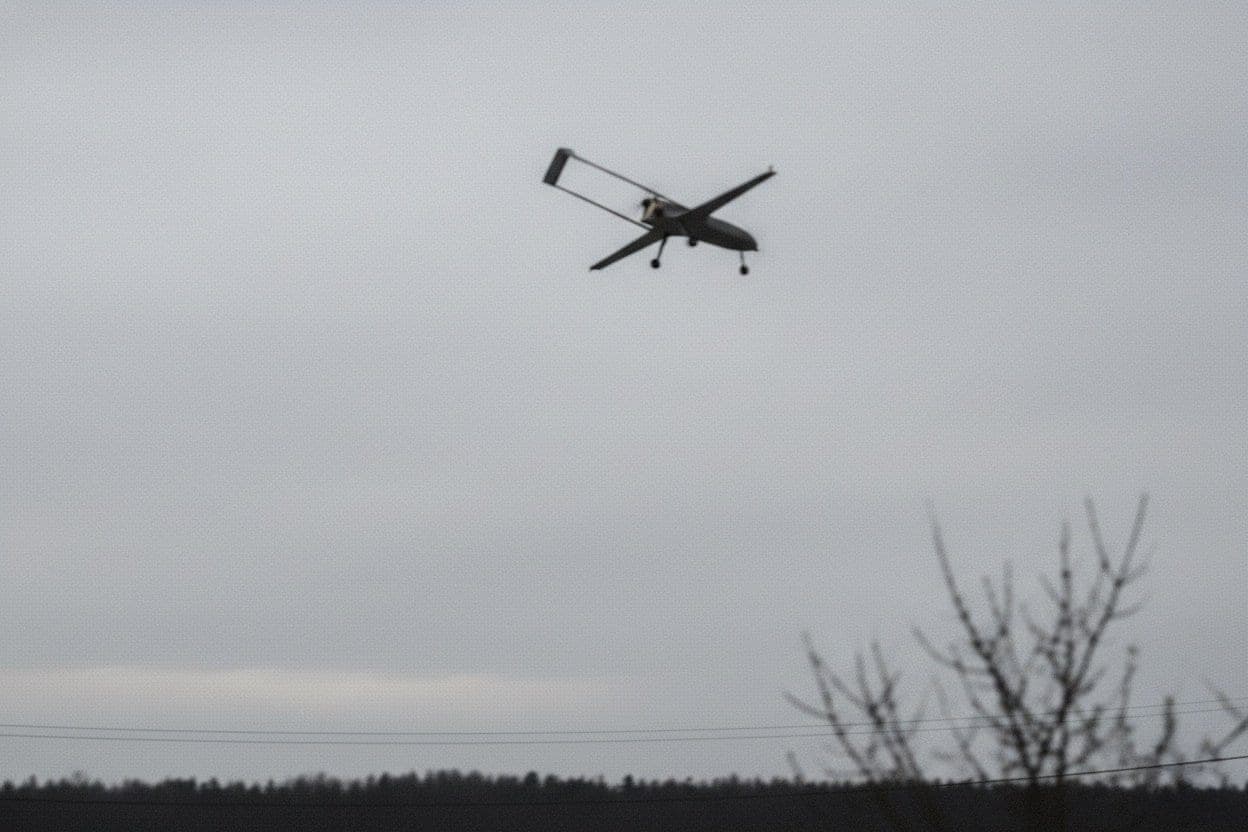
Around noon local time (08:00 UTC) on March 5, 2026, drones hit the Azerbaijani exclave of Nakhchivan, striking the terminal building of Nakhchivan International Airport and landing near a school in the nearby village of Shakarabad, Al Jazeera and Euronews reported. Azerbaijan's Ministry of Defense said four drones were involved; at least two civilians were injured, and Azerbaijan blamed the strike on Iran. Iran denied its forces launched any drone toward Azerbaijan.
This is outside AirVeto's usual EU eastern-border scope and has no wind-drift component - Nakhchivan sits on Azerbaijan's border with Iran and Turkey, and this was a deliberate strike, not an airborne object carried by wind. It is reconstructed here because the event is well-documented and sits inside the same pattern of unexplained and disputed incidents this site is already tracking around Azerbaijan (see below).
Two drones hit their targets, and Azerbaijan put its army on full alert
Azerbaijan's government said the terminal building at Nakhchivan International Airport was struck directly, with video showing an explosion and smoke cloud over the airport. A second drone came down near a school in Shakarabad village, close to the Iranian border. Azerbaijan's Foreign Ministry said it "strongly condemns these drone attacks launched from the territory of the Islamic Republic of Iran," and President Ilham Aliyev called it "an act of terror," ordering the army to full combat readiness and demanding an explanation, an apology, and accountability from Iran.
Azerbaijan's Ministry of Defense said its "technical monitoring systems" had verified four Iranian armed-forces drones targeting the region.
Iran's General Staff denied the claim outright: "The Islamic Republic of Iran ... denies its armed forces launched a drone toward the Republic of Azerbaijan." Iranian Foreign Minister Abbas Araghchi went further, suggesting Israel could be responsible and framing the strike as "aimed at diverting public opinion and undermining Iran's good relations with its neighbours."
The strike landed during the wider 2026 Iran war, as Iran's separate conflict with Israel and the United States was already underway.
This is not the first unexplained incident to hit Azerbaijani territory this year
Azerbaijan's Nakhchivan strike is not an isolated data point. AirVeto's reconstruction of the Goranboy ammunition depot explosion - a separate, undisclosed-cause blast six months later, in September 2026 - catalogs a documented run of incidents in which Azerbaijani assets were damaged after Azerbaijan took an action a neighboring power opposed. The Nakhchivan strike differs in one key respect: unlike the depot explosion or the earlier consulate and embassy incidents, Iran did not deny the drones existed, only that its own forces fired them, and no state offered an alternative explanation for whose drones landed on Azerbaijani soil that day.
Wind over Nakhchivan at the time of the strike
The drones that hit Nakhchivan International Airport and Shakarabad were guided, powered munitions on programmed flight paths, not objects carried by wind - this section states the atmospheric conditions AirVeto's model shows for the event window, not a drift reconstruction. At 08:00 UTC on March 5, 2026, the 2,000 m layer over Nakhchivan showed NW wind at 6.1 km/h; at 3,000 m, the airport's approximate strike altitude, the wind shifted to WSW at 16.7 km/h. This reconstruction is based on reporting from Al Jazeera and Euronews and AirVeto's wind-model data for the event window.
What is not established
No independent, on-the-ground investigation has confirmed who piloted the drones that hit Nakhchivan. Azerbaijan's account is backed by its own military monitoring systems and a presidential accusation; Iran's denial is backed by nothing beyond its own statement. No drone wreckage, serial number, or third-party forensic finding has been made public as of this writing.