

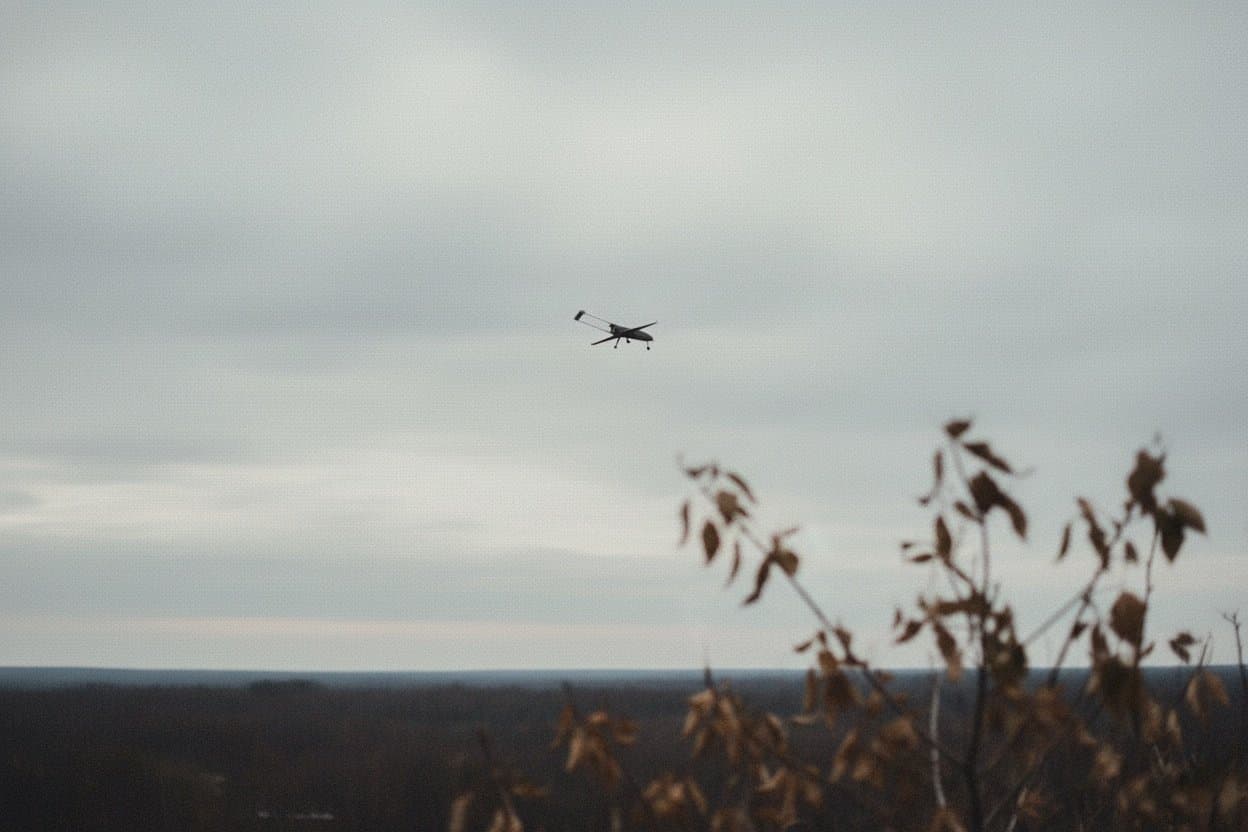
At approximately 04:40 local time on 18 June 2026 (01:40 UTC), Ukrainian monitoring channels began reporting fixed-wing drones over Moscow. By 05:14, explosions were audible across the city. According to Russia's Ministry of Defence, 194 Ukrainian drones were intercepted on approach to the Russian capital — the largest drone raid on Moscow since Russia's full-scale war against Ukraine began in February 2022.
Five fires burned at the Moscow Oil Refinery in Kapotnya. Flights at all four major Moscow airports were suspended. Russian authorities reported 17 people injured in the city, including two children. It was the second strike on the Kapotnya refinery in one week.
What's burning
The Moscow Oil Refinery sits 16 to 20 km southeast of the Kremlin in Kapotnya. It has been a Gazprom subsidiary since 2011, processing over 12 million metric tons of crude per year. This isn't a fringe facility. It's a primary fuel source for the Moscow region, and a direct input to the logistics chain that keeps the Russian military supplied.
Ukraine's General Staff confirmed the refinery was the intended target. Beyond Kapotnya, Russian authorities reported damage to a shopping centre in Lyubertsy, an apartment building in the Zhukovsky district (residents evacuated), and houses in Chekhov and Pavlovsky Posad. 527 flights were cancelled or delayed across Moscow's airports.
Zelenskyy described the operation as "a fully justified response to Russian attacks on our cities and communities, and another important result of our warriors' work against facilities that sustain Russia's war machine." Ukraine framed it specifically as a reprisal for Russian strikes on a historic monastery that had drawn international condemnation.
Russia's air defence absorbed 194 drones and some still got through
Moscow has one of the most layered air defence networks outside of NATO. The city has been hardened against drone and missile strikes for decades. Russia's MoD claimed 194 drones intercepted on approach to Moscow alone, with a wider figure of 555 drones downed across multiple regions in the same operation.
And the refinery still burned.
That's the operational point. At sufficient scale, even a sophisticated layered defence cannot maintain a clean intercept record. Some drones will arrive. The question shifts from "can we stop them all" to "what do we accept losing." Kapotnya answered that question twice in one week.
Ukraine's drone production capacity has grown substantially since 2024. Long-range fixed-wing drones capable of reaching Moscow represent a deliberate strategic investment in what Kyiv calls "long-range sanctions" — striking Russian energy infrastructure that funds the war rather than trading territory on the front line. A 194-unit strike wave against a refinery processing 12 million metric tons of fuel per year is an economic calculation as much as a military one.
The exchange ratio is not in Russia's favour.
Russia has run this doctrine against Ukrainian cities since 2022
Ukraine has been living under this since February 2022. Kyiv, Kharkiv, Odesa, Zaporizhzhia — drone and missile strikes on power infrastructure, fuel depots, grain storage, apartment buildings. Russia launched its full-scale war expecting a short campaign. Ukraine did not collapse. And now the drones go the other direction.
I'm not dressing this up as geopolitical analysis. It's a reversal. The same munitions doctrine Russia has applied to Ukrainian civilians for four years is now reaching Moscow at scale. The people in Zhukovsky who were evacuated from their apartment building know what that means. So does everyone who had their flight cancelled Thursday morning.
A note on what we cover
AirVeto covers EU eastern border airspace — the Baltic states, Poland, Finland, and Ukraine. Moscow is outside our corridor; there's no incident page for the 18 June raid.
The Baltic EW-diversion incidents (Kouvola, Nautrēni) are a separate matter: Russian electronic warfare redirecting Ukrainian drones into NATO territory. That's Russia's doing, not Ukraine's. Full archive at /incidents. Live wind layer on the map.