

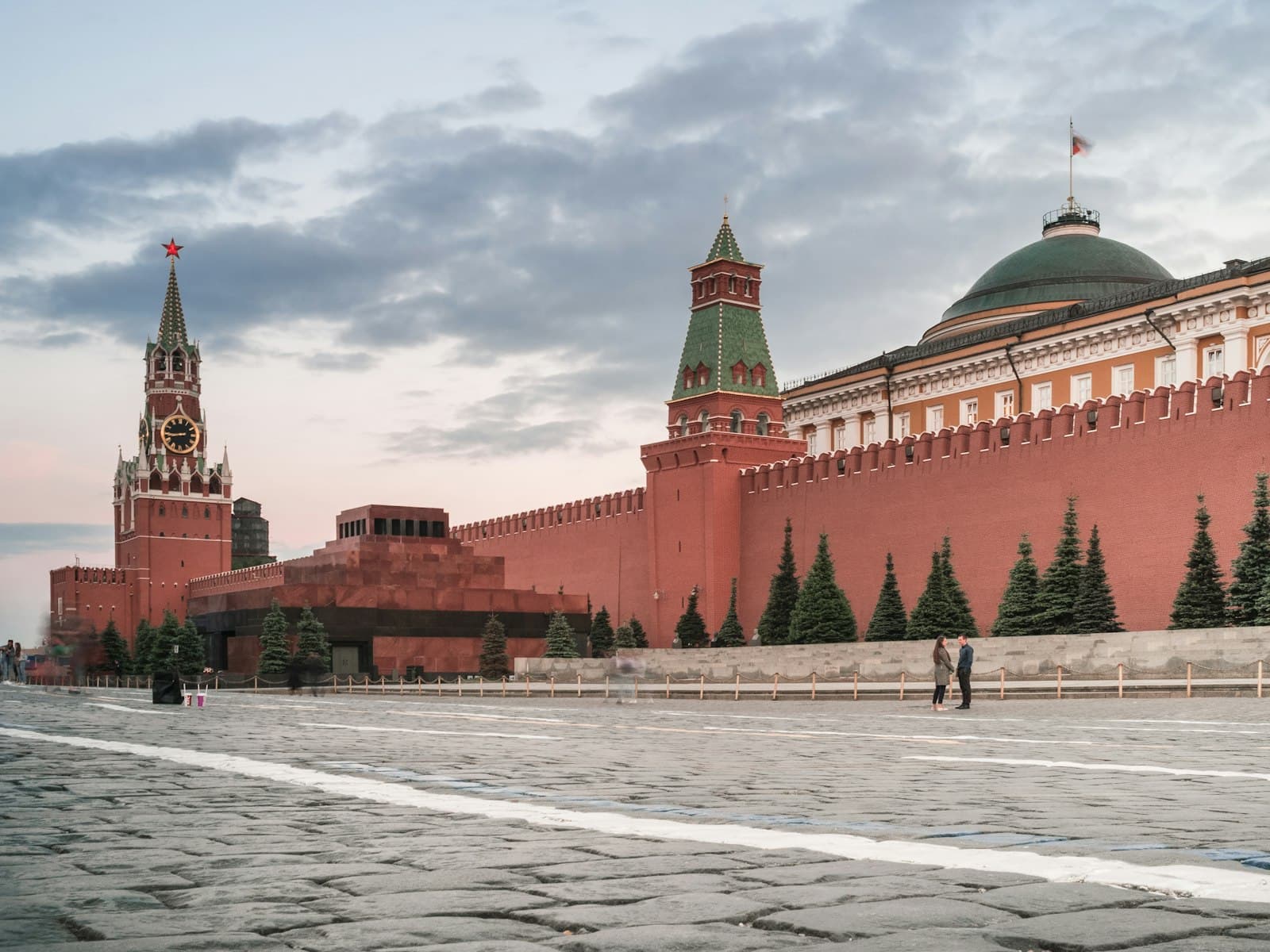
On January 27, 2022, the White House said President Joe Biden had told Ukraine's president there was a "distinct possibility" Russia would take military action against Ukraine the following month, and that Washington had "been warning about this for months," Al Jazeera reported at the time. Russia's full-scale invasion followed on February 24, 2022. Four years later, officials across NATO's eastern flank and Ukraine's own president are again naming a Russian military buildup and a possible move beyond Ukraine's borders as a live scenario - and at least one of them has said, on the record, that it looks like the same pattern.
Zelensky has already made the comparison explicit
President Volodymyr Zelensky told CNN in remarks released August 23, 2026, that Russia is likely to mobilize another 300,000 troops before year's end and suggested Russian forces "might also attempt an incursion into the northern Ukrainian regions of Kharkiv and Sumy," noting Russia "do not yet have troops in the Bryansk region... but we can see military equipment along the borders." Two days later, asked whether Ukraine would help defend Estonia if Russia struck it, Zelensky told a joint press conference with Estonia's president that NATO's collective-defense guarantee, not Ukrainian troops, should be the answer - treating a Russian move against a NATO member as something worth planning an answer to, not a hypothetical he dismissed.
The eastern flank is naming its own contingency plans in public, not staying quiet about them
Estonian Prime Minister Kristen Michal told United24 Media this week that Estonia's border crossings with Russia can be sealed immediately if Moscow declares a general mobilization. He named Russia's economic strain and monthly casualties as the reasoning. NATO Military Committee Chairman Admiral Giuseppe Cavo Dragone told reporters in Copenhagen, per LRT, that the alliance holds roughly 4,000 pages of contingency plans for an eastern-flank escalation, from a minor incident up to Article 5. Separately, Ukrainska Pravda cited Reuters reporting that Poland, Lithuania, Latvia, and Estonia are cooperating to shield infrastructure from potential Russian false-flag operations, a risk allied intelligence services have repeatedly flagged. None of these officials said war is coming. All of them described preparing publicly for a scenario they used to discuss only privately - the same shift in posture that preceded 2022, when Washington's own declassification campaign was built on the premise that saying the warning out loud, rather than quietly, might change Moscow's calculus.
The pattern is real; what it predicts is not
A genuine parallel exists in form: a documented troop buildup, public warnings from multiple governments, and officials naming a neighboring state as a possible next target - all of that happened before February 2022, and versions of all three are happening again in 2026. But the comparison AirVeto can responsibly draw stops at the pattern. Russia denied any plan to invade for months in 2021 and 2022 before it did; it has made no comparable admission or denial now, and no government cited here has set a timeline. The officials making these statements also have the clearest incentive to sound the alarm loudly, Ukraine's president most of all. That doesn't make the warnings wrong. It does mean the pattern itself is today's story, not a forecast of what comes next.
The live map shows current conditions over the Baltic region.