
Israel's POINT@AIR Aerostat Radar Heads to AUSA 2026 Without a Disclosed Range
IAI's ELTA is unveiling POINT@AIR, a radar on a tethered balloon, at AUSA 2026. Its range is undisclosed and no source names balloons as targets.
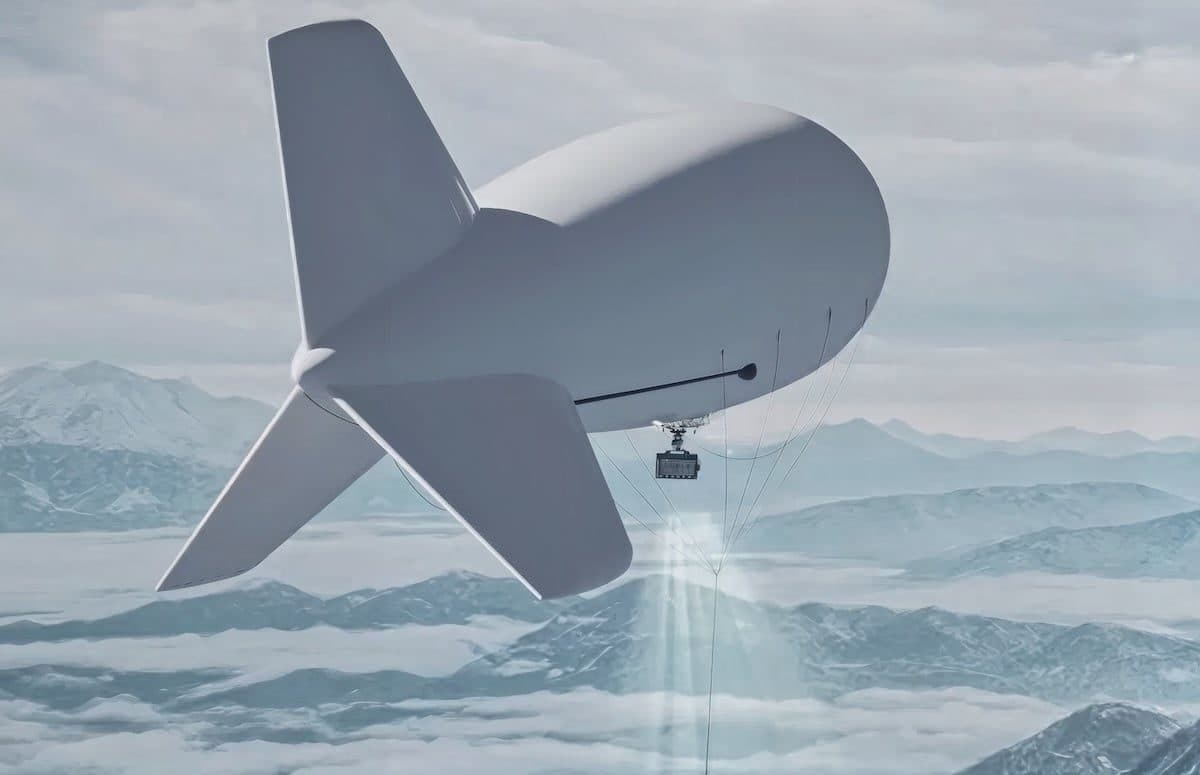
Israel Aerospace Industries (IAI) is unveiling POINT@AIR, a mobile long-range radar carried by an aerostat, this week, Defence Industry Europe reported on October 11, 2026. The launch is at the Association of the United States Army (AUSA) Annual Meeting & Exposition in Washington, D.C. IAI has not disclosed the system's detection range, deployment time or cost, according to Ynet. None of the three outlets covering the launch names balloons as a target, and the missing range is the figure that would show whether a tethered radar helps against them.
What is POINT@AIR and who builds it?
POINT@AIR is a radar lifted on an aerostat, a tethered balloon that holds equipment high above the ground. IAI's ELTA Systems division developed it, and it is presented at IAI's AUSA booth, Ynet reported. The system connects to command-and-control (C2) systems, the networks commanders use to see and assign threats, according to both Ynet and Defence Industry Europe.
How does the radar see in every direction?
POINT@AIR is based on ELTA's ELM-2083 radar family and uses an active electronically scanned array (AESA), a radar that steers its beam electronically instead of by moving the antenna, Defence Industry Europe reported. Electronic scanning combined with mechanical rotation lets it see in every direction. Israel National News reported that the radar detects and tracks multiple aerial, maritime and ground targets at once and ranks them by threat.
What do the sources say about low-altitude threats?
Defence Industry Europe says the elevated position allows "earlier detection of low-altitude threats." Ynet is more cautious: the system could "potentially detect low-flying drones and other threats earlier." Neither outlet gives a distance or an altitude, so the claim stays qualitative.
Is it a fixed installation or a mobile one?
Israel National News describes a "compact, highly mobile aerostat platform that can be rapidly relocated." ELTA CEO Dror Bar said the aim was a smaller, more mobile product: "Our goal was not simply to reduce the size of an existing solution." The sources do not state how long a relocation takes.
What does AirVeto's archive say about the targets such a radar would face?
AirVeto's archive holds 19 balloon incidents since November 2025 on the EU's eastern border, in Lithuania, Poland, Latvia and the Kaliningrad region. Smuggling balloons are low, slow and unpowered, and they drift with the wind. Their path follows the air they float in, not a flight plan. The nine cargoes seized in four Lithuanian districts on October 8 and the Vilnius airport closure of September 21-22 are recent examples.
That profile is why the missing specifications matter. The sources describe aerial, maritime and ground targets in general, and none says IAI designed or tested POINT@AIR against small balloons. Treat any link between this product and balloon interception as unproven until IAI publishes range and target-size data.
What is still unknown?
Ynet reported that three facts are undisclosed as of October 13, 2026:
- Detection range
- Deployment time
- Unit cost
Until those numbers appear, POINT@AIR is a confirmed product launch with an unconfirmed capability. The sources call it long-range but give no figure. AirVeto will update this brief if IAI releases specifications. The wind that carries balloons across the border is on the live AirVeto map.