
Baltic Sea, 15 Jul 2026 - Polish jets intercept Russian Su-30s
Polish and Swedish fighter jets intercepted two Russian Su-30SM2 aircraft from Kaliningrad over the Baltic Sea on July 15, 2026, one day after a Russian Il-20 ELINT mission over the same waters.
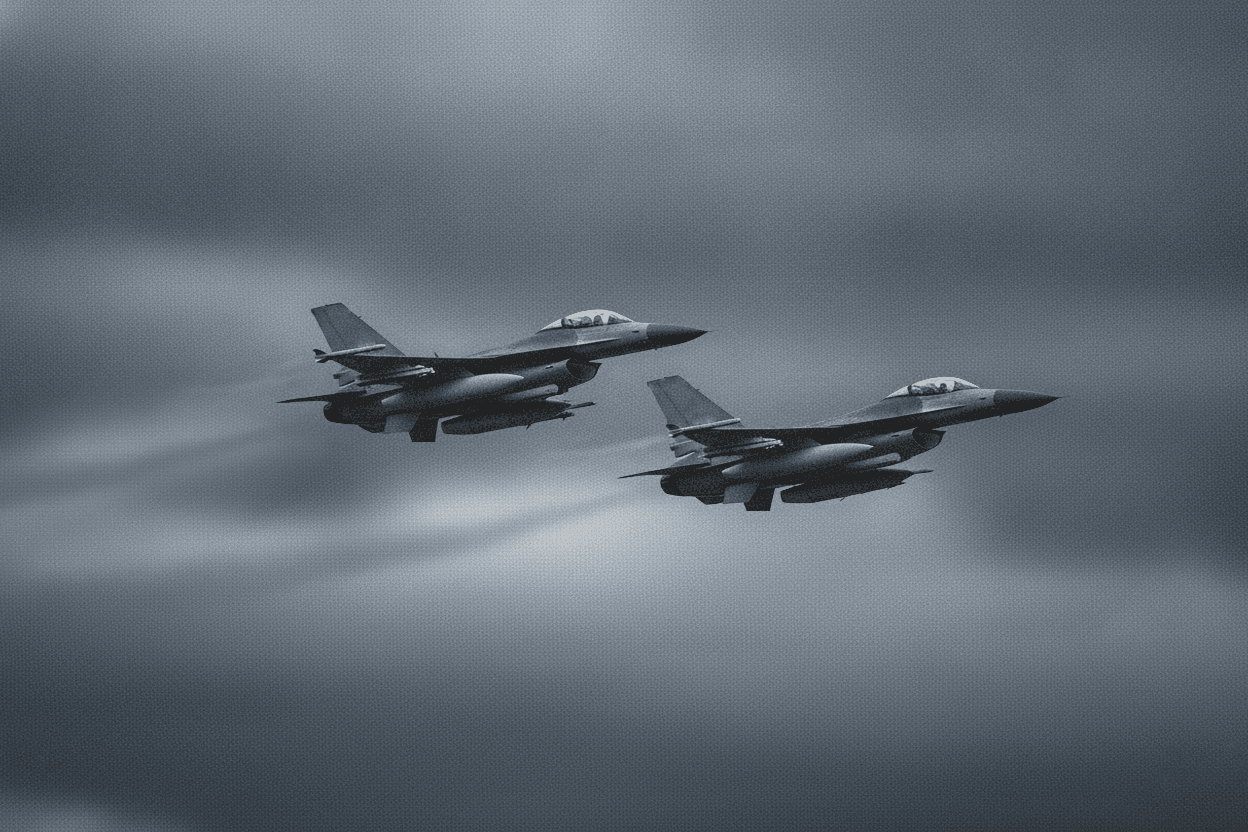
On July 15, 2026, Polish and Swedish quick reaction alert fighters intercepted two Russian Su-30SM2 multirole aircraft from Kaliningrad that were operating over the Baltic Sea without a filed flight plan. Poland's Ministry of National Defence, citing the mission as "aggressive surveillance of Polish and NATO air defence integration exercises," confirmed that the Russian aircraft were escorted out of the area after Polish pilots established contact. Swedish jets assumed the escort as the formation moved north. AirVeto's wind layer covers the southern Baltic Sea during the 15 July event window.
The Su-30SM2 is a different collection instrument than the Il-20 it followed
The previous day, Polish F-16s had intercepted a Russian Il-20 ELINT aircraft approximately 30 km north of Ustka. The Il-20 is a dedicated signals intelligence platform designed to loiter parallel to NATO coastlines at altitude and collect radar emission signatures as air-defence systems respond to its presence. The Su-30SM2 is a multirole fighter-interceptor: it carries active radar, fires weapons, and can also perform short-range electronic intelligence gathering, but its primary role in this context is presence and coercion rather than passive SIGINT collection.
Two Su-30SM2s operating over the same general stretch of the Baltic Sea one day after an Il-20 mission suggest a multi-day collection sequence: the Il-20 maps the radar emissions; the Su-30s probe the intercept timing and response geometry. The Polish MoD's description of the July 15 mission as "aggressive surveillance" of NATO exercises is consistent with this reading.
Polish and Swedish crews both held an intercept in the same area
Poland's QRA fighters were scrambled to intercept and escort the Su-30SM2 formation. After Polish pilots established contact and the Russian aircraft acknowledged the intercept, Swedish aircraft assumed the escort as the formation progressed northward in the international airspace between Poland and Sweden. Joint handling of a Russian contact by two NATO nations in the same interception sequence is not unusual in the Baltic, where QRA coverage is shared across the alliance, but it reflects the coordination required when contacts transit from one nation's QRA zone into another's.
The July 15 intercept falls within what Stars and Stripes described as a sustained Russian surveillance surge over the southern Baltic. Poland documented the July 14 Il-20 approach as "the first Russian attempt in quite some time to approach our maritime border in order to gather intelligence on our air defense systems" - the July 15 Su-30 mission follows within 24 hours, using a different platform in the same zone.
The Baltic Sea intercepts run in sequences, not single sorties
Since December 2025, Russian reconnaissance aircraft have approached Polish-patrolled Baltic airspace on multiple occasions. The December 25, 2025 Il-20M mission flew overnight on Christmas Day while simultaneous Belarusian balloons crossed Podlaskie - a probe timed to maximum holiday-period distraction. The July 2026 sequence (Il-20 on 14 July, Su-30SM2 on 15 July) follows a different pattern: consecutive-day sorties using complementary aircraft types rather than a single high-stakes approach.
The 20 June Kaliningrad AN-30 identification - NATO fighters escorting a three-aircraft Russian reconnaissance formation transiting from Kaliningrad - used the same no-transponder, no-flight-plan profile as the July 15 Su-30 approach. Russia's operating pattern on this axis is consistent: known mission types, known aircraft, known profiles.
This reconstruction draws on reporting by Poland's Ministry of National Defence (via MILMAG), TVP World, Stars and Stripes, and EUROPESAYS, and on AirVeto's wind-model data for the July 15, 2026 event window. The wind layer shows atmospheric conditions over the southern Baltic Sea for the intercept window. Methodology: methodology.
The full archive of military airspace intercepts over the Polish Baltic approach is at Dron nad Polską.
Sources
- MILMAG - Polish Ministry of National Defence: Russian Su-30SM2s intercepted by Polish aircraft (15 Jul 2026)
- TVP World - Poland intercepts Russia's Su-30SM2 spy planes over Baltic (15 Jul 2026)
- Stars and Stripes - Russian surveillance flights trigger NATO intercepts over Baltic Sea (16 Jul 2026)
- EUROPESAYS - Poland intercepts Russian aircraft over Baltic after aggressive surveillance (15 Jul 2026)
- Methodology