
Ukrainian drone crashes in residential Galați, Romania
A Russian Geran-2 drone crashed in the Bariera Traian district of northern Galați on April 25, 2026, damaging a farm outbuilding and an electricity pole. No one was hurt.
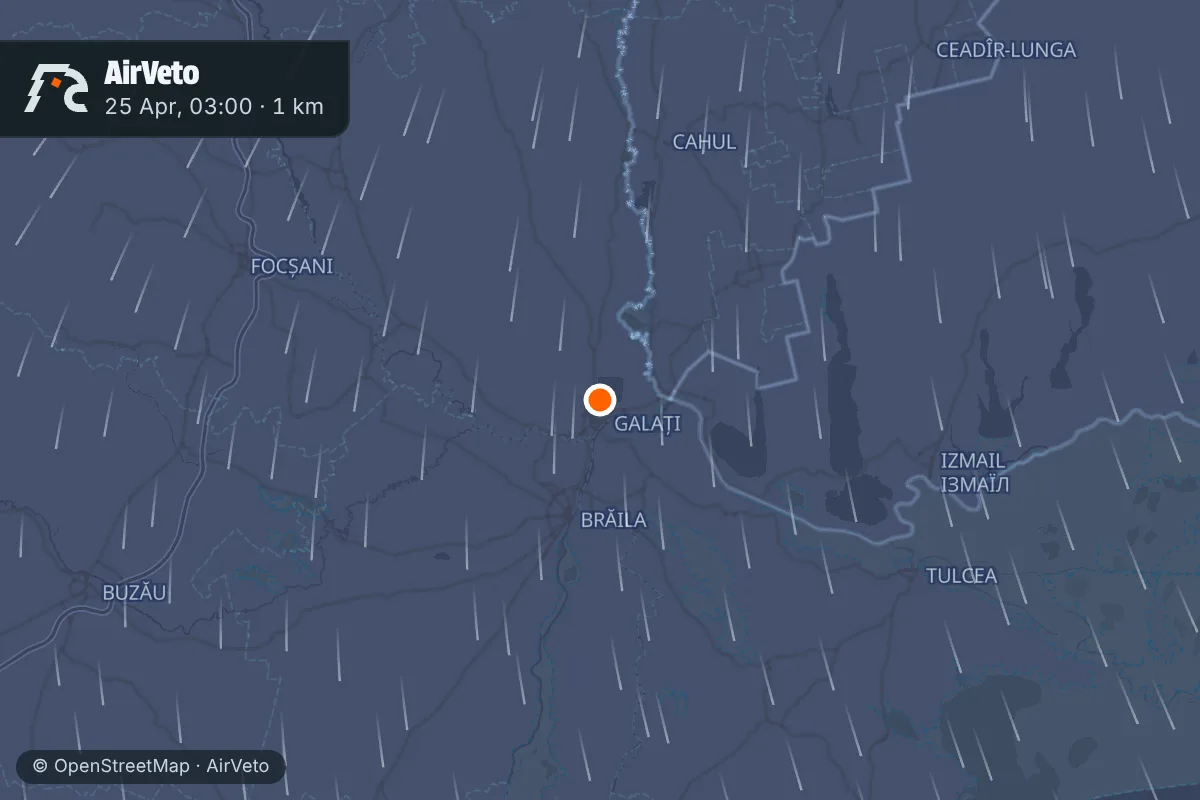
At 02:31 local EEST (00:31 UTC) on Saturday, April 25, 2026, emergency line 112 received the first report of a drone impact in the Bariera Traian area of northern Galați, southeastern Romania. A Russian Geran-2 (Shahed-136) kamikaze drone had entered Romanian airspace from the direction of Reni, Ukraine, flew approximately 15 km at low altitude over Romanian territory in roughly four minutes, and crashed in the city's northern outskirts. The drone damaged a farm outbuilding (anexă) and an electricity pole on the site. No injuries were reported.
AirVeto's wind-model data for the event window: At 00:00 UTC on 25 April - at the start of the overnight approach window - the 1,000 m layer over the Danube region showed N wind at 25.6 km/h.
This event is not the same as the May 29, 2026 Galați strike, in which a second Geran-2 hit a 10-storey apartment block on Bulevardul Brăilei, injured two civilians, and prompted Romania to expel the Russian consul general in Constanța. The April 25 Bariera Traian crash was a distinct, earlier incursion that caused only property damage.
NATO aircraft scrambled but did not engage
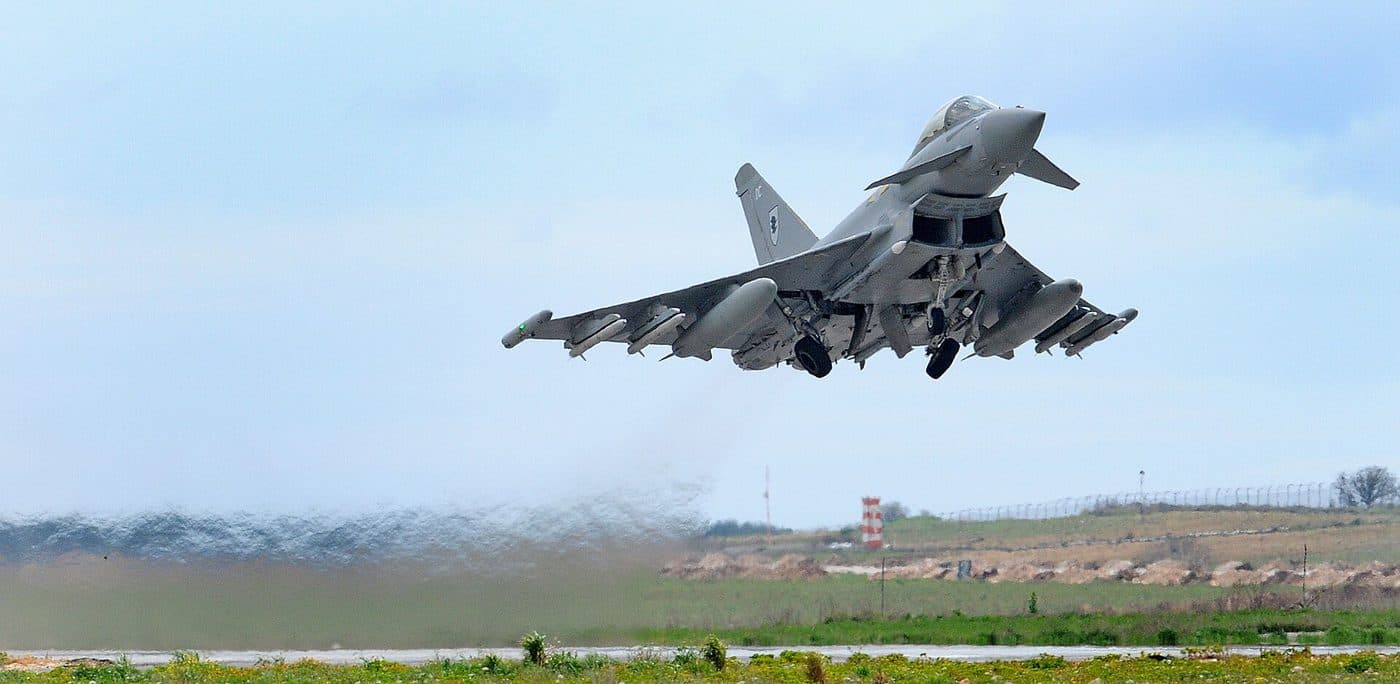
British Royal Air Force Eurofighter Typhoons assigned to NATO's enhanced Air Policing mission scrambled from 57th Air Base at Mihail Kogălniceanu (Constanța region) at approximately 02:00 local EEST (00:00 UTC), around 30 minutes before the 112 call confirmed impact. NATO issued authorization to engage the drone. The Typhoons returned to base without firing: by the time the aircraft reached the intercept position, the Geran-2 had already crashed in Bariera Traian. The UK Ministry of Defence confirmed that no Russian assets were engaged during the scramble.
The compressed timeline repeated a pattern already visible in earlier incursions along the Danube. The Geran-2 travels at approximately 185 km/h at low altitude; from the Ukrainian border near Reni, it covers the roughly 15 km to Galați in under five minutes, leaving almost no decision window for an intercept over an urban area.
Second drone found with live warhead - controlled detonation
On April 26, 2026, a second Geran-2 drone carrying an active explosive load was discovered in a field between Văcăreni and Luncavița villages in Tulcea County, approximately 15 km southeast of the Bariera Traian crash site. Romanian bomb disposal teams (SRI) secured the area and carried out a controlled detonation. No injuries were reported. The find confirmed the April 25 strike wave had involved at least two drones crossing or crashing on Romanian soil rather than a single stray munition.
The wave was part of a broader overnight Russian strike targeting Danube port infrastructure near Reni, Ukraine. The two Romanian ground impacts, the RAF scramble, and the NATO authorization order combined to make the April 25 cluster the most serious Romanian airspace event of 2026 until the May 29 Galați apartment block strike.
Why Russian drones keep reaching Galați
Galați sits at the triple confluence of the Siret, Prut, and Danube rivers, less than 15 km from the Ukrainian town of Reni. Russia has targeted Reni's grain terminals and port infrastructure repeatedly since 2023, treating the Danube as a logistics chokepoint for Ukrainian agricultural exports. A Geran-2 launched from Russian-controlled territory toward Reni follows a flight path that skirts the bend in the Danube where the Romanian and Ukrainian banks are closest; navigation errors, guidance failures, or deliberate targeting variations place those drones directly over Galați's northern outskirts. The Bariera Traian area, where the April 25 drone crashed, lies on the northern edge of the city facing open agricultural land that runs toward the Prut river delta, the same low-altitude approach path used by the May 29 drone five weeks later.
The April 25 cluster and what followed
The April 25 Bariera Traian incident sits within a sequence of Romanian airspace violations that escalated through early 2026. The series includes the Sfântu Gheorghe, Tulcea drone incident of February 25, 2026 and the Pârches, Tulcea drone incident of March 26, 2026. Romania's defence ministry later stated that 7 confirmed airspace violations had occurred in 2026 up to 28 April; the April 25 cluster was the most serious of those 7 before the events of late May.
The April 25 crash prompted Romania's Foreign Ministry to summon the Russian Ambassador in Bucharest and issue a formal protest over the violation of Romanian sovereign territory. The most severe event in the sequence came five weeks later: on May 29, 2026, a Geran-2 struck the Bulevardul Brăilei apartment block, injuring a 53-year-old woman and a 14-year-old boy and triggering the expulsion of the Russian consul general in Constanța. The April 25 incident caused no casualties and drew a firm but lower-level diplomatic response. The contrast between the two events illustrates how quickly the threshold shifted as the incursions continued.
Wind conditions over the Danube delta approach
At 00:00 UTC on 25 April - at the start of the overnight approach window - the 1,000 m layer over the Danube region showed wind pushing south at 25.6 km/h. Light flow at this level was the atmospheric background for the crossing. For the full methodological framework, see methodology. This reconstruction is based on reporting by AGERPRES, Al Arabiya, Romania Insider, The Aviationist, and Militarnyi, and on AirVeto's wind-model analysis for the overnight window of April 25, 2026.
Methodology: see methodology. Page published 2026-06-03 by AirVeto.
Related location
- Romania - Romania, a NATO member since 2004, shares a Danube-river border with Ukraine at the Black Sea delta and has repeatedly recorded drone debris, intercepts, and naval-drone incidents along that frontier and its Black Sea coast since September 2025.
Sources
- AGERPRES - MAPN: Russian drone attack in Ukraine near Romanian border, fragments fall in Galați city (April 25, 2026)
- Al Arabiya - Romania says drone fragments damage property during overnight Russian attack on Ukraine (April 25, 2026)
- Romania Insider - Drone with explosives found in Romania after April 2026 Russian attack wave (April 2026)
- The Aviationist - RAF Eurofighters scrambled as Russian drones approach Ukraine border (April 25, 2026)
- Militarnyi - NATO authorization to down drones over Romania, April 25 (April 25, 2026)
- Methodology
Last updated: