
Romanian F-16 shoots down drone over Estonia, NATO first
On May 19, 2026, a Romanian NATO F-16 from the Baltic Air Policing detachment shot down an intruding drone near Kablaküla, Estonia - the first NATO fighter intercept of a drone over Baltic airspace.
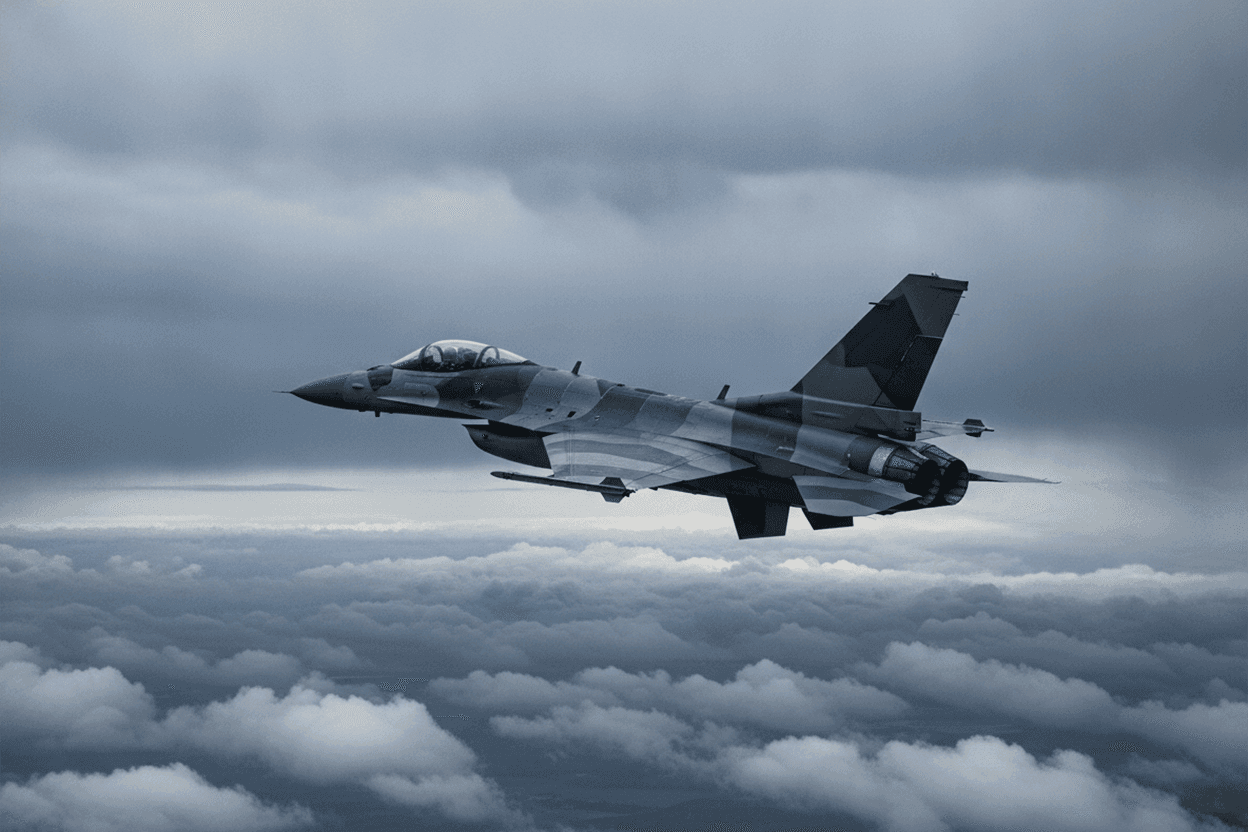
At around noon local time (09:00–10:00 UTC) on Monday, May 19, 2026, Latvia's crisis management centre issued an air-threat alert for its eastern border region after radar picked up an unidentified object moving in from the direction of Latgale. The alert lasted roughly an hour. Minutes later, Estonian defence authorities issued alerts across six southern counties as Estonian radar, tipped off by Latvian counterparts, tracked what appeared to be the same drone crossing the border and flying over Lake Võrtsjärv.
A Romanian Air Force F-16 from the NATO Baltic Air Policing detachment at Šiauliai Air Base in Lithuania was already airborne. It fired a single missile at 12:14 local time. The drone came down in a wooded area at the edge of a field in Kablaküla village, Põltsamaa Municipality, roughly 30 meters from the nearest house. No civilian casualties were reported.
It was the first time a NATO fighter had destroyed an intruding drone over Baltic airspace.
Estonian Defence Minister Hanno Pevkur said his forces waited until civilian safety could be confirmed before engaging:
"We received advance information from our Latvian colleagues, and our radar also detected a drone moving into southern Estonia. The threat was confirmed and the drone entered Estonian territory."
Around two hours after the intercept, Ukraine issued a public apology. Ukrainian foreign ministry spokesperson Heorhii Tykhyi said:
"We apologize to Estonia and all of our Baltic friends for such unintended incidents."
What preceded the shoot-down
Monday's events were the sharpest moment in a week of near-continuous alerts:
- May 7, 2026 - Rēzekne, Latvia. Two drones came down in eastern Latvia's Rēzekne region, one striking an oil storage facility, damaging four empty tanks and starting a brief fire. Latvian Defence Minister Andris Sprūds said the drones had "probably been launched by Ukraine against targets in Russia and had fallen accidentally" - see the Rēzekne / Viļāni incident page.
- May 17, 2026 - Samanė, Lithuania. A drone crashed in a field near Samanė village in Lithuania's Utena district carrying explosives and without prior radar detection. NKVC chief Vilmantas Vitkauskas said preliminary signs pointed to a Ukrainian drone - see the Utena Samanė incident page. Also on May 17, a drone entered Latvian airspace from the direction of Russia before leaving without interception.
- May 19, 2026 - Latvia / Estonia. The Latvian alert and Estonian intercept described above.
A pattern dating to March 2026
The May incidents extend a series that began in late March. In the space of a week, drones struck or crashed in Lithuania, Estonia, Latvia, and Finland - all apparently during Ukrainian strike operations against Russian oil export terminals at Ust-Luga and Primorsk on the Gulf of Finland. One drone hit the chimney of Estonia's Auvere power station, two kilometers from the Russian border. Another reached Finland carrying an unexploded warhead.
Ukraine apologised for the Finnish incidents, attributing them to "likely Russian electronic interference" with navigation systems. That explanation has since become the consensus working theory across Baltic capitals: Russia's dense electronic warfare infrastructure along its Baltic coastline spoofs or jams GPS signals, pushing drones off their planned flight paths and into NATO territory.
Why the drones keep crossing
Russian jamming infrastructure along the Gulf of Finland and around Kaliningrad is well-documented. When Ukrainian long-range drones lose signal lock - typically while flying preset GPS flight paths at low altitude - they either crash, enter loiter patterns, or continue on corrupted headings. Prevailing wind pushing east and northeast in the region means that an off-course drone over the Gulf of Finland or Russian Pskov Oblast is already tracking toward Estonian or Latvian territory.
Multiple officials, including Finnish Prime Minister Petteri Orpo, have publicly described the drones as "presumably driven off course into NATO countries by Russian electronic jamming." Baltic governments issued a joint statement on April 10, 2026 dismissing Russian accusations that they were facilitating Ukrainian drone transits.
The first shoot-down and what it signals
Before 19 May, NATO Baltic Air Policing missions had scrambled repeatedly but never engaged a drone. The Romanian F-16's missile strike represents a significant policy shift, or at minimum a public confirmation that the threshold for lethal intercept has dropped as incidents have multiplied.
The "Carpathian Vipers" detachment, Romania's F-16 rotation at Šiauliai, only began its tour on April 1, 2026. Within seven weeks it had conducted the alliance's first drone kill over the Baltic region.
Lithuanian Defence Minister Robertas Kaunas confirmed that NATO aircraft from Šiauliai had patrolled Latvian airspace during the May 17 alert before returning to base. The coordination visible across May 19 indicates the alliance had been quietly refining its response posture even as the public incidents piled up: Latvia alerted Estonia in time, a NATO fighter was already airborne.
This reconstruction draws on reporting by ERR, LSM, Estonian World, and The Aviationist, and on AirVeto's wind-model data for the 09:14-10:30 UTC window on May 19, 2026. At 09:00 UTC on 19 May - during the shoot-down window - the 1,000 m layer over the Latgale–Põlva zone showed SSE wind at 40.8 km/h. Moderate wind pushing NNW at this level was the atmospheric background for the intercept. How the model is built and where it is reliable is on the methodology page.
Aftermath
Latvia's military acknowledged after the May 17 incident that "recurrences of such incidents are possible" for as long as Russian aggression continues in Ukraine. With Ukrainian strike tempo against Russian oil infrastructure showing no sign of slowing, and Russian electronic warfare an assumed constant, the Baltic states appear to be settling into a new operational normal: near-weekly airspace alerts, scrambled jets, and, now, occasional shoot-downs.
The wreckage near Kablaküla landed 30 meters from a house. The Rēzekne oil-tank fire was quickly extinguished. So far, luck has held.
Related location
- Gulf of Finland - Baltic Sea arm separating Estonia from Finland, bounded to the east by Russia - dense AIS traffic and GPS-spoofing reports.
- NATO eastern flank - The frontier where EU airspace meets Russia and Belarus across five NATO member states - the active zone of drone incursions, smuggling balloon recoveries, and Baltic Air Policing intercepts since 2025.
Sources
- ERR - Intruding drone shot down by Romanian fighter jet in Estonia; alert over (May 19, 2026)
- LSM English - Air threats detected over Latvia and Estonia (May 19, 2026)
- Estonian World - Romanian F-16 shoots down Ukrainian drone over Estonia (May 19, 2026)
- The Aviationist - Romanian F-16s Shoot Down Rogue Drone in Estonian Airspace (May 19, 2026)
- LRT - Vėl pranešta apie galimą grėsmę Latvijos oro erdvėje; pakelti NATO naikintuvai (May 19, 2026)
- Aerotime - NATO Fighter Downs Drone Over Estonia In Second Baltic Incursion In 48 Hours (May 19, 2026)
- Wikipedia - 2026 Ukrainian drone incursions into Baltic states
- Methodology