
Gerbera decoy found 100 km inland near Puiești, Romania
A Gerbera-type Russian drone crashed 100+ km inland near Puiești, Vaslui County on November 25, 2025, found by a resident behind their house; no warhead, first confirmed daylight breach in Romania.
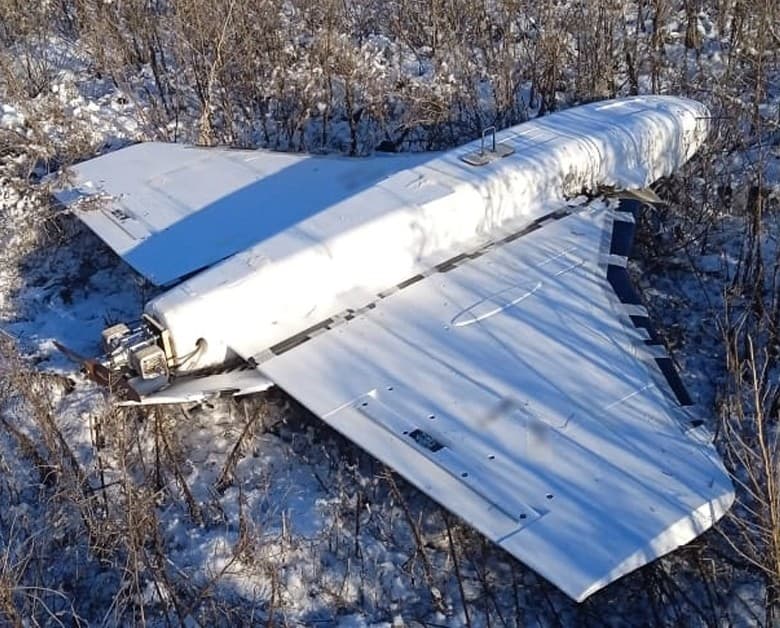
According to United24 Media and Ukrainska Pravda, a Gerbera-type Russian drone crashed in Puiești, Vaslui County, Romania, at approximately 08:00 UTC on November 25, 2025 - more than 100 km inland from the Romanian-Ukrainian border. A local resident discovered the drone behind their house. The drone carried no warhead. It was Romania's first confirmed daylight drone breach and the deepest confirmed NATO territory penetration by a Russian UAV, confirmed by the Romanian Defence Minister. AirVeto's wind reconstruction at 1,000 m covers the Moldova region of Romania during the morning window of November 25, 2025.
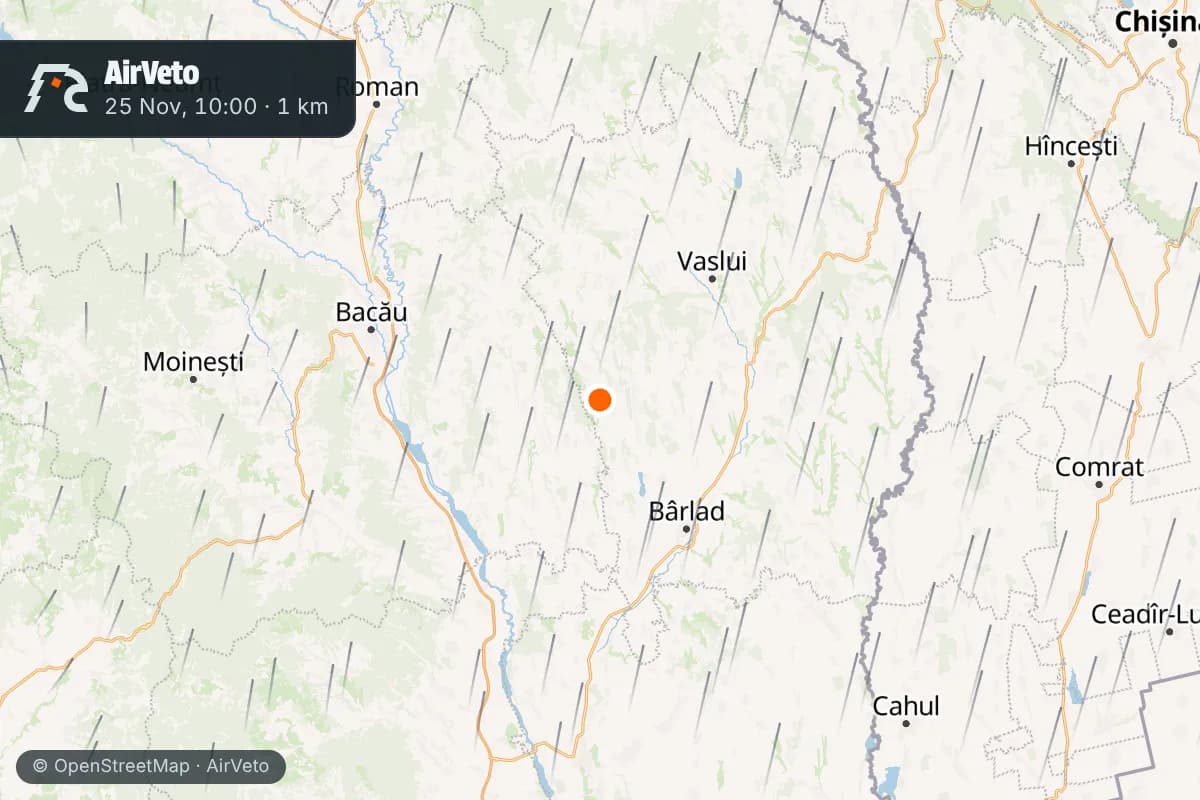
100+ km inland - what makes Puiești the record
All previous confirmed drone crashes in Romania had occurred within the Danube Delta or the coastal plain immediately adjacent to the Ukrainian border - within roughly 20–30 km of the crossing point. Puiești, in Vaslui County, is in the Moldova region of Romania (the historic eastern Romanian region bordering the Republic of Moldova), more than 100 km north of the Danube Delta and more than 100 km west of the Ukrainian border at the closest point.
For a Gerbera-class drone to reach Puiești from Russian-controlled Ukrainian territory, it must have flown a sustained cross-country track over Romanian airspace for a duration of approximately 40–60 minutes - crossing the Prut river valley, overflying the Moldovan plain, and descending into the farmland around Puiești. The 100+ km inland position is not consistent with a short overshoot of the Danube Delta: it represents a sustained penetration.
The Gerbera drone - foam decoy, no warhead
The Gerbera is a Russian-manufactured low-cost decoy drone in the Geran-3 family - a foam-and-plywood construction resembling the Iranian Shahed but smaller and designed as a radar decoy rather than a kinetic strike vehicle. It carries no warhead. Its role is to saturate Ukrainian air-defence radar by appearing as multiple incoming threats, forcing the expenditure of interceptor missiles and revealing radar positions by the interception attempts it provokes.
Romanian EOD teams assessed the airframe and confirmed the absence of a warhead at the site. A photograph circulated on social media purporting to show Cyrillic markings on the Puiești wreckage was subsequently debunked by the Romanian fact-checking outlet Veridica.ro - the image showed text in Ukrainian Cyrillic ("Peremoga bude") and was not from the Puiești crash site. The actual wreckage at the site was fragmented. The drone's Russian origin was established through type identification (Gerbera airframe), not the circulated photograph.
The resident who found the drone behind their house - the first documented case in Romania of a civilian discovering a drone on their residential property - triggered the authorities' response by calling police. This is distinct from the institutional detection pattern (radar → scramble → ground search) of earlier events.
First confirmed daylight breach in Romania
All previous confirmed Romanian drone events had occurred during overnight hours. The Puiești crash on November 25, 2025 occurred during daylight - the resident found it during morning hours. This is significant because it shows the vulnerability is not limited to the period when Romanian radar and alert systems are under less political scrutiny. A daylight flight over 100+ km of Romanian territory that was neither intercepted nor publicly tracked until a civilian found the crashed vehicle exposed the depth of the coverage gap.
Wind layer at 1,000 m over Vaslui on 25 November
AirVeto's wind reconstruction covers the region at 1,000 m over the Vaslui and Moldova region of Romania during the morning window of November 25, 2025. The embed above renders the wind field; methodology is described on the AirVeto methodology page.
This reconstruction is based on reporting by United24 Media, Ukrainska Pravda, and The Defense Post, and on AirVeto's wind-model data for the morning window of November 25, 2025.
Romania's deepening geographic footprint
The Puiești crash is the key node in the expansion of confirmed Romanian drone events from the Danube Delta to the inland Moldova region. Follow-on fragment finds continued this trend:
Related location
- Romania - Romania, a NATO member since 2004, shares a Danube-river border with Ukraine at the Black Sea delta and has repeatedly recorded drone debris, intercepts, and naval-drone incidents along that frontier and its Black Sea coast since September 2025.
Sources
- United24 Media - Deepest NATO penetration: Russian Gerbera drone found 100+ km inland in Puiești, Romania (November 2025)
- Ukrainska Pravda - Russian drone crashed deep inside Romania - Vaslui County, 100 km from border (November 25, 2025)
- The Defense Post - Gerbera-type Russian drone found in Romanian village; Cyrillic markings, no warhead (November 2025)
- Romania Journal - Drone found behind house in Puiești; resident alerted authorities (November 25, 2025)
- Methodology
Last updated: