
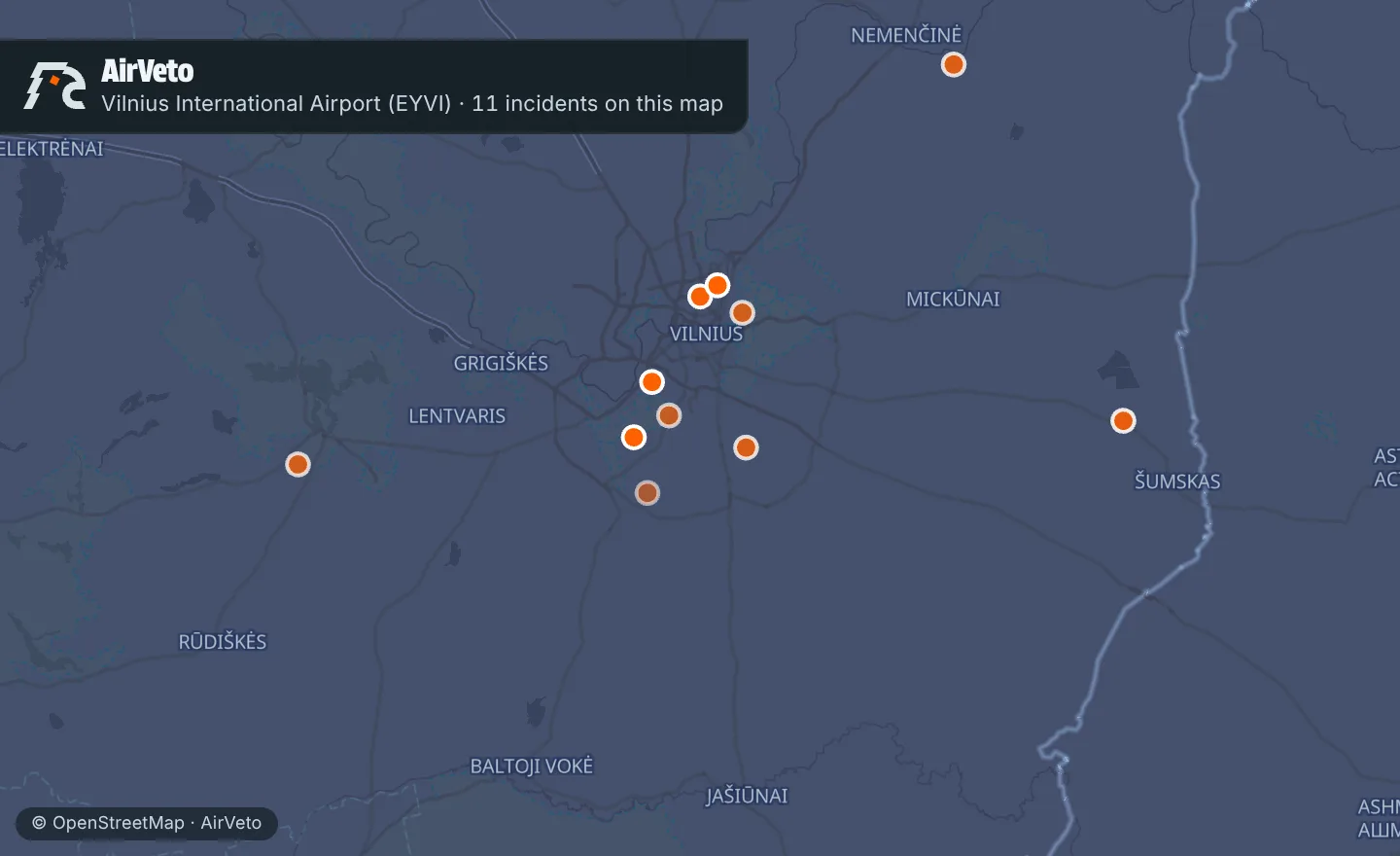
Incidents at this location
- 🇱🇹 · Oct 3, 2026 · Vilnius County and Ukmergė
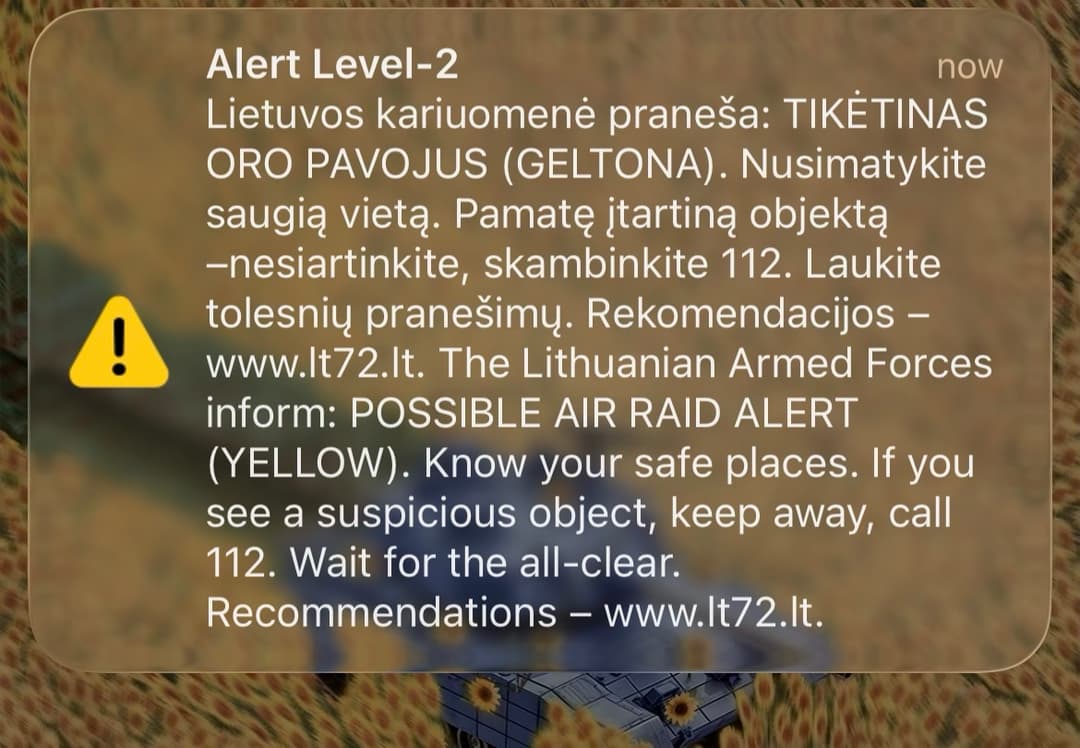
Vilnius yellow air alert, 3 Oct 2026
Lithuania lifted a yellow air alert for Vilnius County and Ukmergė on October 3, 2026, at 10:30 to 10:37 local time by source. The Air Force found no suspicious objects where it vanished. - 🇱🇹 · Sep 21, 2026 · Vilnius International Airport
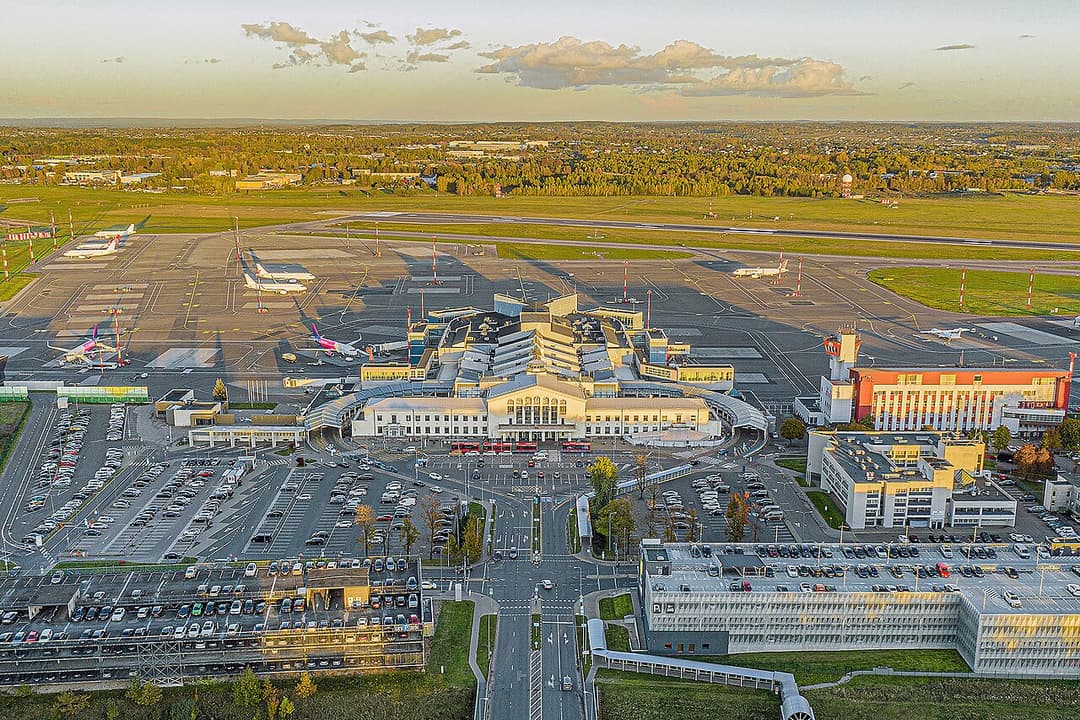
Vilnius airport balloon closure, Sept 22 - 20 flights hit
Belarusian balloon markers closed Vilnius Airport's approach zone from 23:25 on September 21 to 02:40 on September 22, 2026, disrupting about 20 flights, LRT reported. - 🇱🇹 · Sep 14, 2026 · Pratkūnai
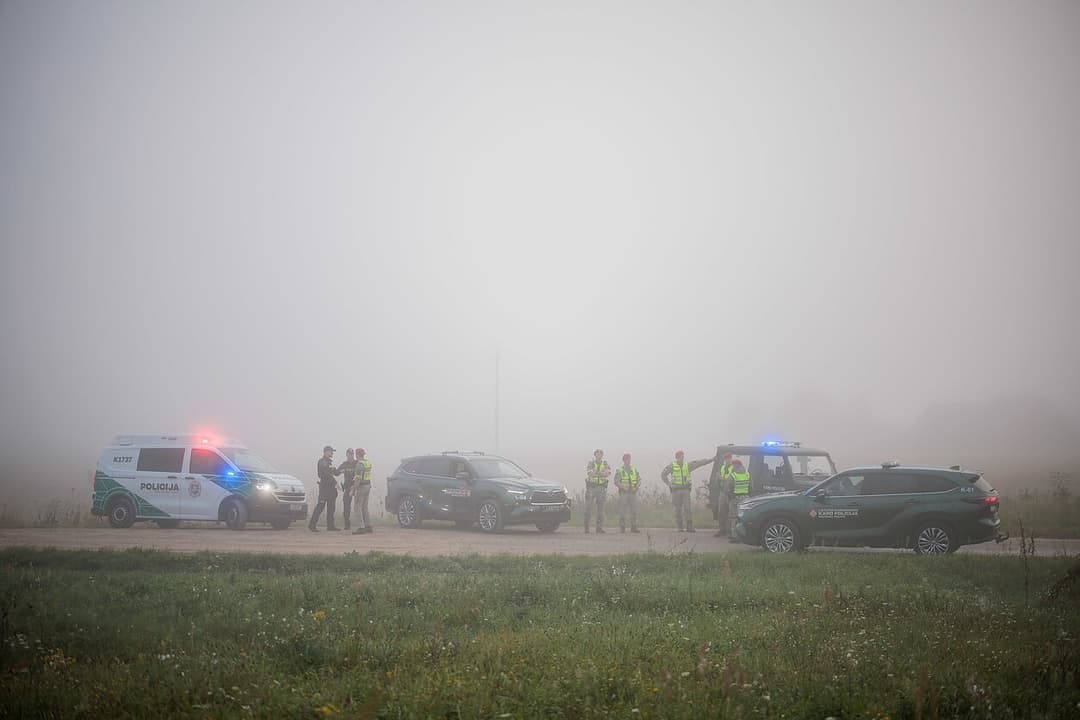
Vilnius air alert: NATO jets down drone, Sep 15 2026
Lithuania issued a yellow-level air alert after a drone crossed from Belarus on September 15, 2026; NATO fighters destroyed it near Pratkūnai, Kaišiadorys District, and the all-clear came at 00:33. - 🇱🇹 · Jun 7, 2026 · Vilnius International Airport

Balloon closes Vilnius airport, four flights diverted
Belarusian balloon markers closed Vilnius Airport from 01:18 to 04:00 EEST on June 8, 2026, disrupting five flights and 453 passengers; four aircraft were diverted, including two to Kaunas. - 🇱🇹 · May 20, 2026 · Vilnius and northeastern Lithuania
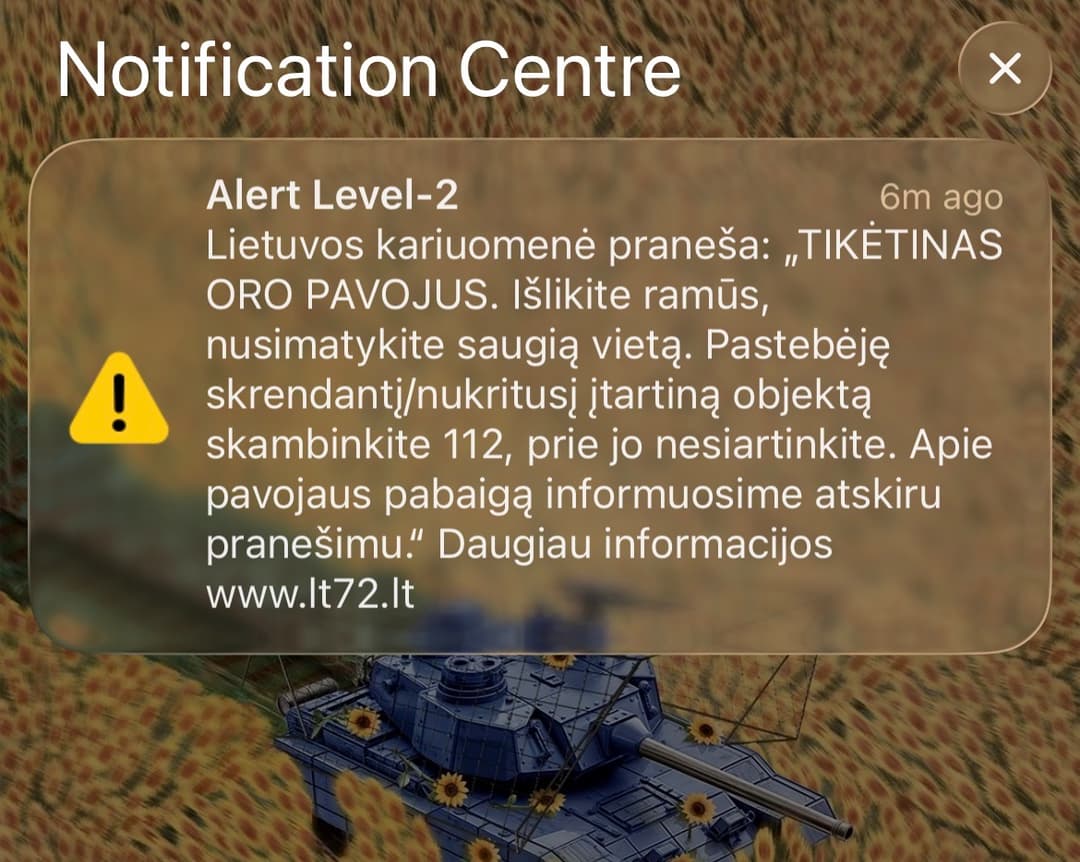
Drone alert shuts Vilnius airport, president moved to shelter
An unidentified radar mark from Belarus triggered Lithuania's air-danger alert on May 20, 2026, closing Vilnius Airport and moving officials to shelter; lifted at 10:58 with no impact confirmed. - 🇱🇹 · Apr 9, 2026 · Vilnius International Airport
Balloons close Vilnius airport for almost seven hours
Vilnius Airport (EYVI) was closed for almost seven hours on April 9–10, 2026 after suspected smuggling balloons entered approach airspace from the Belarusian direction. - 🇱🇹 · Jan 28, 2026 · Vilnius International Airport
Eight smuggling balloons intercepted near Vilnius airport
Eight balloons entered Lithuanian airspace near Vilnius Airport at 03:00 UTC on January 28, 2026; four suspects were arrested. AirVeto's 7 km wind log shows ~71 km/h flow pushing NNW from Belarus.
Related reading

Methodology: see /about/methodology. AirVeto is situational awareness and decision support, used alongside official systems. It does not replace them.