

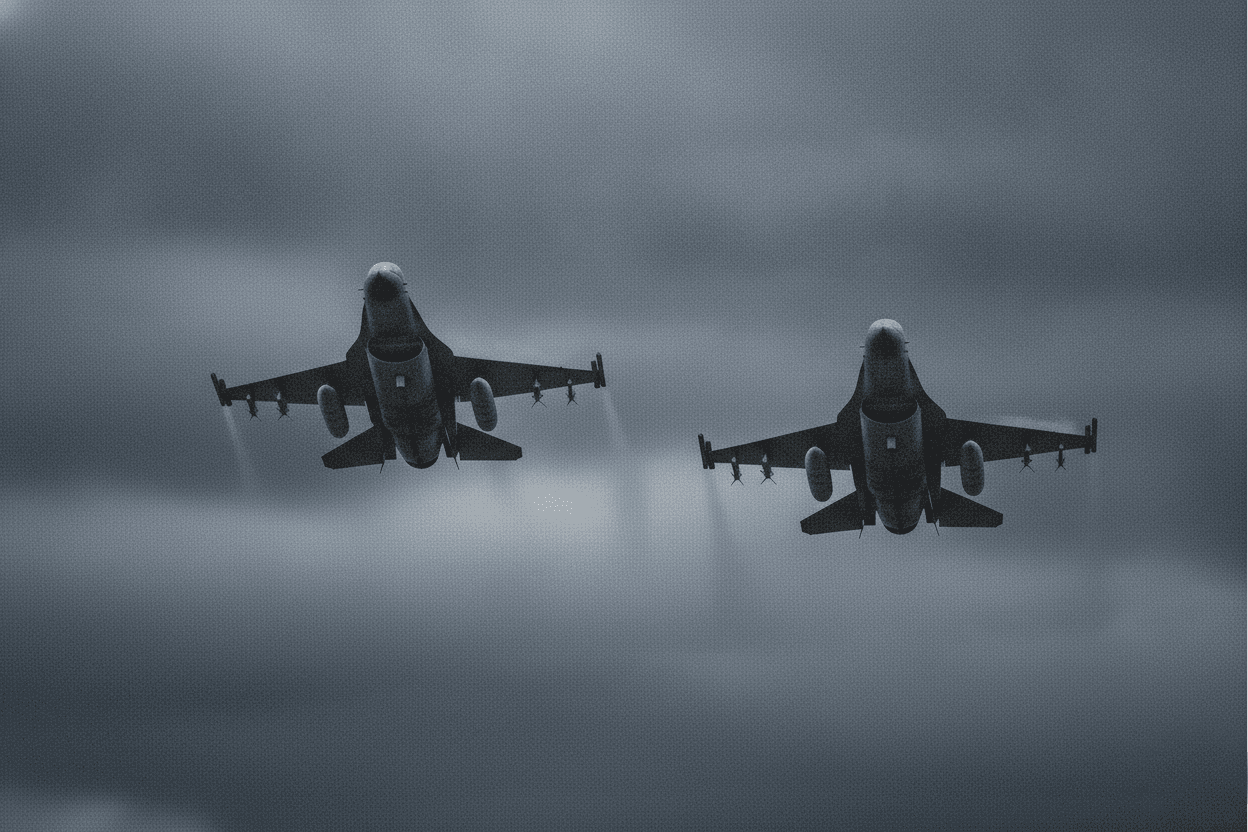
Starting Monday 16 June, the Suwałki Corridor becomes a live exercise zone. International drills codenamed Gallant Boar 2026 ("Narsus Šernas" in Lithuanian) run through June 26 in the strategically critical zone near the Lithuanian–Polish border. Lithuanian, Polish, and French ground forces are participating — specifically, soldiers from Lithuania's Grand Duke Butigeidis Dragoon Battalion of the Žemaitija Infantry Brigade training alongside their Polish and French counterparts.
The primary objective is joint operations and synchronisation between allied forces. That phrase covers a lot: command interoperability, cross-national logistics, and the kind of real-terrain familiarisation you can only get by moving equipment through the corridor under exercise conditions.
The convoy route
Before the exercise opens, heavy military equipment moves by road: Klaipėda → Kryžkalnis → Kazlų Rūda → Marijampolė → Suvalkai, beginning Saturday morning. That route crosses the full width of Lithuania from the Baltic coast to the Polish border — roughly 300 km, passing through the narrowest inland section of the country before reaching the corridor itself. Civilian road users in those districts should expect delays.
The route matters geographically. Klaipėda is Lithuania's only port and sits on the Baltic Sea, where land-sea temperature contrast in June creates boundary-layer wind shear — low-altitude flow can differ markedly from what's happening 50 km inland. By the time equipment reaches Marijampolė, it's in the open agricultural terrain typical of the corridor's wind field, which is dominated by synoptic-scale flow with minimal terrain effect.
Why the corridor exercises are different from most NATO drills
Most NATO exercises run in large, defined training areas. Gallant Boar runs in the corridor itself — the 65 km of land between Belarus and Kaliningrad that is the only ground link between the Baltic states and the rest of the EU. Exercising here is a deliberate signal: allied forces are familiar with the terrain, the logistics, and the cross-border coordination that defending it would require.
France's participation is notable. French forces have been present in Lithuania since the Enhanced Forward Presence battalion deployed to Rukla, and French participation in a corridor-specific exercise marks another step in that commitment. Poland's involvement is the obvious one — the southern half of the corridor is Polish territory; any defence of it is inherently a joint Lithuanian-Polish operation.
What the wind looks like over the corridor this week
The Suwałki Corridor sits at a meteorological junction. At 54–55°N in mid-June, the jet stream is typically well north of the region and synoptic forcing is weaker than in winter — but the corridor's flanking geography still shapes local flow. Belarus to the east, Kaliningrad to the west, and the Baltic coast less than 150 km north-northwest.
This week's pattern: post-frontal westerly flow following Saturday's system, backing to more southwesterly later in the week as a high builds over Scandinavia. At exercise altitudes (ground to 500 m), winds will be lighter than recent weeks — the June 11 orange-warning squall that pushed 25 m/s through the same corridor zone has passed. Conditions this week favour clear-air exercise windows, though the backing southwesterly may bring low cloud and reduced visibility to the Marijampolė end by mid-week.
For drone operations within the exercise (UAVs are standard kit in all three participating armies), the relevant layer is 80–500 m. At that band, the post-frontal westerly means anything airborne drifts east — toward Belarus — which has operational implications for recovery planning and for any unintended excursions past the exercise boundary.
For context on how the corridor's wind field behaves across seasons, see Reading the Suwałki Gap.
The bigger picture
Gallant Boar is one of the Baltic region's major scheduled exercises in 2026. It follows a spring of genuine airspace incidents — drones and, most recently, a meteorological balloon from Belarus that triggered a yellow-level air alert in Vilnius district on June 13. The exercises don't respond directly to those incidents, but they happen against the same backdrop: a corridor that everyone in Baltic defence planning knows is the terrain where a real confrontation would be decided, and that allied forces are increasingly serious about knowing from the ground up.
The full Baltic airspace incident archive is at /incidents. The Suwałki Corridor wind layer is on the live map.