
CIA reportedly warns of a Russian ship-launched drone attack on Spain, France or Italy
US intelligence reportedly warned Spain, France and Italy of a possible ship-launched Gerbera drone attack; Italy disputes the report.
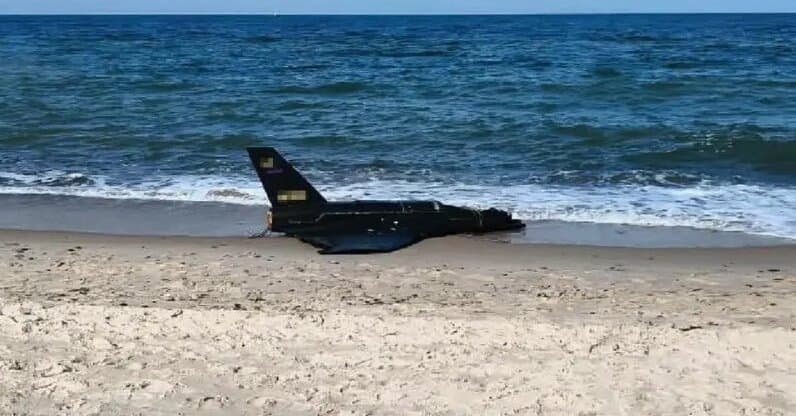
El Mundo reported on September 23 that a US intelligence assessment warns Russia could launch Gerbera-type drones from merchant ships against Spain, France or Italy. The assessment has been shared with European governments. AirVeto has reconstructed six Gerbera-type drone incidents along the EU's eastern border since September 2025. The most recent was a camera-equipped variant that crashed in Moldova on September 24 - the same drone model the reported warning names for a hypothetical Mediterranean attack.
The reported plan: drones hidden in shipping containers, launched from international waters
Journalist Xavier Colás, a former Russia correspondent, sourced the report to a person close to Lithuania's Ministry of Defence, Euronews reported. He traced its origin to CIA director John Ratcliffe's visit to Moscow on August 25.
The scenario described: Gerbera drones concealed in a shipping container aboard an ordinary commercial vessel. Launch point: 200 to 300 kilometres offshore. At the Gerbera's roughly 160 km/h cruising speed, the flight to a Spanish, French or Italian coastline would take between about 75 minutes and two hours.
The Gerbera is a small Russian drone. It is about two metres long, with a 2.5-metre wingspan, and weighs up to 18 kilograms. Its declared range is up to 600 kilometres, depending on payload.
Its typical explosive charge is four to five kilograms - not enough for mass destruction. El Mundo's sources describe the likely target as an airport or port, closed temporarily by fire or damaged equipment, rather than a structure destroyed outright.
EU Defence Commissioner Andrius Kubilius separately warned that Russia "can easily launch drones over Spanish airports and damage the tourism industry," per El Mundo. NATO Secretary General Mark Rutte was asked by Euronews about the broader threat. He said the alliance's assessment is that "the Russian threat exists and is a long-term one." He urged European governments to "remain calm, carry on."
Italy's government has denied receiving any such warning
Italian defence minister Guido Crosetto rejected the report within a day of publication. Writing on X, he called it "completely unsubstantiated," per Euronews's translation of the post. The story, he said, "has found no confirmation whatsoever," per The Olive Press. Deputy Prime Minister Matteo Salvini went further, calling the story irresponsible.
Sources contacted by the Italian news agency ANSA said no alert had reached Italy at any operational level - intelligence, diplomatic, or military. Neither the Spanish nor the French government has publicly confirmed receiving a warning. The CIA itself has not confirmed the report exists.
El Mundo's account rests substantially on one anonymous Lithuanian defence-ministry source. It is corroborated by unnamed Baltic diplomatic contacts and a handful of defence analysts the paper says are aware of the underlying report. That is a thinner sourcing base than a confirmed operational plan. Italy's on-record denial is the strongest pushback the story has drawn so far.
Why the Mediterranean, and why now
The analysts El Mundo consulted point to political vulnerability, not geography. Spain, France and Italy all hold elections in 2027. British Russia-strategy analyst Keir Giles told the paper Moscow will target "wherever Europe's weakest point is." He named Spain specifically, as a country that has not invested in integrated air defences suited to the drone threat.
Rutte has made a similar point before. He has argued a Russian missile would take only about ten minutes longer to reach Madrid than Warsaw. Distance from the eastern border, in his framing, is not itself a form of protection.
Ship-launched drones would not be a first for Russia. In February, a Swedish naval unit detected a drone taking off from the Russian intelligence-gathering vessel Zhigulevsk in the Öresund Strait. Sweden jammed it and logged the flight as an airspace violation.
AirVeto has separately tracked the militarization of Russia's civilian Baltic fleet. The *Marshal Vasilevskiy*, a Gazprom LNG carrier, was photographed in May 2026 with permanent heavy-machine-gun mounts. Roughly two dozen military or FSB personnel were aboard.
Italy's own ammunition industry had a fire this year - ruled accidental
The reported warning lands about six weeks after a real fire at Italy's own defence-industrial base. An explosion tore through the KNDS Ammo Italy munitions plant at Colleferro, near Rome, on August 13. That was one of four sites tied to Ukraine's supply chain that caught fire or came under threat within eleven days that month.
Italian investigators ruled out sabotage at Colleferro within hours. They pointed instead to an accidental detonation during powder-pressing. The two events are not evidence of the same threat - nothing ties the reported Mediterranean drone plan to the Colleferro fire specifically. It is a reminder, not a precedent: Italy's defence-industrial sites already sit inside the supply chain the warning names as a possible motive for targeting the country.
What AirVeto is watching
No Gerbera drone has been reported over Spanish, French or Italian territory. If the reported warning becomes an actual incident, AirVeto's wind-reconstruction method applies the same way it does along the eastern border.
Pin the recovery or crash site. Pull the wind field for the event window. Trace the plausible track back toward its likely launch point.
AirVeto's archive already holds six Gerbera incidents for comparison, most recently at Rusinowo, Poland and Cernița, Moldova.
Sources
- El Mundo - La CIA alerta de un ataque ruso con drones contra España, Francia o Italia (23 Sep 2026)
- Euronews - What we know about CIA warning of Russian drone threat to southern Europe (24 Sep 2026)
- The Olive Press - Italy's defence minister rubbishes 'unconfirmed' report of Russian drone plot against Spain, France and Italy (25 Sep 2026)
Last updated: