
Stray Polish AIM-120 strikes house in Wyryki-Wola
During Russia's Sep 9-10, 2025 drone incursion into Poland, a Polish F-16's AIM-120 AMRAAM malfunctioned and struck a house in Wyryki-Wola, Włodawa County. It did not detonate.
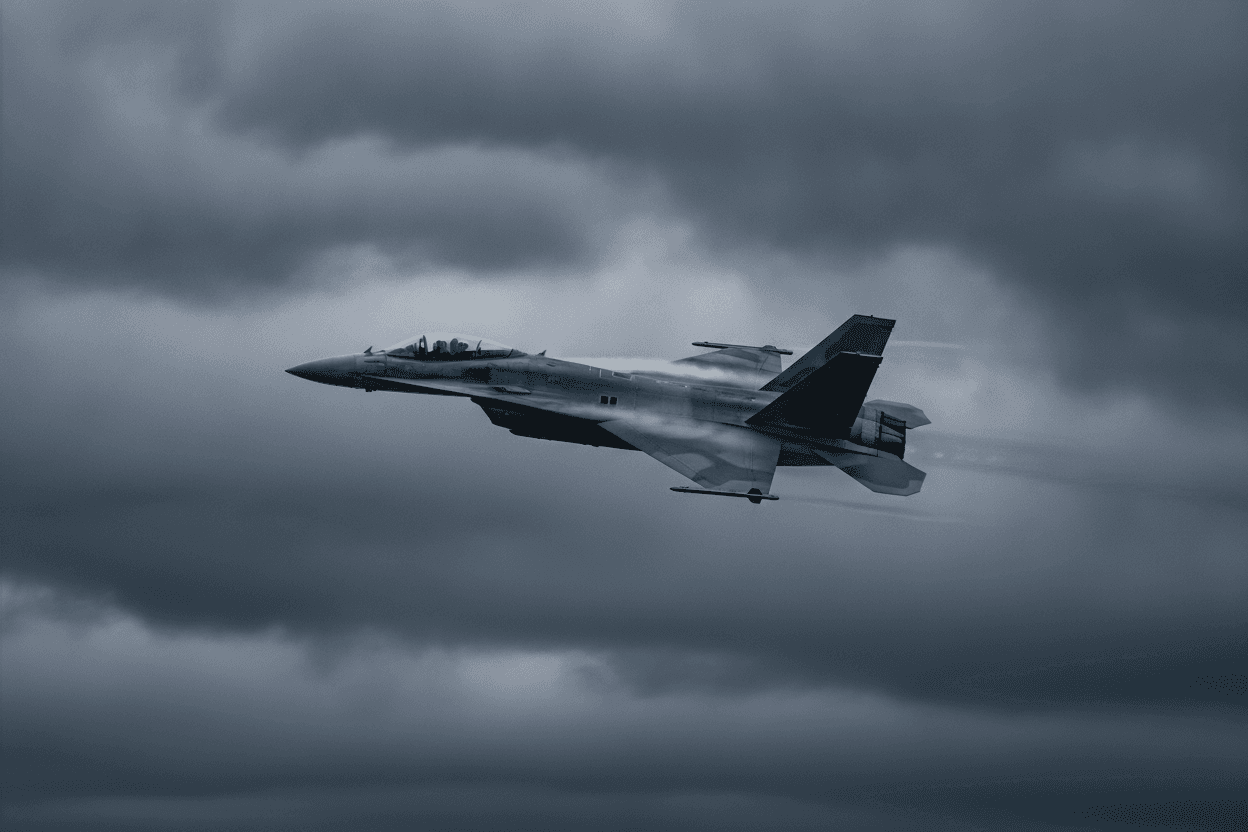
At approximately 23:30 CEST on September 9, 2025, a wave of 19–23 Russian military drones crossed into Poland from Belarus and Ukraine - the largest single airspace incursion into a NATO state since Russia's war on Ukraine began. Polish F-16s, Dutch F-35s, and allied assets scrambled under Quick Reaction Alert. During the intercept, a Polish F-16 fired an AIM-120 AMRAAM at one of the drones. The missile malfunctioned in flight. The 150 kg, three-meter-long projectile fell onto a residential building in Wyryki-Wola, a village in Włodawa County on Poland's eastern border. The missile did not detonate. The roof was destroyed; a car parked nearby was damaged. No one was injured.
It was the first time in the war that a NATO air-defence weapon caused structural damage inside a NATO member state.
The September 9–10 incursion
The night began with Ukrainian strikes on Russian oil and military infrastructure. Russian forces responded by launching a mass wave of decoy and strike drones westward; a significant portion crossed the Polish border. Polish presidential adviser Marcin Przydacz later confirmed that 21 drones entered Polish airspace.
Most of the drones were Gerbera decoys - low-cost foam-and-plywood platforms designed to flood air defences before or alongside genuine strike packages. They carried no warheads and were not aimed at specific Polish targets. By the morning of 10 September, 16 had been recovered across eastern and central Poland. Multiple drones penetrated more than 150 miles into the country; at least one fell on a Polish Territorial Defence Force base near Warsaw.
At least three drones were confirmed shot down that night. The majority of the shoot-downs were by Dutch Air Force F-35s flying Baltic Air Policing rotations. The Polish Air Force also engaged.
The missile failure at Wyryki-Wola
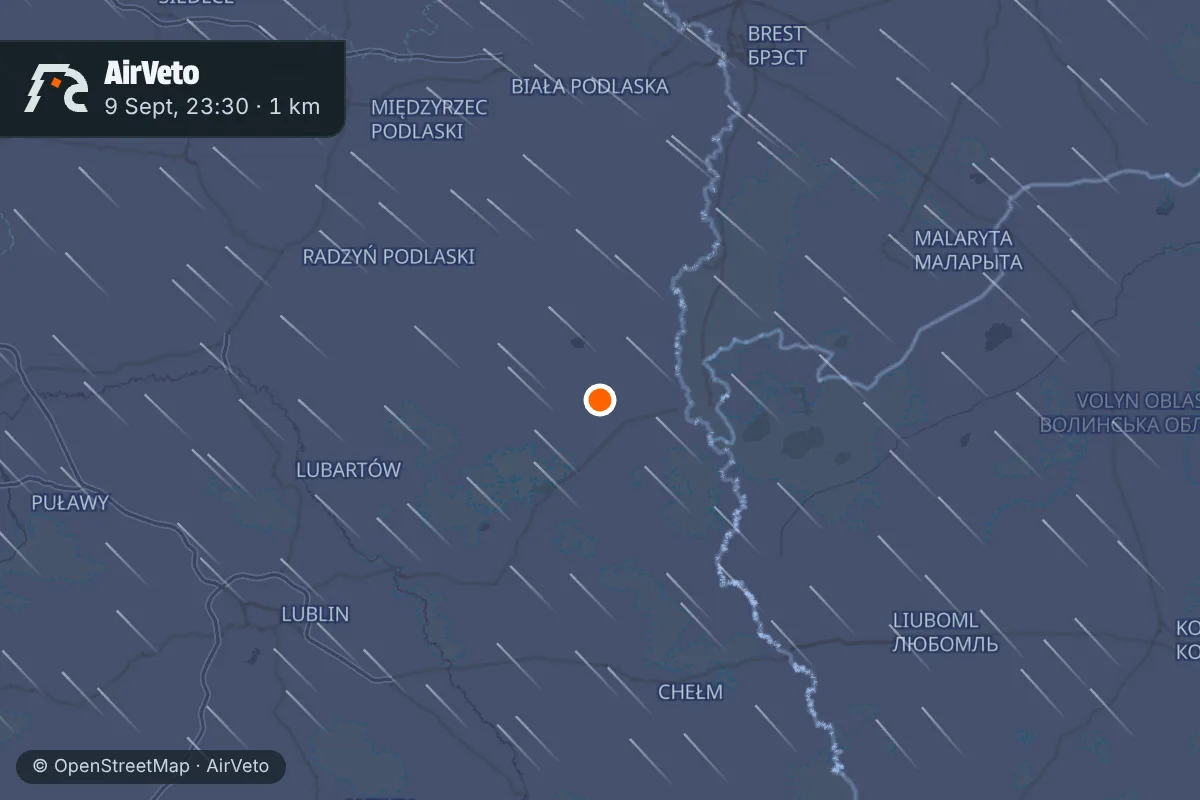
The AIM-120 AMRAAM launched by the Polish F-16 malfunctioned mid-flight. The guidance failure sent the missile on a ballistic trajectory toward Wyryki-Wola, a village approximately 13 km west of Włodawa and 66 km north-east of Lublin. The missile struck the roof of a private house and came to rest there. It did not detonate. Polish bomb-disposal units later secured and removed the projectile.
No one was in the affected part of the building. No injuries were reported.
The political fallout
Polish media reported the roof damage on 9–10 September and initial official statements attributed it to a drone impact. The disclosure that a Polish missile had caused the damage emerged later and triggered a domestic political crisis. Prime Minister Donald Tusk was accused of attempting to withhold the information; separately, President Karol Nawrocki and the National Security Bureau said they had not been informed of the Polish origin of the weapon.
Tusk subsequently confirmed the missile's origin and made the attribution explicit: "All responsibility for the damage to the house in Wyrykach falls on the authors of the drone provocation, that is, Russia."
The incident became a reference point in the broader European debate about the legal and operational accountability for interception weapons that go astray during engagements over populated NATO territory.
NATO and international response
Poland invoked Article 4 of the Washington Treaty, prompting emergency consultations among Alliance members. On September 12, 2025, Poland gave an emergency briefing to the UN Security Council. The UN Secretary-General warned of escalation risk; the Security Council issued a statement expressing serious concern.
Poland launched Operation Eastern Sentry, a sustained enhanced-vigilance posture along its eastern border, in direct response to the incursion.
This reconstruction draws on reporting by The War Zone, AeroTime, and Kyiv Post, and on AirVeto's wind-model data for the event window on September 9-10, 2025. At 21:00 UTC on 9 September - during the intercept window - the 1,000 m layer over eastern Lublin Voivodeship showed SE wind at 41.7 km/h. Strong flow pushing northwest at altitude was the atmospheric background for the mass incursion. How the model is built and where it is reliable is on the methodology page.
Part of the September 2025 cluster
The Wyryki-Wola event was the most-covered single moment of the September 2025 incursion, but the cluster extends wider. Earlier that week a Gerbera decoy drone had been found in a field near Majdan Sielec, Tomaszów Lubelski County, Lublin Voivodeship - a pre-inspection date of 2 September visible on the airframe confirmed a Russian origin. Further Gerbera wrecks were recovered across Lublin Voivodeship in the days following the 9–10 September night.
The September incursion established Poland as the most significant named-event airspace crisis on EU/NATO's eastern border - a status the country had not previously held in this conflict.
The full record of drone and airspace incidents over Polish territory is collected at Dron nad Polską.
Related location
- Polish-Belarusian border - Poland's roughly 418 km frontier with Belarus - focal point of migration, airspace, and cross-border incidents.
Sources
- The War Zone - Poland investigating whether its F-16's AIM-120 missile destroyed a home (2025)
- AeroTime - Poland confirms Polish missile caused house damage during Russian drone raid (Sep 2025)
- Kyiv Post - 'Missile fired by our aircraft': Poland confirms interceptor hit house (Sep 2025)
- Meduza - Malfunctioning missile fired from F-16 fell on Polish house during Russian drone incursion (Sep 2025)
- Ukrainska Pravda - Poland confirms Polish missile caused house damage (Sep 2025)
- Militarnyi - Rzeczpospolita: F-16 fired missile at house in Poland (Sep 2025)
- Wikipedia - 2025 Russian drone incursion into Poland
- Methodology
Last updated: