

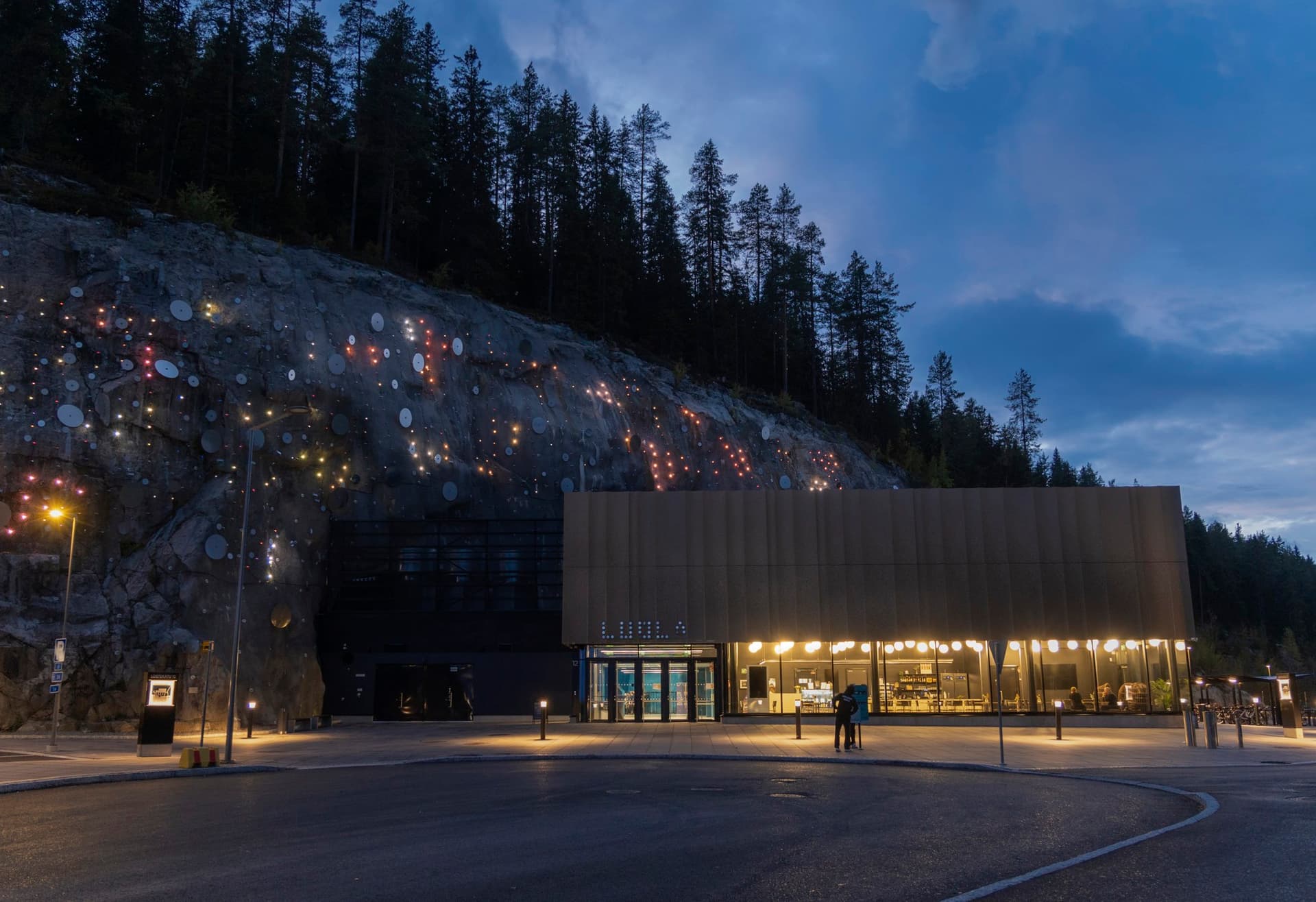
Finland has civil defense shelters with space for about 4.8 million people, according to the Finnish Government - roughly 85 percent of Finland's 5.6 million population, a figure this piece calculates from the two counts rather than one the government states itself. The 4.8 million figure is not unusual for a single facility; it's the national total, spread across more than 50,000 shelters, per the Ministry of the Interior. Most of that capacity sits behind a second identity: a swimming hall, a gym, a car park, a playground, doing ordinary civic work every day it isn't needed for anything else.
Helsinki alone has 5,500 shelters for a city of 700,000
Helsinki has around 5,500 civil defense shelters with space for close to one million people, in a city of roughly 700,000 residents, per thisisFINLAND, the state-run cultural and society magazine published under Finland's Ministry for Foreign Affairs. The capital sits on granite bedrock that allows rooms to be carved wide rather than cramped, and the city has accumulated close to ten million cubic meters of underground space across nearly 500 individual facilities - playgrounds, running tracks, metro stations, band rehearsal rooms, a museum, even a church, alongside the swimming pools and sports halls. Helsinki is thought to be the only city in the world with a formal underground master plan, per the same report.
The precondition is a 72-hour changeover, not a purpose-built bunker
None of this works as ordinary civic infrastructure unless it can also work as a shelter on short notice. Finland's rule, per the Ministry of the Interior, is that a dual-use space must be clearable and ready to shelter people within 72 hours. Pasi Raatikainen, a senior civil defense planner at the Helsinki City Rescue Department, told thisisFINLAND the logic runs the other way from what a visitor might assume: keeping the spaces in daily use is what keeps them functional. "It would be foolish not to use this capacity," he said. Helsinki's metro stations, including Koivusaari (opened 2017), double as shelters built to the same standard.
The system predates the current threat environment by seven decades
Shelter construction in Finland has continued without interruption since 1955, per thisisFINLAND - built first into the country's post-war reconstruction as part of what Raatikainen calls preparedness written into the social contract, then shaped by Cold War nuclear planning, then by the 1986 Chernobyl accident's fallout concerns.
The system did not originate as a response to Russia's war in Ukraine or the string of suspected airspace violations Finland has logged through 2026, including the Russian Il-20 that crossed into Finnish airspace on 20 August.
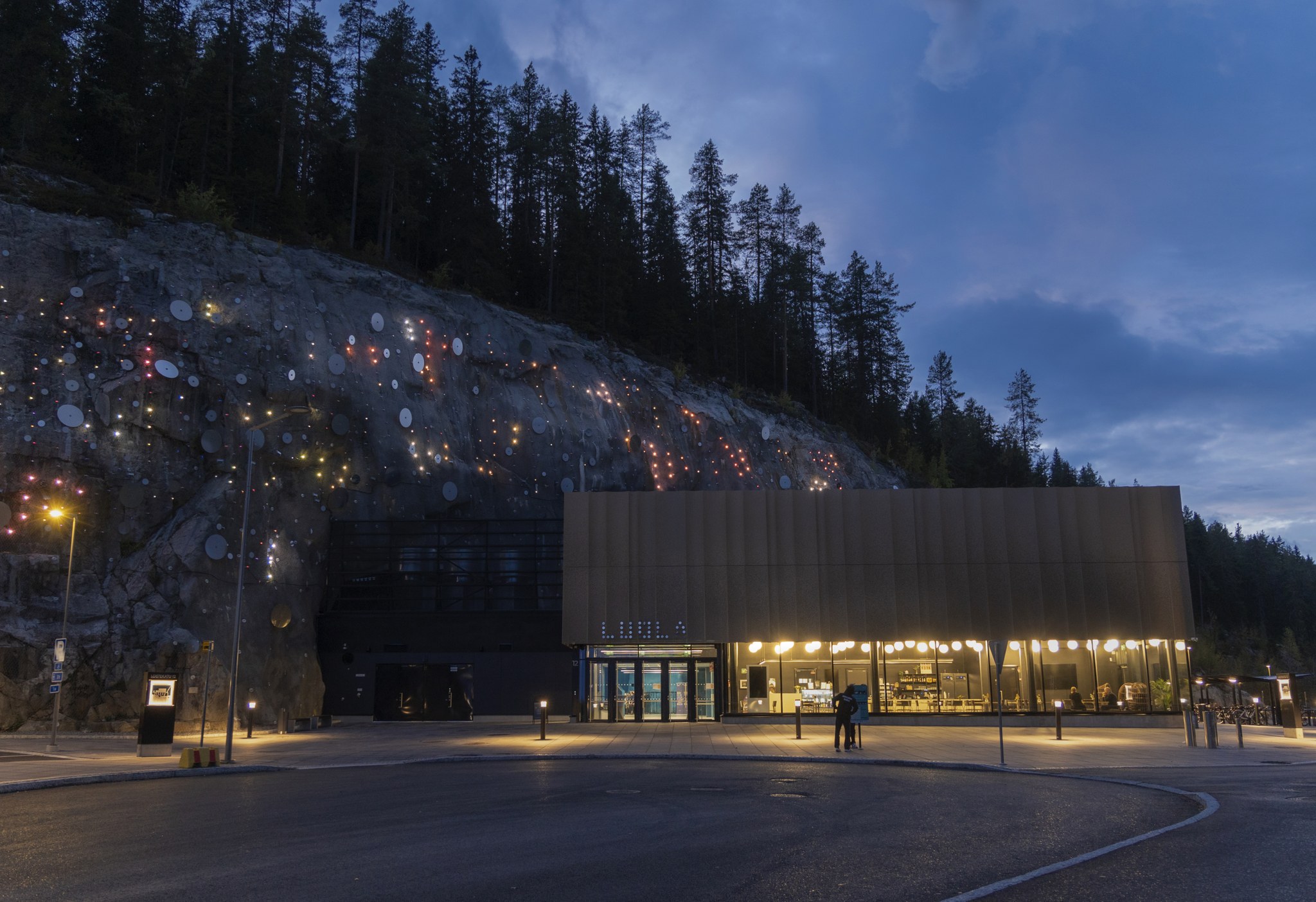
What changed this year is visibility, not the infrastructure itself. Shelter 2026, the largest civil defense exercise held in Europe since World War II, put more than 2,000 participants through a live drill inside Luola, a Kuopio sports complex converted to the same 72-hour standard as Helsinki's network - a demonstration of decades-old infrastructure, not a new build prompted by the current security climate.