
What Latvia's new border guard weapons law changes
Latvia's parliament passed new border guard powers 24 days after armed escorts threatened its soldiers. The law adds infrastructure defence and no-warning fire.
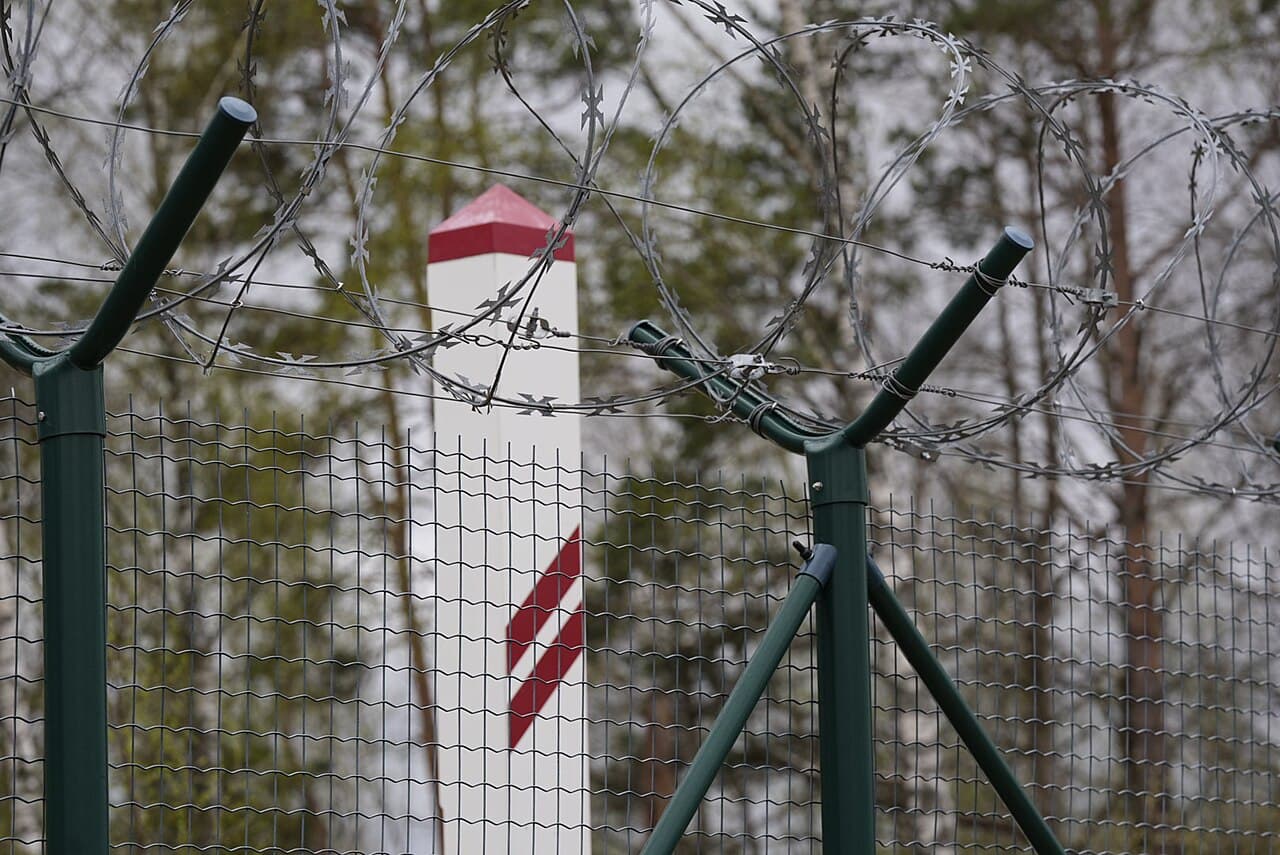
Latvia's parliament, the Saeima, adopted amendments to the State Border Guard Law on October 29, 2026, letting guards use weapons to defend border infrastructure. It passed 24 days after armed escorts threatened Latvian soldiers at the Belarus border, and it names only border guards, where the October 20 draft also named soldiers and police. Parliament's release and the LSM and TVNET reports AirVeto read do not mention drones.
The law adds one explicit case to rights guards already had
Border guards could already use force, weapons, explosives and service dogs in cases the law lists, LSM reported. Those include defending a guard or another person, and stopping a public-order breach that obstructs guards' work.
The amendments add one case: using those means to defend a Border Guard facility or a state border infrastructure object. Vilnis Vītoliņš, the Interior Ministry's Legal Department director, told the committee the missing wording "could have made officials wonder whether they have such rights." On defending a guard, he said: "If a person attacks a border guard, these means can also be used. In that respect nothing changes." Both quotes are AirVeto translations from Latvian.
TVNET adds that the committee's text lets guards use explosives or explosive devices to stop or end damage to border infrastructure. Parliament's release on the final law does not mention explosives.
Two further changes are new. Guards may fire without warning when a warning is not possible in the situation. Any injury or death from a weapon must be reported to the prosecutor's office at once, and within 24 hours at the latest.
Interior Minister Jānis Dombrava, who proposed the amendments, has said he wants to end guards' hesitation to act for fear of criminal liability for lawful use of force, LSM reported on October 20.
It passed 24 days after the incident and one day after the committee backed it
The timeline below merges parliament's releases with LSM and TVNET reporting. All dates are 2026.
| Date | What happened |
|---|---|
| Oct 5 to 6 (night) | Masked, armed escorts try to bring 20 migrants across the Belarus border and threaten the soldiers who stop them. Hours later, masked people enter Latvia and damage border infrastructure, including surveillance equipment. |
| Oct 9 | The State Security Service (VDD) opens a criminal case on forming a criminal organisation, LSM reported. |
| Oct 12 | LSM reports that a little-known group, "Melnie rusi" (Black Rus), has claimed the incident. |
| Oct 20 | The responsible parliamentary committee hears the amendments, 15 days after the night began. Members split, and the text goes back for refinement. |
| Oct 28 | Institutions had objected to the ministry's wording the week before, TVNET reported. The committee backs a refined text and asks for urgent handling. |
| Oct 29 | Parliament adopts both laws in final reading as urgent. |
The October 20 draft also extended the rights to soldiers and police during the enhanced border regime, and planned to exempt officials from liability for harm caused, LSM reported. The text described on October 28 and 29 by parliament's release and TVNET names only border guards.
The most disputed change lets the Border Guard investigate its own officers
LSM called the Criminal Procedure Law change contested. It lets the State Border Guard's own authorised officials investigate crimes by a border guard committed while on duty under the enhanced border regime. TVNET adds that the change covers offences linked to using weapons, explosives, physical force, special means and service dogs.
The proposal's stated aim was faster investigations, so guards are not kept waiting while their conduct is examined, LSM reported. The Border Guard has its own Internal Investigation Bureau. The rule applies only while the enhanced regime lasts, which LSM says is set through December 31, 2026.
Latvia's drone powers sit in other laws
The weapons amendments concern Border Guard facilities and border infrastructure. Latvia's powers over drones were set elsewhere. LSM reported in June 2025 that parliament had decided in March to give police similar rights to stop remotely controlled devices. The same rights were then proposed for owners of nationally important sites.
In June 2026 parliament also made airborne devices an aggravating circumstance in smuggling offences, covered in AirVeto's June brief on the Criminal Law change. Neither change is part of the October 29 amendments.
AirVeto reconstructed the escorts incident that preceded the law in Latvia-Belarus border, Oct 5, 2026. The wider picture of Latvian and Lithuanian cooperation on the same border is in the July brief on cross-border mutual aid.
The amendments take effect after the President promulgates them. Entry into force was not confirmed at time of writing.
Sources
- Saeima - Saeima paplašina robežsargu pilnvaras valsts robežas aizsardzībai (29 Oct 2026)
- Saeima - Aizsardzības komisija konceptuāli atbalsta plašākas robežsargu pilnvaras valsts robežas aizsardzībai (28 Oct 2026)
- LSM - Saeimas komisija virza plašākas robežsargu ieroču izmantošanas tiesības un strīdīgu izmeklēšanas kārtību (28 Oct 2026)
- LSM - Robežsargi varēs izmantot ieroci arī infrastruktūras aizsardzībā (29 Oct 2026)
- LSM - Robežas sargiem grib paplašināt tiesības izmantot šaujamieročus; Saeimas komisijā izskan pretargumenti (20 Oct 2026)
- LSM - Par incidentu uz Latvijas robežas atbildību uzņemas grupējums «Melnie rusi»; analītiķi saskata specdienestu pēdas (12 Oct 2026)
- TVNET - Saeimas komisija atbalsta likuma grozījumus, kas robežsargiem dos plašākas tiesības lietot ieročus pret infrastruktūras sabotieriem (28 Oct 2026)
- LSM - Security guards might be allowed to shoot down drones in Latvia (12 Jun 2025)