
Russia's state media deleted a nuclear threat against Lithuania
RIA Novosti published, then deleted, a column threatening Lithuania with a nuclear strike after the Seimas voted to start lifting its nuclear weapons ban.
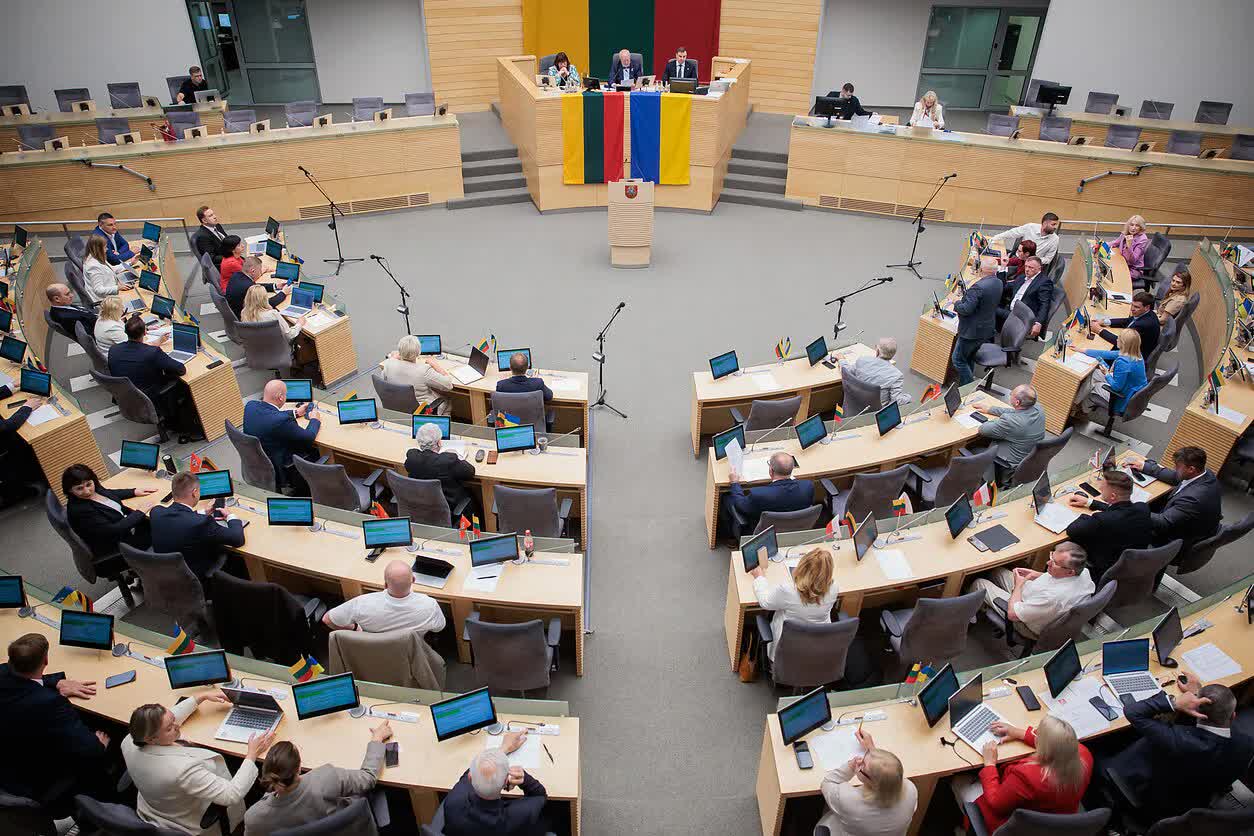
Russia's state news agency RIA Novosti published, then deleted within hours, a column threatening Lithuania with a nuclear strike, Kyiv Post and Meduza reported on September 25, 2026. The column ran three days after the Seimas voted 99 to 13 to start lifting Lithuania's constitutional ban on nuclear weapons. AirVeto's archive places that vote against 36 airspace incidents it has reconstructed in Lithuania since January 2026.
RIA Novosti pulled the column within hours of publishing it
RIA Novosti published a column headlined "Russia Is In for Another SVO. It Will Be Very Short," written by Alexander Nosovich, Meduza reported. Nosovich is a freelance contributor to the agency and the editor-in-chief of RuBaltic.ru, a pro-Russian outlet based in Kaliningrad. The Russian investigative outlet Dossier Center has linked him to an influence network run by staff of the Russian Presidential Administration and Russia's Foreign Intelligence Service, Meduza reported.
The agency deleted the column a few hours after it went up, saying it "does not correspond to the editorial board's views, editorial policy, or Russian state policy," Meduza reported. A copy of the page survived in a web archive, according to both Meduza and Kyiv Post.
In the deleted text, Nosovich called Lithuania "a suicidal country with no brains whatsoever" and "a small but proud kamikaze in Russia's near abroad," Meduza reported. He drew a parallel to Russia's war on Ukraine, which Moscow calls a "special military operation," and argued that military action against Lithuania would not need ground troops. "Only missiles with the appropriate payload," he wrote, in a passage Kyiv Post read as implying nuclear weapons.
The column followed the Seimas's first vote to lift the nuclear weapons ban
Nosovich wrote the column in response to the Lithuanian parliament's decision to support lifting the ban on stationing nuclear weapons in the country, Meduza reported. On September 22, the Seimas voted 99 in favor, 13 against and 5 abstaining on a proposal to repeal Article 137 of Lithuania's constitution, UNN reported. That article bars weapons of mass destruction and foreign military bases from Lithuanian territory.
That single vote does not change the constitution. Lithuania's rules require two more votes, spaced at least three months apart, each needing at least 94 of the Seimas's 141 members in favor, UNN reported. Seimas Speaker Juozas Olekas said the next vote is scheduled for October 6, with final adoption possible on January 12, 2027.
Lifting Article 137 would not itself station nuclear weapons in Lithuania. It would remove the constitutional barrier to doing so; any actual deployment would still need a separate political and NATO-level decision.
Medvedev had already threatened Lithuania over the same proposal
The RIA Novosti column was not the first Russian nuclear threat tied to this vote. Earlier in September, Dmitry Medvedev, Russia's former president and deputy chairman of its Security Council, made a public threat. If Vilnius lifted the nuclear weapons ban, he said, Lithuania would "disappear from the map of the world" in a conflict, Kyiv Post reported. Nosovich's column repeated that threat days after the first Seimas vote made it concrete.
Lithuania's own military dismissed the threat as routine
The Lithuanian Armed Forces answered the column directly, in a statement 15min.lt reproduced from the military's own Facebook account. Russia's attempts to intimidate neighboring states through hostile rhetoric are "this country's usual method of operation," the statement said, and "a practically natural reaction to any activity that strengthens us." No additional measures were needed in response, the military added, according to 15min.lt.
The statement closed with its own message back to Moscow. Every NATO member's armed forces stand ready to fight "tonight, tomorrow, or whenever necessary," regardless of what resources they already have, the Lithuanian military said. "This reminder is more for Russia."
The threats have run in both directions
Nuclear brinkmanship over Kaliningrad and the Baltic states has not come from Moscow alone. In July 2025, Lt. Gen. Christopher Donahue made a striking claim. NATO's land forces could seize Kaliningrad "in a timeframe that is unheard of, faster than we've ever been able to do," said Donahue, commander of US Army forces in Europe and Africa, Kyiv Post reported. He was unveiling NATO's Eastern Flank Deterrence Line at a conference in Wiesbaden, Germany, not responding to any specific Russian statement.
Poland's Foreign Minister Radosław Sikorski made a comparable claim on September 12, ten days before the Seimas vote. Speaking at the Yalta European Strategy meeting in Kyiv, he said NATO holds "overwhelming superiority" in air power and would "defeat Russia quite quickly" if Moscow attacked the alliance, Kyiv Post reported. Sikorski also spoke about Russia's oil industry specifically. If Ukraine had knocked out half of Russia's refining capacity in six months, he said, NATO's combined air power could take out the other half in six weeks. Russia's foreign ministry spokesperson Maria Zakharova called the remark "Russophobia of the brain," Kyiv Post reported.
Neither statement was a reply to the other. Donahue's predates the RIA Novosti column by over a year; Sikorski's predates it by two weeks. But they show rhetoric of rapid, decisive military action running in both directions across the border AirVeto tracks. Moscow threatens Lithuania, and named Western officials have made their own public claims about how fast Kaliningrad or Russia's oil industry could be dismantled.
AirVeto has reconstructed 36 airspace incidents in Lithuania since January
Neither Meduza, Kyiv Post nor UNN ties the RIA Novosti column to Lithuania's airspace record. AirVeto's own archive supplies that context: 36 drone, balloon and jet incidents reconstructed in Lithuania since January 1, 2026. That count includes an unconfirmed report of Russian jets crossing near Kaliningrad on September 17 and a cargo drone VSAT downed near the Belarus border days earlier, the 20th Lithuania drone crossing AirVeto has reconstructed this year. Most of that traffic drifts across the Kaliningrad boundary or the Belarus border to Lithuania's southeast, the two frontiers Article 137 was written to keep clear of foreign weapons.
That is the record the Seimas voted against on September 22, and the record Nosovich's column answered three days later with a threat, not an argument.
What happens next
The next test of the amendment is the second Seimas vote on October 6, followed by a third on January 12, 2027, if the calendar holds. Both need a two-thirds majority to pass. So far, Moscow's response has stayed rhetorical, met by an equally rhetorical Lithuanian shrug: Medvedev's warning, then the deleted RIA Novosti column, then the Lithuanian military's own reminder that it is not impressed. Whether Moscow's rhetoric escalates toward the kind of airspace incidents AirVeto already tracks in Lithuania is what the next two votes will test.
Sources
- Kyiv Post - Russian State Media Deletes Opinion Piece Calling for Attack on Lithuania (25 Sep 2026)
- Meduza - Russian state news agency published a column threatening Lithuania with Russia's 'next SVO.' Hours later, it was deleted. (25 Sep 2026)
- UNN - In Lithuania, parliament moved toward lifting the constitutional ban on nuclear weapons (22 Sep 2026)
- 15min.lt - Lietuvos kariuomenė atsakė į Rusijos bandymą bauginti (25 Sep 2026)
- Kyiv Post - NATO Can Seize Russia's Kaliningrad 'Faster Than Ever,' Says US General (18 Jul 2025)
- Kyiv Post - Polish FM: 'We Would Defeat Russia Quite Quickly' if Moscow Attacked NATO (12 Sep 2026)