

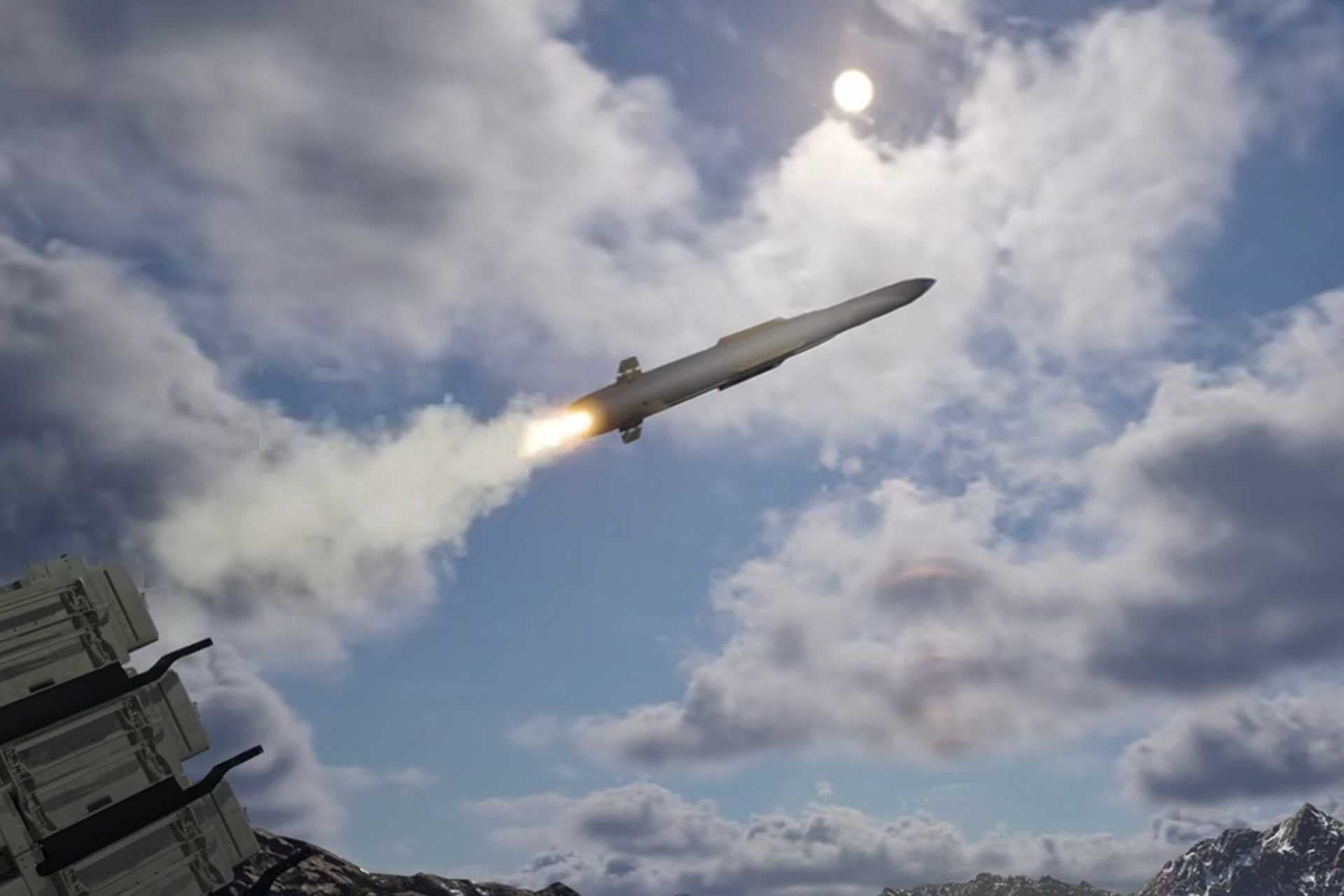
In July 2026, Lockheed Martin announced the PAC-3 Adapted Capability Effector (ACE), a Patriot interceptor priced at approximately $2 million, roughly half the cost of current variants. The announcement came at Britain's Farnborough International Airshow on 20 July, responding to a cost equation NATO can no longer sustain: Iranian and Russian drones cost around $35,000 each against a $4 million interceptor, a 114-to-1 ratio.
The same week, Ukraine exported its first combat-proven interceptor drones to NATO allies and Gulf states under a formal framework that had opened six months earlier. Ukrainian Sting interceptor drones, produced at a rate of 10,000 or more units per month, sell for approximately $2,500 each and are 60-90% effective against Shahed-type drones. The Pentagon had already purchased 2,000 F10 strike UAVs from Ukraine, approved on 3 July. Saudi Arabia, the United Arab Emirates, and Qatar signed 10-year defense deals with Ukraine for Sting interceptors, driven by the same Iranian drone threat pressuring NATO's own air-defense budget.
NATO is not choosing between expensive and cheap air defense. It is building three tiers at once: Patriot systems, Ukrainian interceptor drones, and European co-production of FPV platforms, because Eastern European airspace threats have made high-end air defense alone economically indefensible.
The cost math broke twice, and Ukraine's answer shipped first
Restocking Patriot interceptors at $4 million per unit is not sustainable when 50-200 drones arrive per night, the operational norm across Ukraine and the Middle East. Lockheed's PAC-3 ACE fix, at roughly $2 million, will not ship until 2028.
According to Ukraine NSC Sec. Rustem Umerov, Ukraine's Sting interceptor, at $2,500 per unit, is already in production and combat-proven: 3,900 Shahed and Geran drones destroyed by February 2026, more than 7,000 by May. NATO is buying both. Patriot ACE covers strategic sites; Sting covers volume saturation, where quantity and immediate availability matter more than precision.
Ukraine's export pipeline turned four years of combat data into NATO supply
Ukraine halted all defense exports on February 24, 2022, the day Russia invaded. Four years of sustained operational pressure transformed its defense industrial base. Annual production capacity exceeded $55 billion by 2026, with drone production reaching 8 million units a year, 4.5 million of them in 2025 alone. Domestic military demand covers only a third of that output. The rest is exportable.
Ukraine reversed its export ban on February 12, 2026 and issued the first wartime licenses to defense manufacturers. President Zelenskyy approved the "Drone Deals" export framework on 28 April. It prioritizes Ukraine's strongest backers and countries with no cooperation with Russia. Ukraine's Cabinet of Ministers formalized the mechanism on 1 July: domestic supply first, exports capped at surplus capacity, partners vetted against Russia cooperation.
Buyers moved immediately. The Pentagon's 2,000-unit F10 order came through on 3 July. Saudi Arabia, the UAE, and Qatar signed 10-year Sting agreements. Germany, the UK, Denmark, Sweden, and Norway set up production partnerships, and Zelenskyy has reported more than 11 additional Middle Eastern nations requesting Sting access.
NATO's response is three tiers, not a single replacement system
NATO's air-defense architecture assumed low-volume, high-confidence interception: one or two threats per engagement, at most. Eastern European incursions and Middle Eastern conflicts broke that assumption. The new operational baseline is 50-200 inbound threats a night across multiple zones. NATO's answer is a distributed tier structure instead of a single replacement:
Tier 1 (Strategic): Patriot systems, including PAC-3 ACE, for critical infrastructure and high-confidence engagements.
Tier 2 (Tactical/Distributed): Ukrainian Sting drones for volume saturation and forward defense.
Tier 3 (European Production): FPV drones co-produced in NATO member states under Ukrainian license, decentralizing supply-chain dependency and building domestic industrial capacity.
The structure is already validated in procurement, not theoretical: the Pentagon buying Ukrainian drones, Gulf states signing decade-long contracts, and European co-production lines all confirm it. For the first time, an Eastern European-designed system is preferred at NATO procurement level, not just tolerated.
Baltic states and Poland are the first buyers because they carry the incursion load
Eastern European airspace incursions have increased in frequency and sophistication since 2022, and that pattern is the operational driver behind NATO's restructuring. Ukraine's capacity fills a gap Patriot ACE cannot reach until 2028.
For Estonia, Latvia, Lithuania, and Poland, Sting interceptors are the first affordable path to air-defense coverage at scale. Patriot systems stay limited to strategic sites; FPV drones serve training. At $2,500 per unit and 10,000-plus monthly production, Sting gives the eastern flank's narrow approaches and multiple entry points distributed, redundant coverage that Tier 1 systems alone could not provide. Ten-year Gulf-state agreements, European co-production, and the Pentagon contract all point the same direction: Ukraine's production capacity is now infrastructure NATO's eastern flank depends on, not a wartime stopgap.
The pattern continues in real time
AirVeto's wind reconstruction layer tracks the same threat picture driving this procurement shift: individual drones, balloon drift, and missile approaches across the eastern border. Those incidents aggregate into the pattern behind NATO's capability restructuring.
See the current threat picture and historical drift patterns on the live map.