
How the Baltics Stopped Hesitating Before Shooting Down Drones
Latvia's government fell over a drone it didn't shoot down. Twelve days later Estonia shot one down for the first time. Lithuania needed two separate laws to remove the hesitation for good.
On May 7, 2026, two drones hit an oil depot in Rēzekne, eastern Latvia, and Latvia's military didn't fire at either one. Within a week, the defence minister had resigned; within two, so had the prime minister. Twelve days after that, a Romanian F-16 over Estonia shot down a drone - the first time any NATO aircraft had done that over Baltic airspace. Lithuania took longer: it passed one law in 2025 giving its military the legal right to fire, then needed a second law in 2026 before anyone reliably used it. Three countries, three different speeds, one shared problem - permission to shoot down a drone and willingness to do it turned out to be two different things.
Latvia didn't fire, and a government fell
Multiple drones crossed into Latvia from Russia in the early hours of May 7, 2026 and crashed in Latgale; two struck the East-West Transit oil depot in Rēzekne, LSM English reported, damaging four empty fuel tanks and starting a small fire that was quickly put out. No one was hurt - the tanks were empty. Latvia's National Armed Forces didn't attempt to shoot the drones down. Commander Kaspars Pudāns and then-Defence Minister Andris Sprūds said afterward that engagement safety criteria hadn't been met: nobody could guarantee the debris would miss civilians or critical infrastructure.
The political fallout moved faster than the military's, Defense News reported. By 8 May, three coalition parties were demanding Sprūds's resignation. Sprūds partly reversed his own position in public, saying drones "must be shot down" and that the responsibility for doing so rested with the armed forces commander and himself. It didn't save him: he resigned on 10 May. Prime Minister Evika Siliņa followed on 14 May, citing the loss of her parliamentary majority after her coalition partner withdrew support. Latvia's parliament passed its own compensation-law amendments in mid-June 2026, alongside Lithuania's, giving the state a mechanism to pay for damage tied to military incidents - the fix arriving after the hesitation had already cost two of the people who'd have had to authorize a shoot-down their jobs.
Estonia fired twelve days later - the first shot in the Baltic
On May 19, 2026, a Romanian Air Force F-16 flying NATO's Baltic Air Policing mission shot down a drone over Lake Võrtsjärv in southern Estonia, ERR reported - the alliance's first destruction of an intruding drone over Baltic airspace. Estonian Defence Minister Hanno Pevkur said his forces had waited until civilian safety could be confirmed before engaging - the same standard Latvia had cited twelve days earlier when it chose not to fire. The difference was that Estonia's radar, tipped off in advance by Latvian counterparts, tracked the drone clearly enough to clear that bar, and a NATO fighter was already airborne. The drone came down in a wooded area roughly 30 meters from the nearest house. Before that day, Baltic Air Policing jets had scrambled repeatedly through the spring's drone incidents without ever engaging one.
Lithuania needed two separate laws
Lithuania split the same problem into two pieces and fixed them nine months apart, under two different defence ministers. First, permission: after two Russian-model drones crossed from Belarus in July 2025, one carrying explosives, then-Defence Minister Dovilė Šakalienė told parliament that Lithuania's rules "were not adapted to current threats," Kyiv Post reported, and Lithuania's parliament passed a law, 117 votes to 24, letting the Commander-in-Chief - or an authorised person - order any drone in restricted or closed airspace shot down, effective October 1, 2025, per News Ukraine (RBC-Ukraine). "Now we can quickly react in any way, including the destruction of drones," Šakalienė said. That law was about speed and chain of command: who could give the order, and how fast. It said nothing about who would pay if the wreckage landed on someone's house.
Second, liability: on June 30, 2026, parliament passed further amendments, 96 votes to none, that pay for property damage when Lithuania's own military or NATO allies shoot down a drone and debris falls on the ground. Direct losses are compensated by decision of the government or an authorized institution, funded first from the Defence Ministry's own budget and, if that's insufficient, from additional state budget or state reserve funds. Payouts can be spread over up to ten years, and claims must be filed within three years. Insurers who already paid a policyholder for this kind of damage gain no right to recover the sum from the Lithuanian military or NATO allied forces, and Lithuania does not seek reimbursement from other NATO states for damage their forces cause on its territory, or vice versa. Defence Minister Robertas Kaunas said the point was to let soldiers act without hesitating over who foots the bill. LRT reported the amendments became necessary because of the recent run of drone incidents across the Baltic states.
Balloons are the case nobody's fixed yet
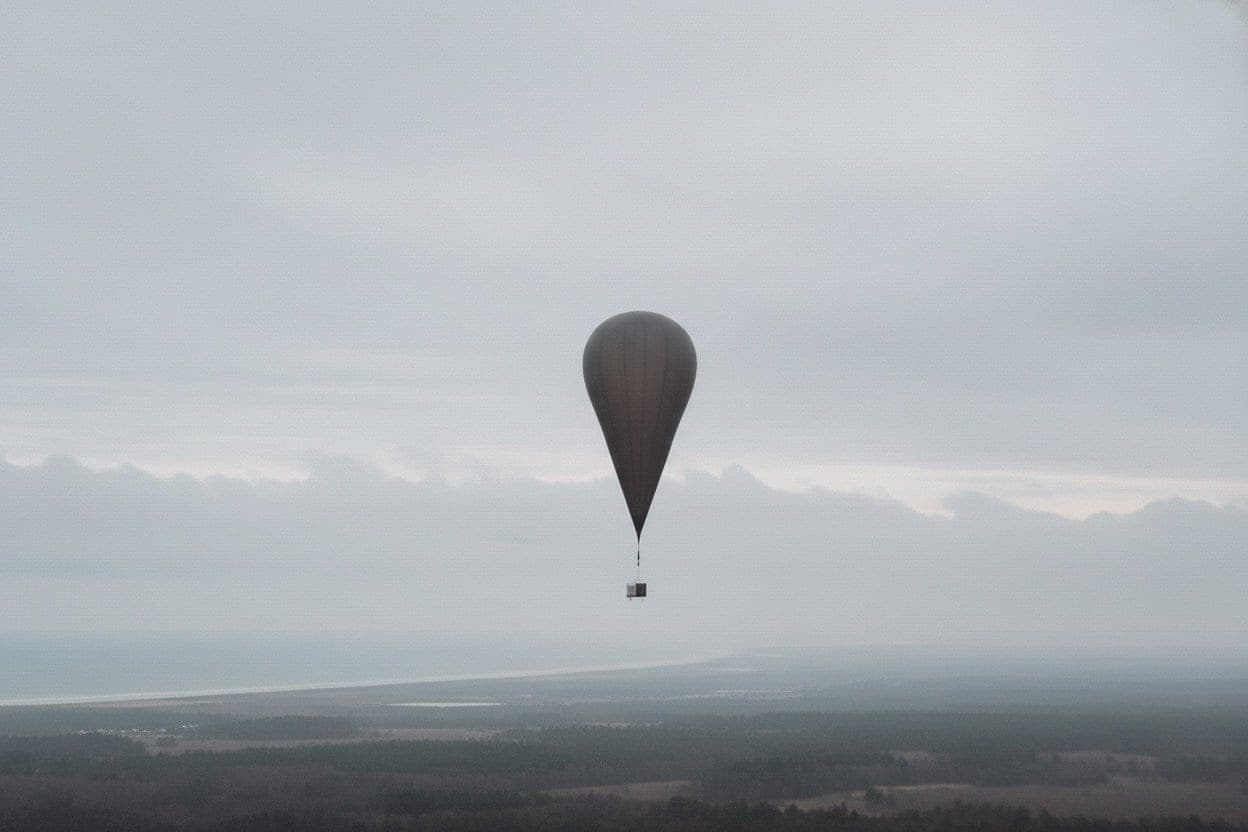
Belarusian smuggling balloons expose the same hesitation Lithuania's drone laws addressed, minus a fix. LRT reported that even before the crisis that made headlines, border guards had recorded roughly 250 balloon incidents and lacked the legal authority to bring one down themselves - only the military could act, and only in what officials called an "extreme measure" outside wartime. Starting in October 2025, balloons packed with contraband cigarettes repeatedly forced the closure of Vilnius International Airport, each time triggering a matching shutdown of Belarus border crossings, Al Jazeera reported. Prime Minister Inga Ruginienė announced on 27 October that Lithuania would begin shooting the balloons down, describing the disruptions as a hybrid campaign against the country. By 9 December, with the airport closed more than 60 hours since October and roughly 51,000 passengers affected, Ruginienė declared an emergency situation - but Reuters reported the government stayed reluctant to follow through and intercept the balloons, citing undeveloped safety methods. Part of that caution is physical: Modern Diplomacy reported the balloons cruise at 3-4 kilometers, in the altitude band used by landing aircraft, carrying a crate of 500 to 1,500 cigarette packs plus a GPS tracker - an unguided, multi-kilogram payload with nowhere controlled to land.
Lithuania's June 2026 compensation law doesn't reach balloons. Its expanded authorization to use force applies to unmanned aircraft and other "autonomously or remotely controlled" objects - a category that, on the government's own wording, doesn't include a wind-driven balloon with no propulsion or active control. Balloons still lack the blanket shoot-down authority drones now have in Lithuania, so the liability question for them hasn't been legislated at all.
Private insurance is patching a narrower, separate gap
None of these state fixes reach a hostile drone that hits property directly, without being intercepted by anyone's military - that still falls under the standard war exclusion in private insurance. ERGO's Aušra Jusė told LRT that war and military action are excluded worldwide, and that a military drone causing damage counts as an act of war regardless of whether it strayed off course or was aimed - not compensated, full stop. Lithuanian Insurers' Association director Andrius Romanovskis said that's ordinary practice: insurers exclude risks too rare and too potentially catastrophic to price. MadeinVilnius.lt reported that BTA, ERGO, Gjensidige, IF, and Lietuvos Draudimas all hold this position on hostile military drones.
Two private products have moved to cover that specific gap since. Lietuvos Draudimas launched a paid war-and-political-risk add-on for homeowners on June 1, 2026, 15min.lt reported - dozens of euros a month for a roughly 100-square-meter Vilnius house, per CEO Simonas Lisauskas. Roughly two months later, Swedbank folded a comparable set of risks into its existing home insurance automatically and at no extra cost, effective August 6, 2026, capped at €250,000 for apartments with contents and €500,000 for houses.
The pattern
Legal permission to fire and willingness to fire are two separate problems, and each Baltic state has solved them on its own timeline. Latvia's cost two people their jobs before the law caught up. Estonia's readiness closed the gap in practice before any law changed at all - the same civilian-safety standard that stopped Latvia from firing is what Estonia cited when it did. Lithuania split the problem into two statutes nine months apart. Balloons, in Lithuania at least, still haven't gotten past the first step. What's consistent across all four cases is that authorizing a shoot-down on paper doesn't make anyone pull the trigger - someone still has to be willing to answer for what happens after.
A full record of airspace incidents over NATO's eastern flank is at the incident archive.
Sources
- LSM English - Basic facts so far about latest drone incidents in Latvia (May 7, 2026)
- Defense News - Ukrainian drone strike on empty Baltic fuel depot prompts top-level resignation in Latvia (May 11, 2026)
- ERR - Intruding drone shot down by Romanian fighter jet in Estonia (May 19, 2026)
- LRT - Valstybė kompensuos nuostolius, sukeltus kariams numušant dronus (30 Jun 2026)
- Kyiv Post - Lithuania streamlines rules on shooting down drones (Sep 2025)
- News Ukraine (RBC-Ukraine) - Lithuania allows military to shoot down drones violating airspace (Sep 2025)
- Al Jazeera - Lithuania to shoot down smuggler balloons, shut Belarus border crossings (27 Oct 2025)
- Al Jazeera - Lithuania declares state of emergency over smuggler balloons from Belarus (9 Dec 2025)
- Modern Diplomacy - Why Are Smuggling Balloons Shutting Down Lithuanian Air Traffic (9 Dec 2025, with information from Reuters)
- Reuters, as reported by Modern Diplomacy (9 Dec 2025)
- LRT - Lithuania to use drones to combat weather balloons - minister (date not stated in the fetched article, precedes the Oct-Dec 2025 balloon crisis)
- 15min.lt - Gyventojams - platesnė turto apsauga: draus nuo karinių dronų, turto suniokojimo politiniais tikslais (May 2026)
- MadeinVilnius.lt - Lithuania now has the opportunity to insure against damage from military drones