

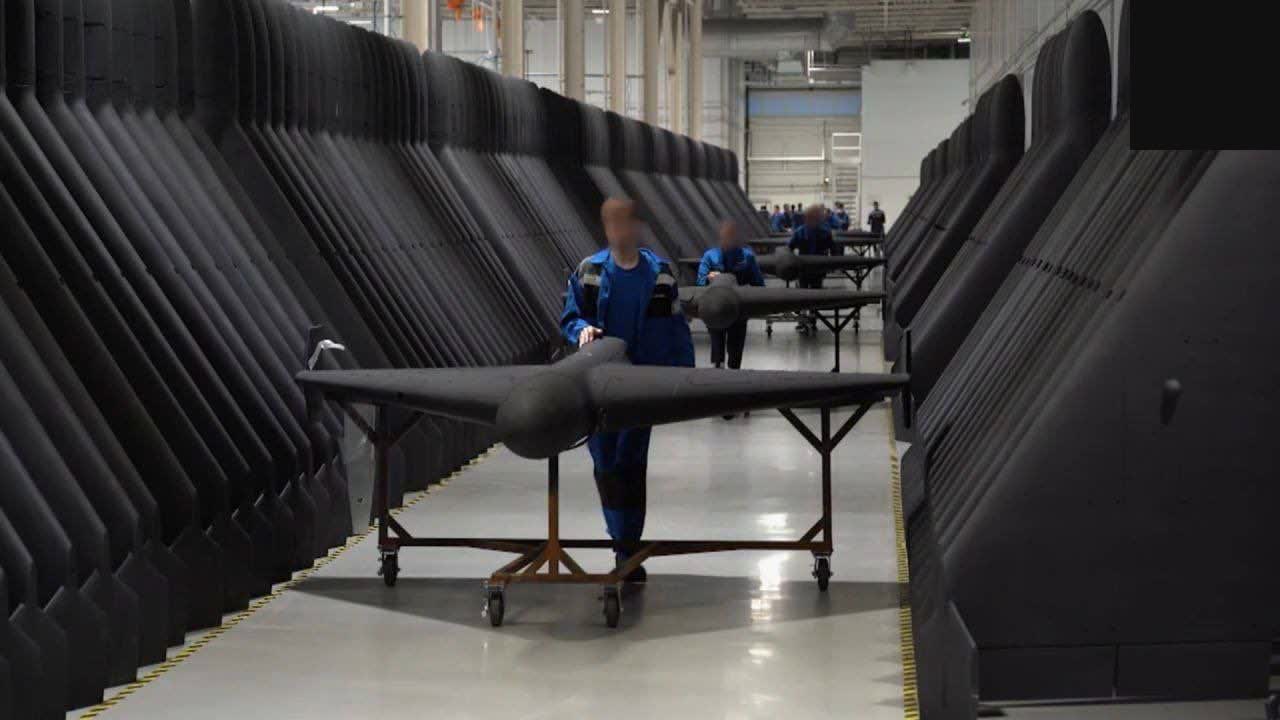
Up to 25,000 North Korean workers are employed in Russia's drone industry, some of them at the Alabuga Special Economic Zone in Tatarstan where Shahed-derived drones are assembled, according to a report from the Multilateral Sanctions Monitoring Team cited by Bloomberg and relayed by New Voice of Ukraine on September 17, 2026. The monitoring group, formed by the United States and allied governments to track sanctions evasion, estimated that North Korean labor abroad earned the regime of Kim Jong Un as much as $800 million last year.
The report describes those workers as entering Russia under a student visa program, a legal cover that lets them work while formally listed as enrolled to study. The average declared annual income for a worker under this arrangement is $7,500, but analysts told Bloomberg that Pyongyang typically confiscates most of it, in some cases more than the worker's actual earnings.
Labor is now part of a deepening military relationship
Bloomberg's reporting frames the labor arrangement as an extension of ties between Moscow and Pyongyang that already include weapons transfers and North Korean troop deployments in support of Russia's war. The Multilateral Sanctions Monitoring Team's broader count put between 15,000 and 30,000 North Koreans working in Russia as of the end of 2025, meaning drone-industry labor is one slice of a larger, in-country workforce.
The plant they are staffing is still expanding
German newspaper Bild reported on September 3, 2026, per New Voice of Ukraine's account of that reporting, that the Alabuga plant's footprint had grown past 1,000 hectares based on satellite imagery, with new production buildings, warehouses, and transport infrastructure under construction. AirVeto's own reporting on the Iran-to-Russia Shahed supply chain traces what Alabuga builds: an Iranian-designed airframe that Russia acquired the license to build in 2023. That drone is now produced domestically at more than 5,500 units a month, and it is the same airframe identified as Geran-2 when it crashes on the Polish or Baltic side of the border. The North Korean labor story fills in who is doing the physical assembly work behind that production figure, not just where the parts and the design came from.
Since August 2026, Alabuga has also been recruiting young workers from Ukrainian territory under Russian occupation, according to the same reporting - a second labor stream feeding the same plant, running alongside the North Korean one.
Sanctions built to stop this are the ones being routed around
A student visa used to place North Korean workers in a drone factory is a workaround, not a loophole nobody anticipated: UN Security Council Resolution 2397, which Russia itself voted for in 2017, specifically restricts North Korean labor exports. The arrangement hands Pyongyang hard currency for programs - nuclear and ballistic missile development - that the same sanctions regime was built to starve. Every dollar it generates for North Korea is a dollar the sanctions system was designed to deny it.
The live map shows current conditions over the Baltic region.