

As of the end of July 2026, Russia's Rassvet satellites passed within line of sight over Ukraine four times a day, but only two or three of those passes rose high enough to hold a stable connection with ground terminals, each lasting roughly 1 to 1.5 hours, according to satellite-communications expert Volodymyr Stepanets writing for Militarnyi. That still falls well short of the persistent, round-the-clock coverage that would let Russian forces control drones beyond radio range at any time of day.
A state-funded Russian answer to Starlink
Rassvet is built and operated by Bureau 1440, a Russian aerospace company, with roughly $1.2 billion in government funding as part of a larger 481-billion-ruble space program running through 2030, per United24 Media. Like Starlink, its satellites relay broadband data through inter-satellite links and ground gateways in the Ka and Ku bands, with manufacturer specifications claiming speeds up to 1 Gbps and latency under 70 milliseconds. Russia has publicly tied the project to replacing the Starlink access it lost to sanctions.
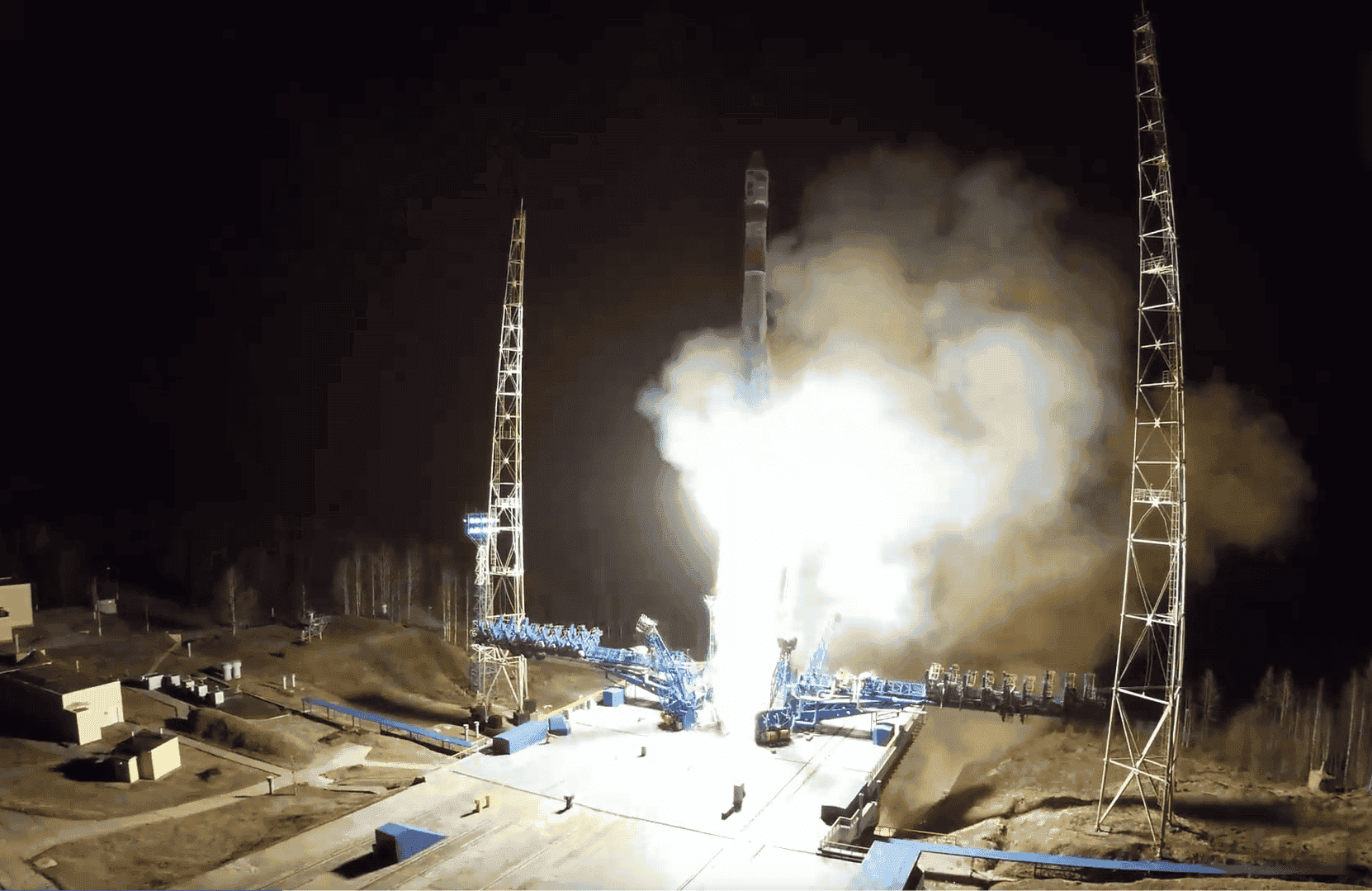
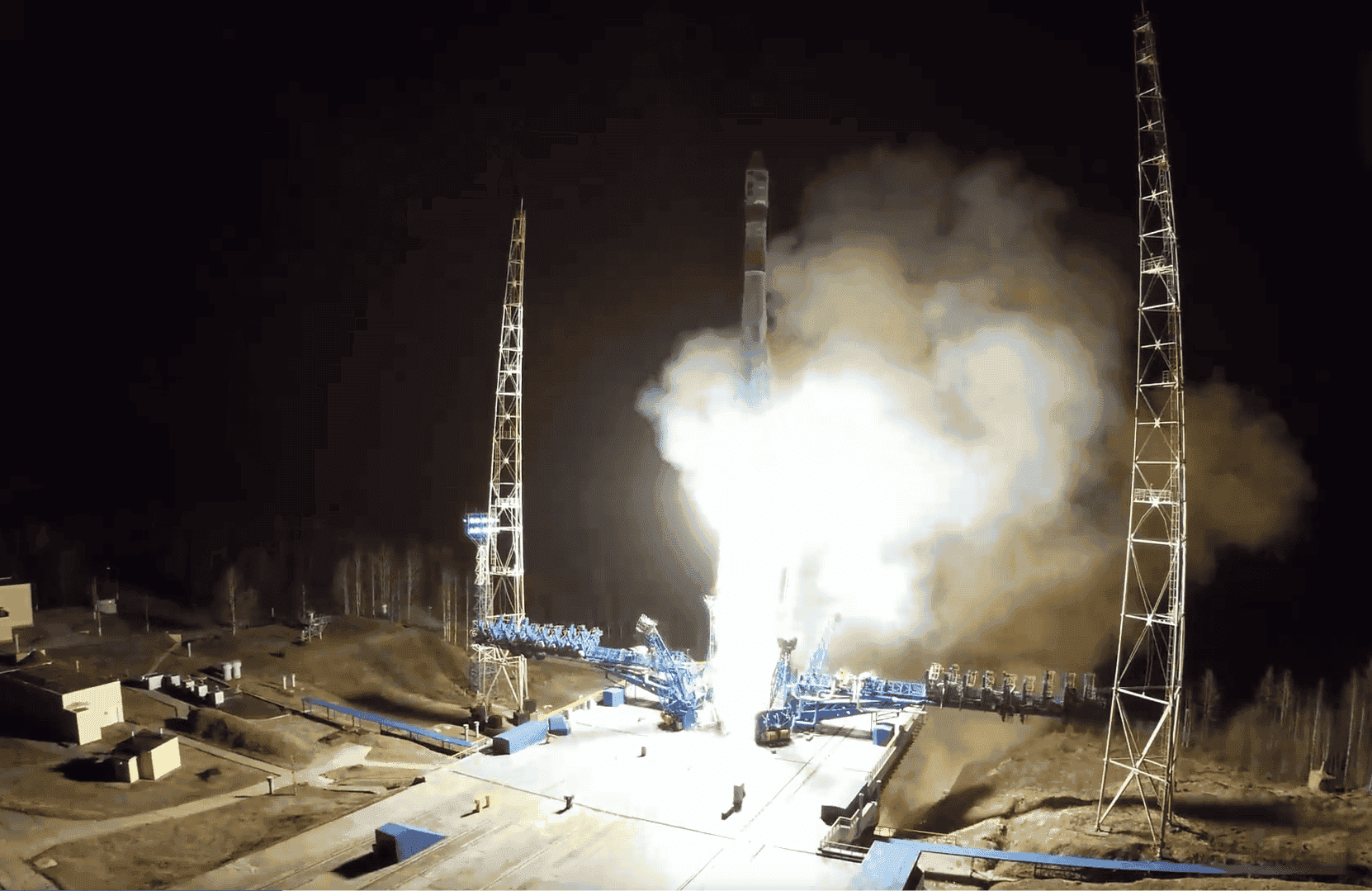
Deployment has moved in two batches so far: 16 satellites launched in March 2026, with 12 reaching operational altitude around 550 km, and a second batch of 16 in July. One satellite has already burned up. Bureau 1440's stated targets run to 250 satellites by 2027, 730 by 2030, and more than 900 by 2035.
The military application is drone and missile control, not just communications
Vladimir Putin said in June 2026 that Russia already has a satellite-based drone-control system: "We have such a system. The question is scaling. This requires some time, but it has been created; it is functioning," per United24 Media. The capability Rassvet is built toward is beyond-line-of-sight command and control: retasking a drone after it has flown past radio range, transmitting live video during flight, and adjusting a strike in progress - the same limitation that currently caps how far Russian drones and cruise missiles can be actively guided rather than simply launched on a pre-set course. Ukraine's own defence intelligence recorded Russian forces using an early batch of Rassvet satellites for hours at a stretch by the end of July 2026, per Janes - a live test of the capability, not just a design goal.
Full round-the-clock coverage over Ukraine, which would remove the current gap between connection windows, is not expected before mid-2027 if deployment continues on its present pace, per Militarnyi.
Ukraine is striking the ground infrastructure behind it
Ukraine has not waited for that coverage to arrive. In June 2026, Ukrainian drones struck the Dubna Space Communications Centre outside Moscow, damaging a 32-metre satellite antenna along with control consoles and other hardware; President Volodymyr Zelensky said the strike showed Ukraine's reach extends to Russia's space infrastructure. Three smaller communication centres in western Russia and Crimea were also hit, per Al Jazeera.
On August 15, Ukrainian drones struck the Progress Rocket and Space Centre in Samara, the only Russian facility that manufactures Soyuz rockets; the resulting fire was assessed as non-critical, per Al Jazeera. On August 23, roughly 40 Ukrainian drones flew more than 1,800 km to reach the Plesetsk Cosmodrome in Arkhangelsk Oblast, with at least two reaching the area near the site's ICBM launch pad. Russia said all 40 drones were shot down, and Roscosmos reported a successful launch there the following day - but the distance alone demonstrated that Russia's northern launch infrastructure sits within Ukraine's reach.
None of these strikes has stopped Rassvet's deployment schedule. What they establish is that Russia's satellite buildup is not happening in an uncontested rear area - it is now a declared target in the war it is meant to support.