
Bobrowniki drone arrest, April 2026 - 3 detained at border
Polish border guards at Bobrowniki detained three men - two Belarusians and one Pole - collecting cigarettes delivered by drone from Belarus, April 2026.
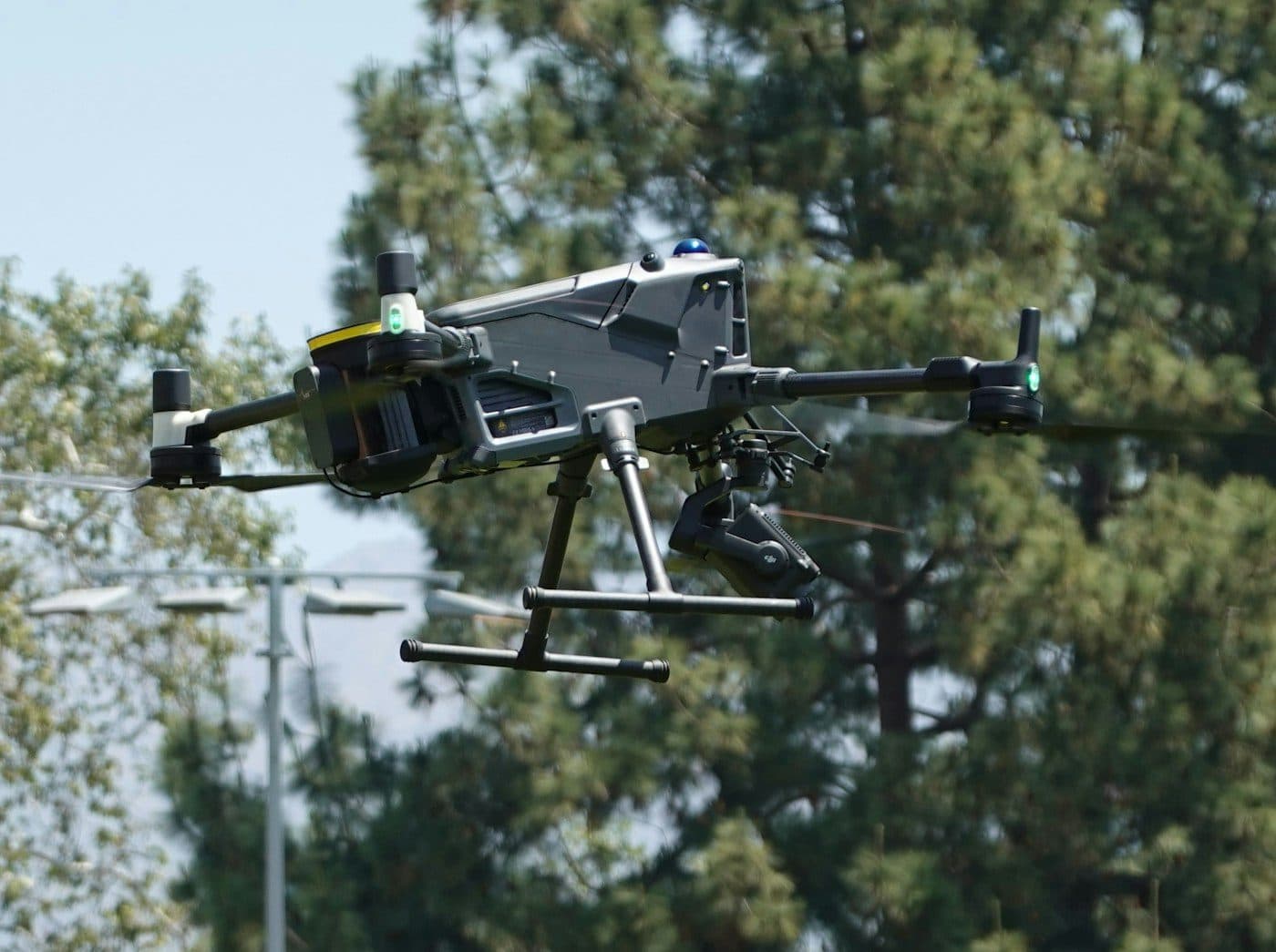
In April 2026, officers from the Podlaskie Branch of the Polish Border Guard (Straż Graniczna) at the Bobrowniki border post detained three men - two Belarusian citizens and one Polish citizen - who came to collect four packages of cigarettes delivered by drone from Belarusian territory. The estimated value of the seized cargo is 95,000 PLN (approximately €22,000). The detained men faced charges under three separate legal frameworks: the penal fiscal code (KKS), aviation law, and Poland's law on counteracting support for aggression against Ukraine. A court ordered all three held in pre-trial detention for three months.
Officers caught all three men at the collection point
Border Guard officers at the Bobrowniki post identified the drone delivery and waited for the collection crew. The three men were detained at the site where the four cigarette packages - carrying Belarusian excise stamps - had been dropped. Catching the collection crew, rather than only seizing the cargo, is the key law enforcement objective in drone smuggling interdiction: the drone operator can release their payload remotely, but someone must physically pick it up.
The Bobrowniki arrest is one of multiple cases in Podlaskie voivodeship during early 2026 where border guards detained people at the cargo collection point rather than only recovering the goods. By April, the Podlaskie Branch had detained 19 people for involvement in cigarette smuggling operations involving air delivery from Belarus since January, with total seizures exceeding 4.2 million PLN in value.
Polish prosecutors applied the anti-aggression law to a cigarette smuggling case
Beyond the standard KKS (penal fiscal code) charges that apply to any excise fraud, and aviation law charges that address illegal drone flight, the Bobrowniki suspects faced charges under Poland's law counteracting support for aggression against Ukraine. In the Bobrowniki case, prosecutors' application of the law rests on the same argument used in earlier Polish cigarette smuggling indictments: cigarettes exported from Belarusian state-owned factories generate revenue for the Belarusian state, which directly supports Russian war capacity through the Union State economic relationship.
Polish prosecutors have applied this framing to contraband cigarette operations since 2025, when it first appeared in cases involving the Grodno Tobacco Factory and similar Belarusian state producers. The charges substantially increase the maximum available sentence compared with pure excise fraud charges. At Bobrowniki, the combination of KKS, aviation law, and the anti-aggression statute resulted in a three-month pre-trial detention order for all three defendants.
Bobrowniki is on the same Poland-Belarus border zone as broader 2026 seizure activity
The Bobrowniki border crossing in Podlaskie voivodeship connects the Białystok region with Grodno Oblast in Belarus. It is one of the main legal crossings on the northern Poland-Belarus border and is part of the same border zone where the Podlaskie Branch recorded 118 weather-balloon cigarette-smuggling cases and 18 drone incidents across 2025. The Bobrowniki drone arrest in April 2026 follows that established pattern: a Belarusian operator launches the drone across the border, drops the cargo inside Poland, and relies on a ground crew (in this case, one Polish citizen acting as a local contact) to retrieve it.
A separate Polish Border Guard case from July 2026 - two further detentions for balloon-based cigarette smuggling in Podlaskie, with approximately 420,000 PLN in seized goods - indicates that smuggling pressure on the Poland-Belarus border continued through the summer regardless of interdiction.
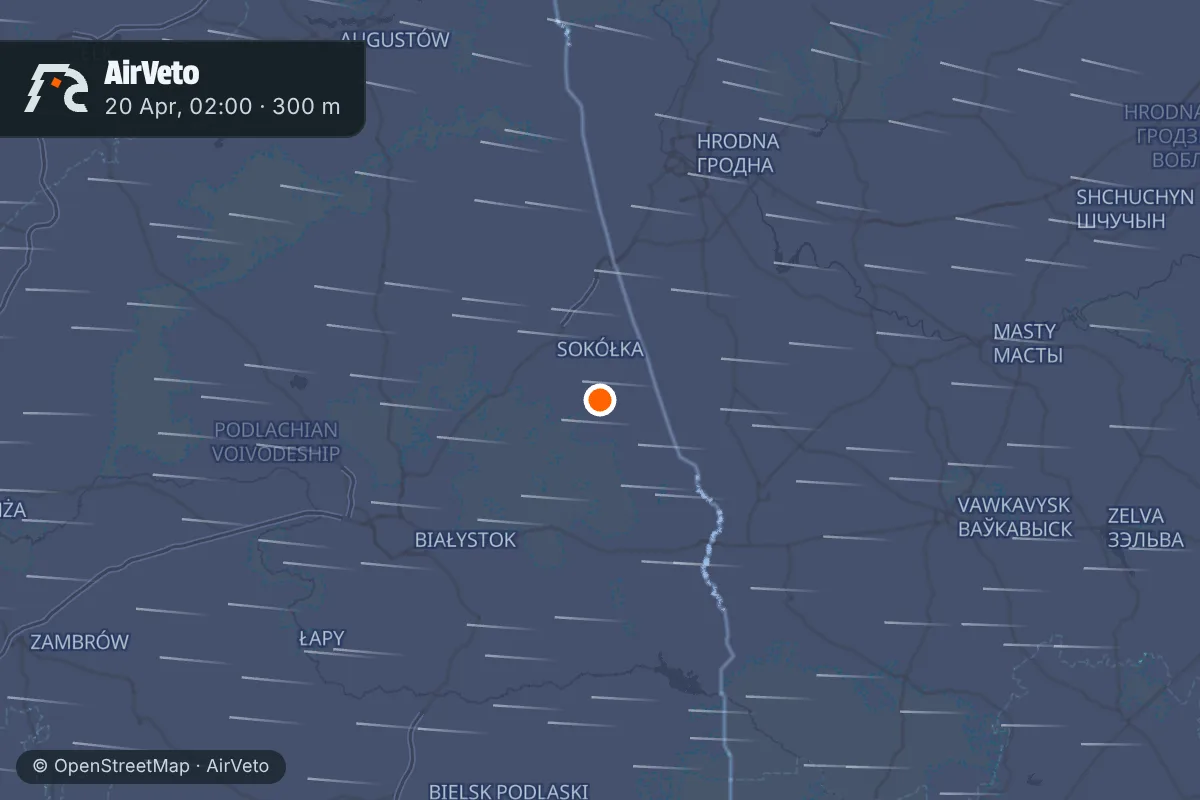
At midnight UTC on 20 April - the start of the event window - the 500 m layer over the Bobrowniki border zone showed E wind at 50.5 km/h. At 2,000 m the wind backed to NNE at 22.5 km/h; at 3,000 m NNW at 21.5 km/h. Strong flow pushing west at low altitude, backing sharply with height, was the atmospheric background for this intercept. AirVeto's wind layer covers the Bobrowniki border area for the event window; how the model is built and where it is reliable is on the methodology page.
This reconstruction is based on reporting by the Podlaskie Branch of the Polish Border Guard and PolsatNews, and on AirVeto's wind-model data for the April 2026 event window.
The full archive of airspace and contraband incidents across the EU eastern border is at incident archive. AirVeto's wind-layer methodology is described at methodology.
Related location
- Polish-Belarusian border - Poland's roughly 418 km frontier with Belarus - focal point of migration, airspace, and cross-border incidents.