
Sea drone explodes at Constanta port, June 5, 2026
A Ukrainian sea drone exploded at Berth 78 of Romania's Constanta port at 10:27 on June 5, 2026. Kyiv warned Romania 33 minutes earlier, 3 hours 34 minutes after the first sighting.
AirVeto finding: Romania's defence ministry says its maritime coordination centre reported the floating object at 06:20, Ukraine's navy warned Romania at 09:54, and the drone exploded at 10:27: an unidentified object sat at the berth for 3 hours 34 minutes before Kyiv's warning arrived.
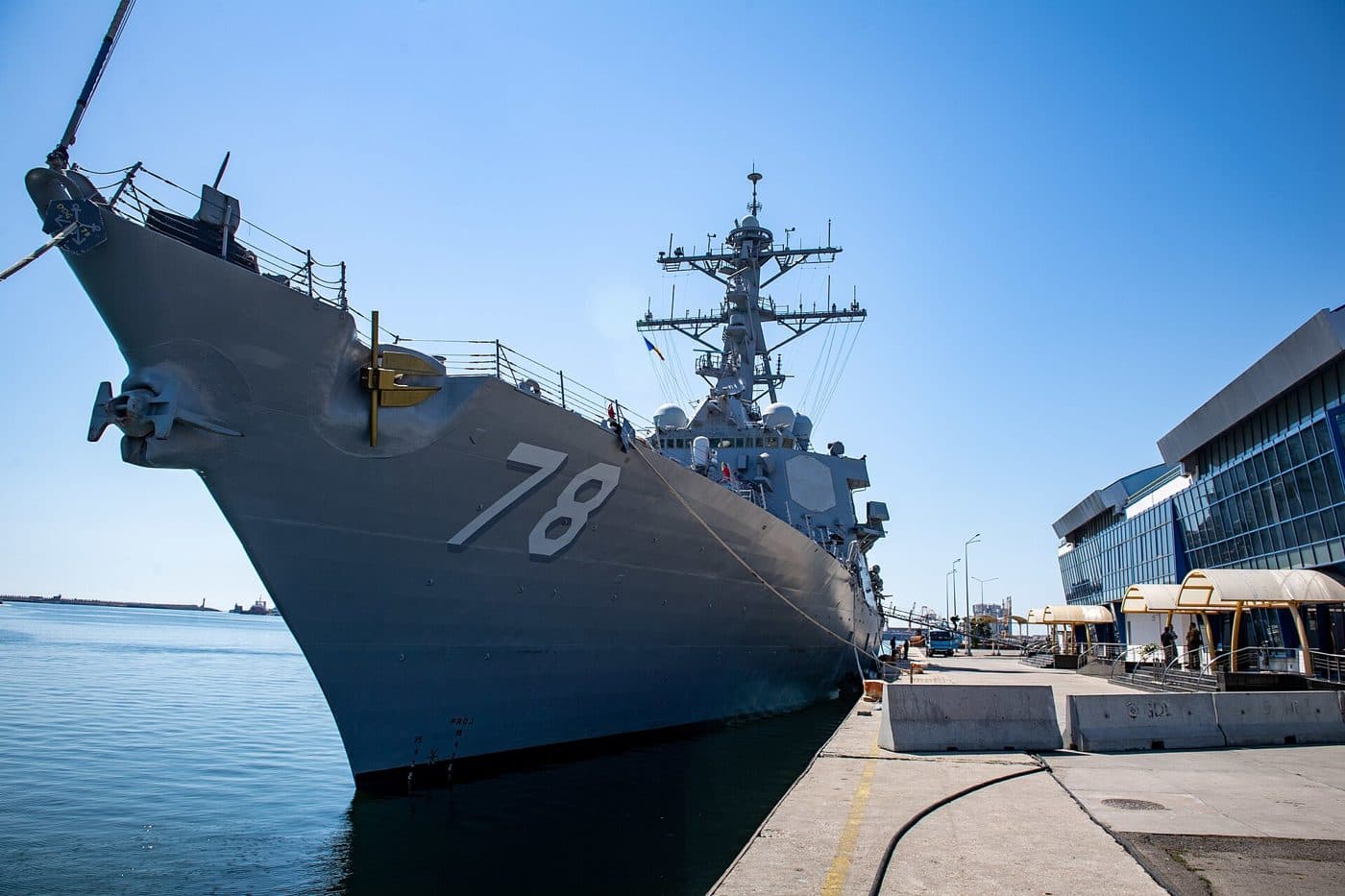
A Ukrainian sea drone exploded at Berth 78 of Romania's Port of Constanta at 10:27 local time on June 5, 2026, the Romanian defence ministry says. Nobody was hurt.
Romania's maritime coordination centre had reported an unidentified floating object at the berth at 06:20, and Ukraine's navy did not warn Romania until 09:54. That is 3 hours 34 minutes between the first report and Kyiv's warning, and 33 minutes between the warning and the blast.
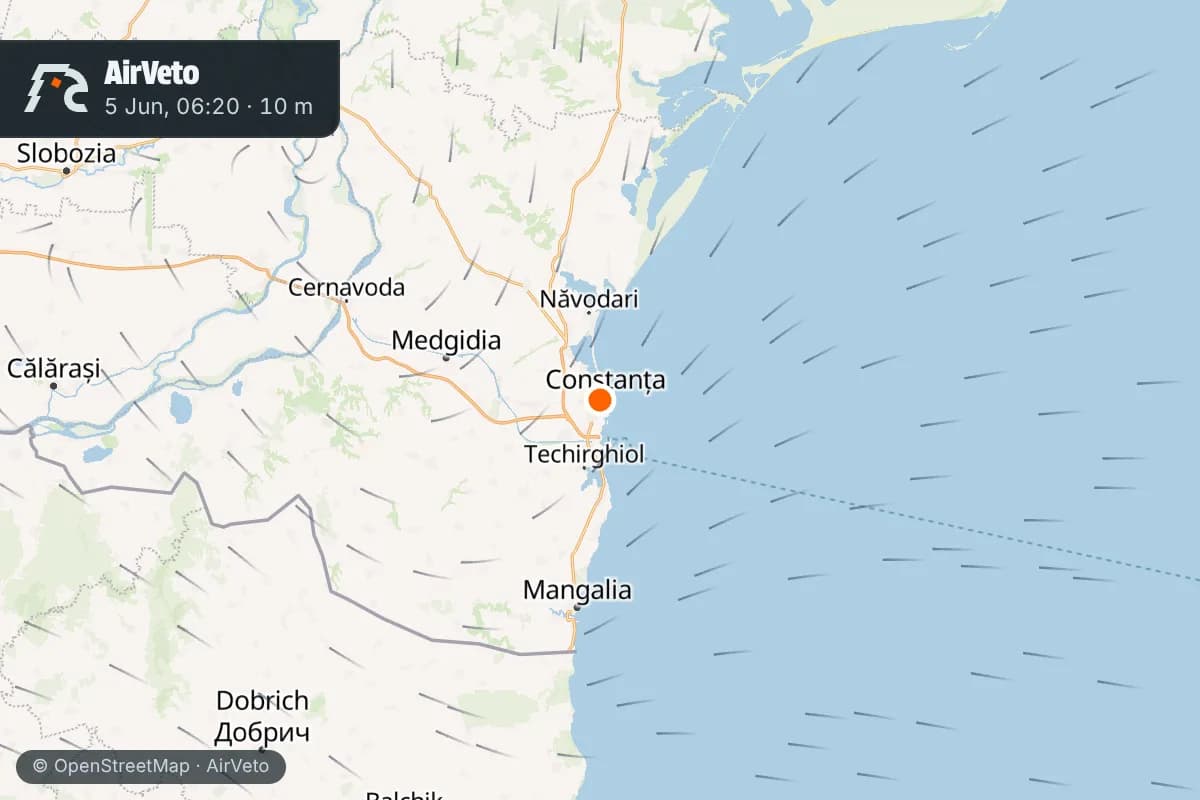
Romania saw the object at 06:20, Ukraine warned at 09:54, and it exploded at 10:27
The defence ministry (MApN) published its timeline on July 3, 2026, after Ukraine answered 14 questions from Defence Minister Radu Miruță. HotNews and Newsweek Romania reported the same times:
| Local time | Event |
|---|---|
| 06:20 | The Romanian Naval Authority's maritime coordination centre tells the naval command about a floating object near Berth 78 |
| 09:54 | Ukraine's navy tells Romania it lost control of four drones and gives the window for their self-destruct |
| 10:27 | The drone at Berth 78 explodes |
| About 11:00 | A Coast Guard vessel sees a second drone explode off the port |
| About 13:00 | Commercial ships report two more explosions at sea |
| 14:35 | Romania confirms all four drones destroyed and ends the operation |
Same-day reports gave the blast as 10:30, which was the ministry's first rounded figure. Maritime Executive reported the object was found around 05:50 and was wedged at Berth 78, near the headquarters of the Romanian Agency for Saving Human Life at Sea. The ministry's own timeline starts at 06:20, so this page uses it.
After the warning, the navy told the response teams at the berth, and staff left the area, the ministry says. Teams were trying to deactivate the drone when it exploded, Maritime Executive reported.
Ukraine lost contact with four drones the afternoon before, about 250 km away
According to the ministry, Ukraine told Romania that its navy lost communications with four Sargan-3000 sea drones near Sevastopol on the afternoon of June 4. That is about 250 km from the Romanian coast. Ukraine said it could not cancel their self-destruct command without contact, and called the loss an isolated incident, most likely caused by Russian electronic warfare.
The ministry asked Ukraine for a permanent channel between the two navies. Miruță also asked that Ukrainian sea drones be programmed to self-destruct only in safe areas, outside Romania's areas of interest.
On the day, Digi24 quoted Commodore Sandu Mateiu saying the craft looked like a Magura type. The ministry's July account names the drones as Sargan-3000, so this page follows the ministry.
The drone sat a few hundred metres from an oil terminal
Ukrainska Pravda, citing Digi24, reported that the drone lodged in a pollution-control barrier a few hundred metres from an oil terminal. Maritime Executive reported speculation that automated targeting may have steered it toward Russian energy sites.
Up to 1,000 people were told to leave nearby beaches, and two helicopters and a boat searched the coast, Maritime Executive reported. Interior Minister Raed Arafat said residents along the coast were warned to take cover, Al Jazeera reported.
President Nicusor Dan said a second drone self-detonated offshore under Coast Guard monitoring, and two more exploded about 145 km east of Constanta. None caused casualties or significant damage, he said, and called the drone's entry into Romanian territory "a direct consequence of Russia's war against Ukraine".
Ukraine blamed Russian jamming, and its warning reached Romania 33 minutes before the blast
Ukraine's navy said the drone "came under the influence of the enemy's electronic warfare systems, lost control, and ended up near the coast of Romania." It said it gave the Romanian navy information to prevent civilian casualties.
The ministry's timeline puts that information at 09:54, once Romanian teams were already mobilised at the berth. Ukraine also gave the window in which the four drones would self-destruct.
The wind over Constanta was light and from the north-northeast
AirVeto's wind model gives the center-point wind over the port at 06:00 local time, the model hour nearest the first sighting.
| Altitude | Wind from | Speed |
|---|---|---|
| 80 m | NNE | 8 km/h |
| 2,000 m | SW | 16 km/h |
| 3,000 m | WSW | 27 km/h |
It followed a Russian drone strike in Galati and preceded Romania's July disclosure
A Russian Shahed-type drone hit an apartment building in Galati on May 29, injuring two people, Kyiv Independent reported. See the Galati drone impact page. On July 11, Romania disclosed that its forces had destroyed five Ukrainian naval drones in the Black Sea between May and July.
This reconstruction is based on reporting by HotNews, Newsweek Romania, Kyiv Independent, Maritime Executive, Al Jazeera, Ukrainska Pravda and Digi24, and AirVeto's wind-model data. The method is on the methodology page.
Last updated October 20, 2026.
Related location
- Romania - Romania, a NATO member since 2004, shares a Danube-river border with Ukraine at the Black Sea delta and has repeatedly recorded drone debris, intercepts, and naval-drone incidents along that frontier and its Black Sea coast since September 2025.
Sources
- HotNews - Ucraina a venit cu explicații pentru explozia dronei din Portul Constanța, la o lună de la incident (3 Jul 2026)
- Newsweek Romania - Noi detalii despre explozia dronei din Constanța: Ucraina a răspuns României (3 Jul 2026)
- Kyiv Independent - Stray Ukrainian naval drone explodes at Romania's Black Sea port (5 Jun 2026)
- The Maritime Executive - Ukraine blames jamming as drone strays into Romanian port and explodes (5 Jun 2026)
- Al Jazeera - Drone explosion in Romanian port spurs Ukraine war spillover fears (5 Jun 2026)
- Ukrainska Pravda - Ukrainian Navy issues statement on drone incident in Romania (5 Jun 2026)
- Digi24 - Ce drone navale deține Ucraina: MAGURA și Sea Baby (5 Jun 2026)
- Methodology
Last updated: