
Ukrainian drones crash near Kouvola, Finland after EW jamming
Two Ukrainian drones crashed in southeastern Finland on March 29, 2026 after Russian EW jamming diverted them from a Ukrainian strike on Ust-Luga oil terminal.
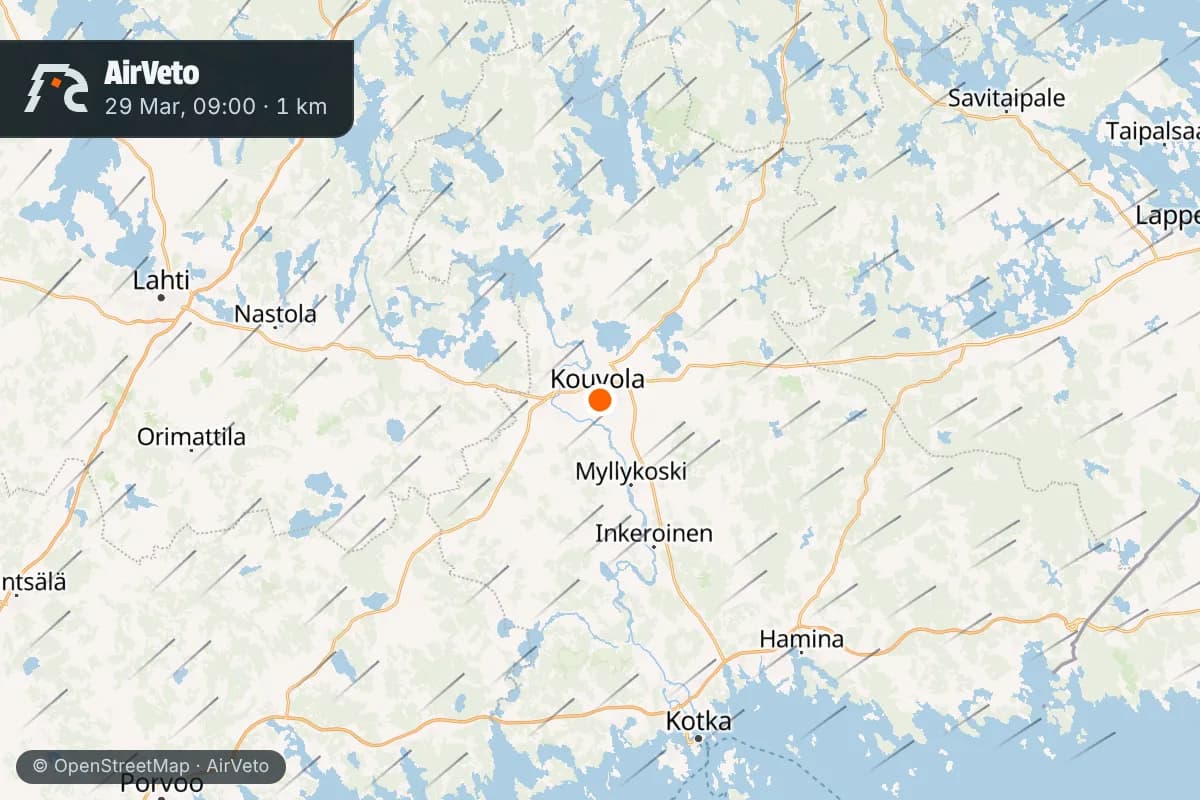
According to Finland's Air Force and the Kyiv Independent, two Ukrainian drones violated Finnish airspace on the morning of March 29, 2026 and crashed in southeastern Finland - one north of Kouvola (Kymenlaakso region) on the Savistontie road near Oravala, and one near Luumäki (South Karelia). The Kouvola drone carried an unexploded warhead; Finnish authorities destroyed it in a controlled detonation at approximately 20:15 local time (18:15 UTC) on the evening of 29 March. The drones were part of a Ukrainian strike on the Ust-Luga oil terminal (Leningrad region, Russia) that night. Russian electronic warfare jamming, assessed to originate from the Leningrad region, diverted them from their planned route over the Gulf of Finland. AirVeto's wind reconstruction places the drift path through southeastern Finland during the overnight strike window.
Finland's National Bureau of Investigation (NBI) later confirmed that the drones were Chaika decoys - not AN-196 Liutyi long-range strike drones as the Finnish Air Force initially reported.
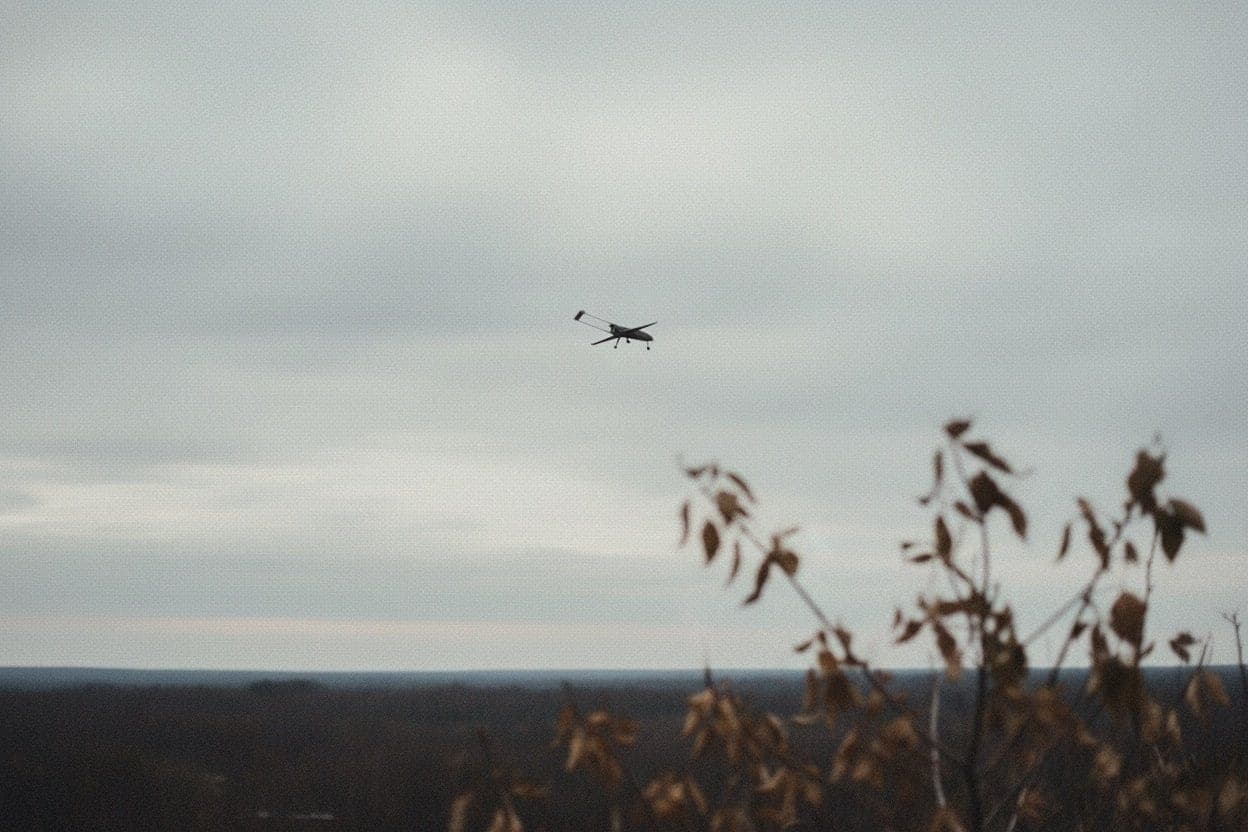
Two drones came down in southeastern Finland on the morning of 29 March
Finland's Air Force scrambled F/A-18 Hornets to track the objects after military radar detected unidentified aerial vehicles entering Finnish airspace from the direction of the Gulf of Finland. Police cordoned off the crash area north of Kouvola on the Savistontie road in the Oravala area, approximately 10 km north of Kouvola city centre. A second drone was found near the municipality of Luumäki, South Karelia, east of Kouvola.
Finnish authorities confirmed that the drone north of Kouvola was carrying an unexploded warhead. The controlled detonation was carried out on the evening of 29 March; Yle journalists at the scene heard a large explosion at approximately 20:15 local time (18:15 UTC). No injuries were reported at either site.
Finnish President Alexander Stubb convened an emergency government meeting and called the incident "a serious violation of Finland's sovereignty," adding that there was "no military threat to Finland" and that authorities had "reacted immediately." Prime Minister Petteri Orpo told Yle that Russia has "extremely strong electronic jamming capabilities, which could explain why these drones are drifting into Finnish airspace, something that is a very serious issue." Orpo also stated that residents in the area should have been warned more quickly after the initial detection - a public-alert criticism directed at the emergency-management process.
The Finnish Air Force initially identified the drones as AN-196 Liutyi - the NBI later corrected this to Chaika
In statements on March 29–30, 2026, the Finnish Air Force reported that at least one of the drones was a Ukrainian AN-196 Liutyi - a long-range one-way strike drone with a 6.7 m wingspan and a reported range of over 1,000 km. This identification, made from an aerial visual pass by a Finnish F/A-18 pilot, was widely reported at the time across Euronews, the Kyiv Independent, AeroTime, and France 24.
The Air Force Commander, Major General Timo Herranen, hinted in an Yle A-studio interview on 2 April that the size might be smaller than initially thought, noting "2–2.5 meter systems." In mid-April 2026, Finland's National Bureau of Investigation (NBI) confirmed the correction: the drones were Chaika decoys, not AN-196s. The NBI's finding was first reported publicly by Jyri Kosola, former head of research at the Finnish Defence Forces.
The Chaika is a Ukrainian low-cost saturation drone with a wingspan of approximately 2.5 m, an empty weight of around 4 kg, a payload capacity of approximately 3.5 kg, a unit cost of approximately $500 USD, and a range of up to 750 km. Its role is to overwhelm Russian air-defence radar, force the expenditure of expensive interceptor missiles, and reveal radar positions - not to strike targets directly.
The drones were diverted from a Ukrainian strike on the Ust-Luga oil terminal
On the night of March 29, 2026, Ukraine launched a large drone strike on the Ust-Luga oil terminal on the southern shore of the Gulf of Finland in Russia's Leningrad region. Bloomberg and the Moscow Times reported fires and damage at the terminal; the Ust-Luga strike was described as the third Ukrainian strike on the facility within one week. Russia's Defence Ministry stated that Ukraine launched over 345 drones overnight across Russian territory, with 31 drones downed over the Leningrad region.
Ust-Luga handles approximately 700,000 barrels of oil per day. The sustained campaign against the terminal in March 2026 reportedly took more than 40% of Russia's overall oil export capacity temporarily offline, according to Bloomberg reporting.
The two drones that reached Finland were assessed to have been part of the same overnight wave. Their planned route would have kept them over the Gulf of Finland until approaching Russian territory from the north or northwest - a track that bypasses Finnish airspace unless disrupted.
Russian electronic warfare jamming sent the drones off course
Ukrainian and Finnish officials pointed to Russian electronic warfare (EW) as the cause of the deviation. Russian EW systems transmit false GPS coordinates, causing GNSS-guided drones to misidentify their position and alter course. Sources cited by the Kyiv Independent, Militarnyi, and United24 Media assessed that the jamming originated from systems in the Leningrad region and potentially Kaliningrad. Ukrainian Foreign Ministry spokesman Georgiy Tykhy stated in a public comment:
"Under no circumstances were any Ukrainian drones directed toward Finland. The most likely cause is interference from Russian electronic warfare systems."
Foreign Minister Andrii Sybiha posted on X that Ukraine had expressed apologies to Estonia, Latvia, Lithuania, and Finland for incidents caused by Russian EW systems redirecting Ukrainian drones. President Volodymyr Zelenskyy confirmed he had spoken directly with President Stubb and that "both sides are sharing all necessary information."
Wind conditions over the Gulf of Finland and southeastern Finland
At 06:00 UTC on 29 March - during the crash window - the 1,000 m layer over Kouvola and the southeastern Finnish coast showed SW wind at 37.1 km/h. The Chaika drones were released as part of a large overnight strike package toward the Ust-Luga area; moderate flow pushing NE at this level means any GPS-jamming-induced northward displacement from the planned route would have carried the drones over Kymenlaakso and South Karelia.
AirVeto's wind reconstruction covers the region at 1,000 m over southeastern Finland and the northern Gulf of Finland during the 29 March strike window. How AirVeto processes and displays that data is described on the methodology page.
This reconstruction draws on reporting by Euronews, the Kyiv Independent, Yle, Bloomberg, and Militarnyi, and on AirVeto's wind-model data for the March 29, 2026 strike window.
This incident is part of the 2026 Baltic states drone incursion cluster
The Kouvola event falls inside the broader 2026 Ukrainian drone incursions into the Baltic states - a documented cluster of incidents in which Russian EW jamming sent Ukrainian drones off course into NATO airspace across Estonia, Latvia, Lithuania, and Finland. Wikipedia hosts a named article for the cluster, which is the signal that it has reached encyclopedia-level citation coverage.
AirVeto covers multiple nodes of this cluster. The March 25, 2026 Auvere power station drone (Estonia) and March 25, 2026 Krāslava drone (Latvia) are part of the same Ust-Luga/Primorsk strike window three days earlier; the March 23, 2026 Varėna drone crash (Lithuania) adds a third node from that three-day sequence. The Kouvola incident on 29 March extends the same chain by six days.
Cross-links to the March cluster:
Related location
- Gulf of Finland - Baltic Sea arm separating Estonia from Finland, bounded to the east by Russia - GPS-spoofing reports and stray drones.
- NATO eastern flank - The frontier where EU airspace meets Russia and Belarus across five NATO member states - the active zone of drone incursions, smuggling balloon recoveries, and Baltic Air Policing intercepts since 2025.
- Finland - Finland shares a 1,340-kilometer border with Russia and recorded four drone finds in spring 2026 - the densest EW-diverted drone cluster in any NATO member state that period.
Sources
- Euronews - Kyiv apologises to Helsinki after two Ukrainian drones crash in Finland (March 29, 2026)
- Kyiv Independent - Ukrainian drone identified in Finland (March 29, 2026)
- AeroTime - One of two drones crashed in Finland identified as Ukrainian AN-196 (March 29, 2026)
- Yle - One of the drones that crashed in southeastern Finland was Ukrainian, air force confirms
- Militarnyi - Russian EW directed Ukrainian drone towards Finland; Foreign Ministry apologized (March 2026)
- Militarnyi - Finland identifies downed Ukrainian drones in March as Chaika decoy drones (April 2026)
- Ukrainska Pravda - Ukraine apologises to Finland after drone crash (March 30, 2026)
- Bloomberg - Russia's Ust-Luga port takes new damage in Ukraine drone attack (March 29, 2026)
- The Defense Post - Ukraine drones crash in Finland, Kyiv apologizes (March 31, 2026)
- Wikipedia - 2026 Ukrainian drone incursions into the Baltic states
- Methodology
Last updated: