
Ukrainian drone strikes Auvere power station, Estonia
A Ukrainian drone entered Estonia from Russia and struck the Auvere power station chimney on March 25, 2026. Energy transmission was unaffected and no one was hurt.

At 03:43 local time (01:43 UTC) on Wednesday, March 25, 2026, a Ukrainian military drone entered Estonia from Russian territory and struck the chimney of the Auvere power station in Ida-Viru County, roughly two kilometers from the Russian border. The plant, operated by Enefit Power, kept running; energy transmission was unaffected and no one was injured. Estonia activated its EE-ALARM public warning system for Ida-Viru and Lääne-Viru counties.
It was the most serious of the Baltic drone incidents that night. Hours earlier, a separate Ukrainian drone had detonated near Dobročina village in Latvia's Krāslava municipality, and two days before that one had crashed in Lithuania's Varėna district.
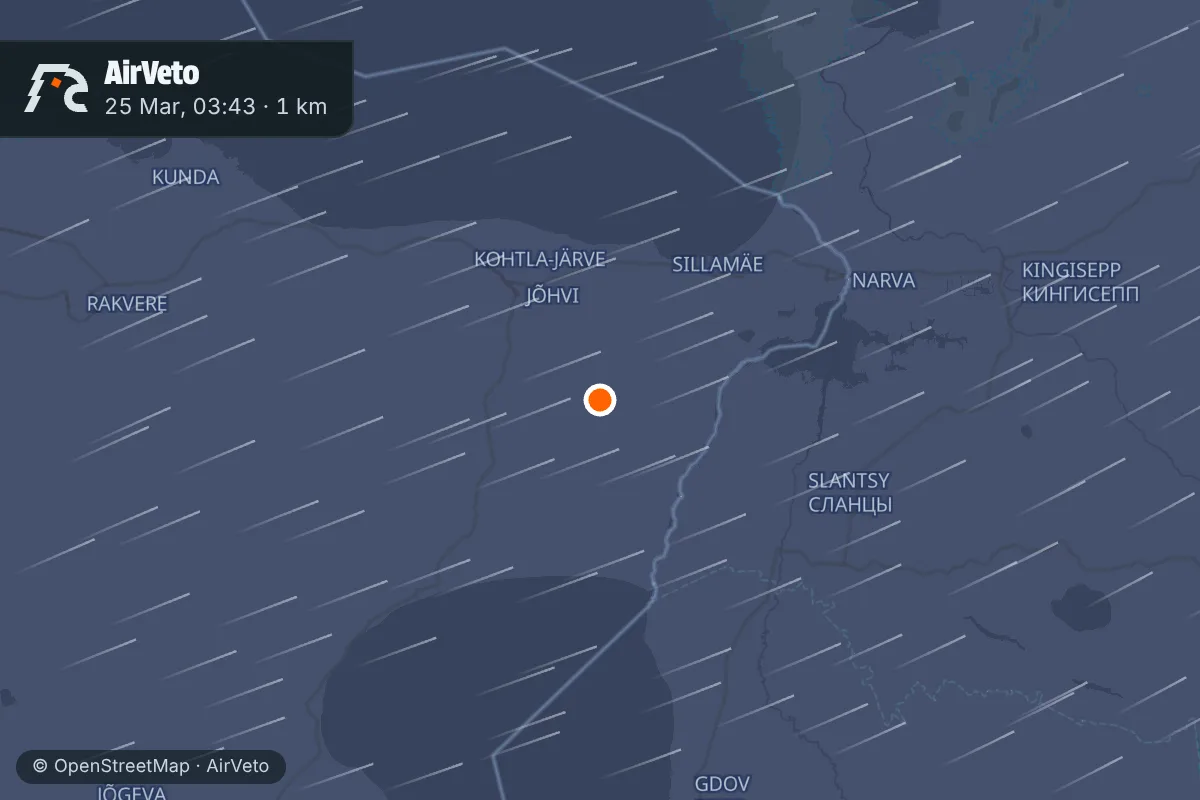
What hit the Auvere plant
The drone struck the chimney of the Auvere station and was destroyed on impact. The facility's energy output continued without interruption, and inspections found no damage that affected operations. Estonian authorities declared the threat over at 15:45 local time the same day.
Prosecutor General Astrid Asi confirmed that the drone had not been directed at Estonia. The assessment, shared across the Baltic governments, was that the object had strayed from a Ukrainian strike mission rather than targeting Estonian infrastructure.
Why a Ukrainian drone hit an Estonian power plant
The Auvere station sits about 50 kilometers from the Russian port of Ust-Luga, one of the Baltic oil export terminals Ukraine was striking that night. The drone is believed to have gone off course during that Baltic terminal strike. The recurring explanation across the 2026 series is Russian electronic warfare: GPS jamming and spoofing along Russia's Baltic coastline push Ukrainian long-range drones off their set flight paths, and some cross into NATO airspace before crashing or hitting whatever lies on the corrupted heading.
Auvere's position, close to the border and near a live Ukrainian target across it, made the power station an unlucky point of impact rather than an intended one.
Part of the 25 March cluster and the wider series
The Auvere strike was the sharpest moment in a sequence that ran for two months:
- March 23, 2026 - Varėna, Lithuania. A Ukrainian drone crashed near Lake Lavysas, undetected by radar. See the Varėna district page.
- March 25, 2026 - Krāslava, Latvia. A Ukrainian drone crossed from Russia and detonated near Dobročina village. See the Krāslava drone crash page.
- May 19, 2026 - Estonia. A Romanian NATO F-16 carried out the first fighter shoot-down of a drone over Estonian airspace, near Kablaküla. See the Estonia drone shootdown page.
The drone that hit Auvere was the first to cause physical damage to infrastructure inside a Baltic state in the 2026 series, a threshold that raised the political stakes well before the May shoot-down.
At 01:00 UTC on 25 March - at the start of the strike window - the 1,000 m layer over Ida-Viru County showed wind pushing ENE at 70 km/h. Strong flow, consistent with the Baltic storm system driving conditions across the region that night. How the model is built and where it is reliable is on the methodology page.
This reconstruction draws on reporting by ERR, Euronews, Bloomberg, and Al Jazeera, and on AirVeto's wind-model data for the post-strike window on March 25, 2026.
Aftermath
The Auvere strike confirmed for Estonia what the Lithuanian and Latvian crashes had signalled in the preceding 48 hours: stray Ukrainian drones could reach Baltic territory, and in Estonia's case strike infrastructure, without being aimed there. Estonian and allied officials treated the incident as part of a continuing risk tied to Ukrainian strikes on Russian Baltic oil terminals and the Russian jamming that accompanies them.
Sources
- ERR - Drone entering Estonian airspace from Russia hits Auvere power station chimney (March 25, 2026)
- kriis.ee - FAQ regarding drones that entered Estonian airspace on March 25, 2026
- Euronews - Drones from Russian airspace hit Estonia and Latvia, authorities say (March 25, 2026)
- Bloomberg - Drones Enter Baltic Airspace, Hitting Power Plant in Estonia (March 25, 2026)
- Al Jazeera - Estonia, Latvia report drone incursions from Russian airspace (March 25, 2026)
- Wikipedia - 2026 Ukrainian drone incursions into the Baltic states
- Methodology
Last updated: