
Ukrainian drone crashes in Dobročina, Krāslava, Latvia
A Ukrainian military drone crossed into Latvia from Russia and detonated near Dobročina village, Krāslava municipality, in the early hours of March 25, 2026. Radar and acoustic sensors tracked it.
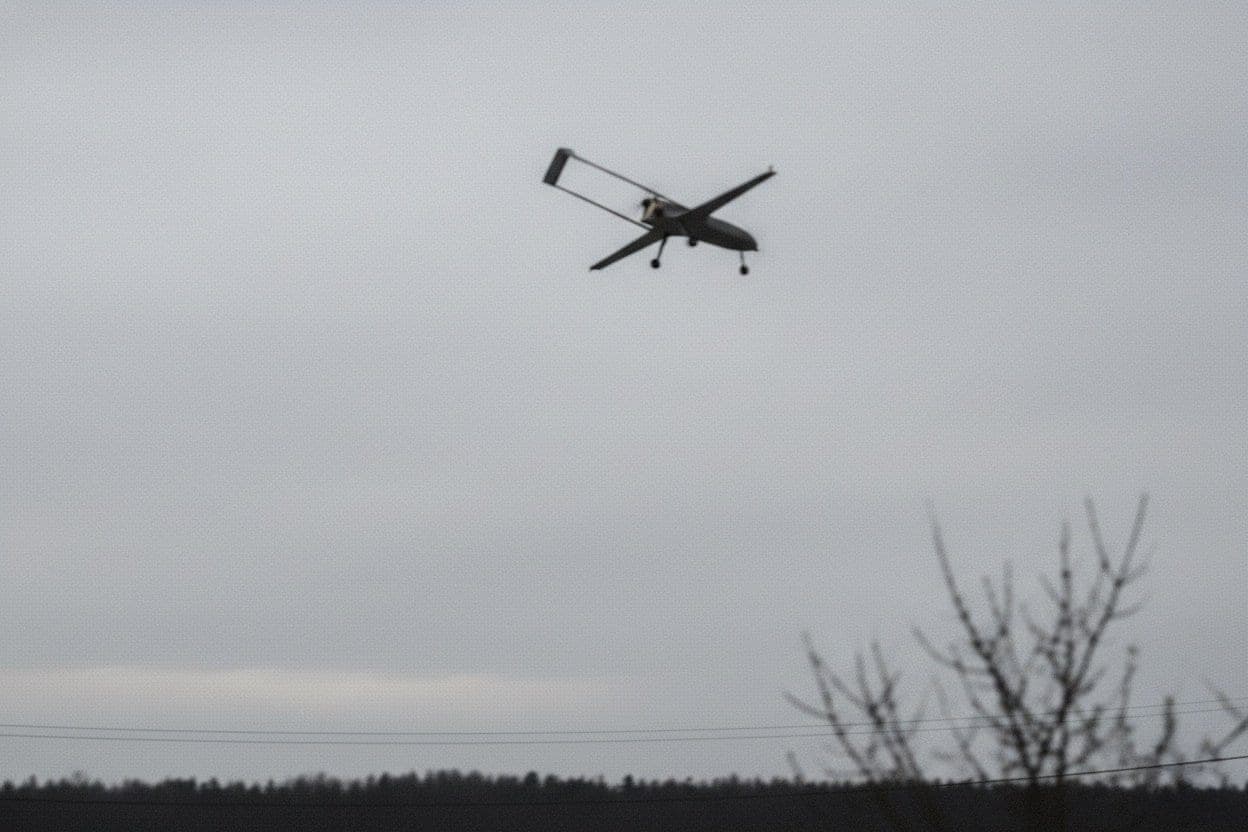
At 02:19 local time (00:19 UTC) on Wednesday, March 25, 2026, Latvian radar detected an unidentified aerial object crossing into the country from Russia. Acoustic sensors in the southeastern Latgale region also picked it up. The object detonated at approximately 02:30 near Dobročina village in the Krāslava municipality, close to the Russian border. No casualties were reported, and no civilian infrastructure was damaged.
The Latvian Air Force identified the wreckage as a Ukrainian-origin drone. It was the second drone to come down inside a Baltic state in 48 hours, after the Varėna district crash in Lithuania on 23 March.
How Latvia tracked the drone
Unlike the Lithuanian crashes, where the drones went undetected in flight, Latvia's radar registered this object as it crossed the border at 02:19. Acoustic sensors confirmed the track. The detonation followed roughly eleven minutes later, giving Latvian authorities a continuous record of the incursion from entry to impact.
The Ministry of Defence confirmed the same day that the drone had entered Latvian airspace from Russia and crashed on Latvian territory. Assessment of the recovered parts established the Ukrainian origin.
Why a Ukrainian drone reached Latvia
The drone is believed to have gone off course during a Ukrainian strike on Russian oil export facilities at Ust-Luga and Primorsk on the Gulf of Finland. The working explanation across Baltic capitals, repeated through the 2026 series, is Russian electronic warfare. Dense GPS jamming and spoofing along Russia's Baltic coastline push Ukrainian long-range drones off course, and some cross into NATO airspace before crashing.
Krāslava sits in the far southeast of Latvia, a short distance from both the Russian and Belarusian borders. A drone losing guidance over Russian Pskov Oblast, where prevailing winds push east to southeast, is already tracking toward Latgale.
Part of the 25 March cluster
The Krāslava crash was one of two Baltic drone incidents on the same night, both linked to the same Ukrainian strike wave:
- March 25, 2026 - Auvere, Estonia. Hours later, a Ukrainian drone struck the chimney of the Auvere power station in Ida-Viru County, two kilometers from the Russian border. See the Auvere power station page.
- May 7, 2026 - Rēzekne, Latvia. Two further stray drones came down in eastern Latvia, one striking an oil storage facility and damaging four empty tanks. The incident forced a political crisis over the defence ministry. See the Rēzekne / Viļāni incident page.
The pattern culminated on 19 May, when a Romanian NATO F-16 conducted the first fighter shoot-down of a drone over Estonia after the object crossed Latvian airspace first.
This reconstruction draws on reporting by LSM, the Latvian Ministry of Defence, Al Jazeera, and Defense News, and on AirVeto's wind-model data for the March 25, 2026 event window. At 00:00 UTC on 25 March - at the start of the event window - the 1,000 m layer over the Latgale region showed WSW wind at 44.9 km/h. A strong flow pushing ENE, consistent with the Baltic storm system active that night. How the model is built and where it is reliable is on the methodology page.
Aftermath
Latvia treated the Krāslava crash as part of a recurring threat rather than an isolated event, a reading the Rēzekne crashes in May confirmed. Latvian officials acknowledged that further incidents were likely for as long as Ukrainian strikes on Russian Baltic oil infrastructure continued and Russian jamming remained a constant along the coast.
Related location
- NATO eastern flank - The frontier where EU airspace meets Russia and Belarus across five NATO member states - the active zone of drone incursions, smuggling balloon recoveries, and Baltic Air Policing intercepts since 2025.
Sources
- LSM English - Drone flies into Latvian territory from Russia and falls (March 25, 2026)
- LSM English - Drone that crashed in Latvia confirmed as Ukrainian (March 25, 2026)
- Latvian Ministry of Defence - Drone enters Latvian airspace and crashes (March 25, 2026)
- Al Jazeera - Estonia, Latvia report drone incursions from Russian airspace (March 25, 2026)
- Defense News - Ukrainian drones hit all three Baltic States: did Russia redirect them? (March 27, 2026)
- Wikipedia - 2026 Ukrainian drone incursions into the Baltic states
- Methodology
Last updated: