
Drone explodes on impact with Dridža Lake, Latvia
An unidentified drone crashed into Dridža Lake in Krāslava Municipality, Latvia, on May 23, 2026 and exploded on impact; no injuries were reported, and no detection alert was issued beforehand.
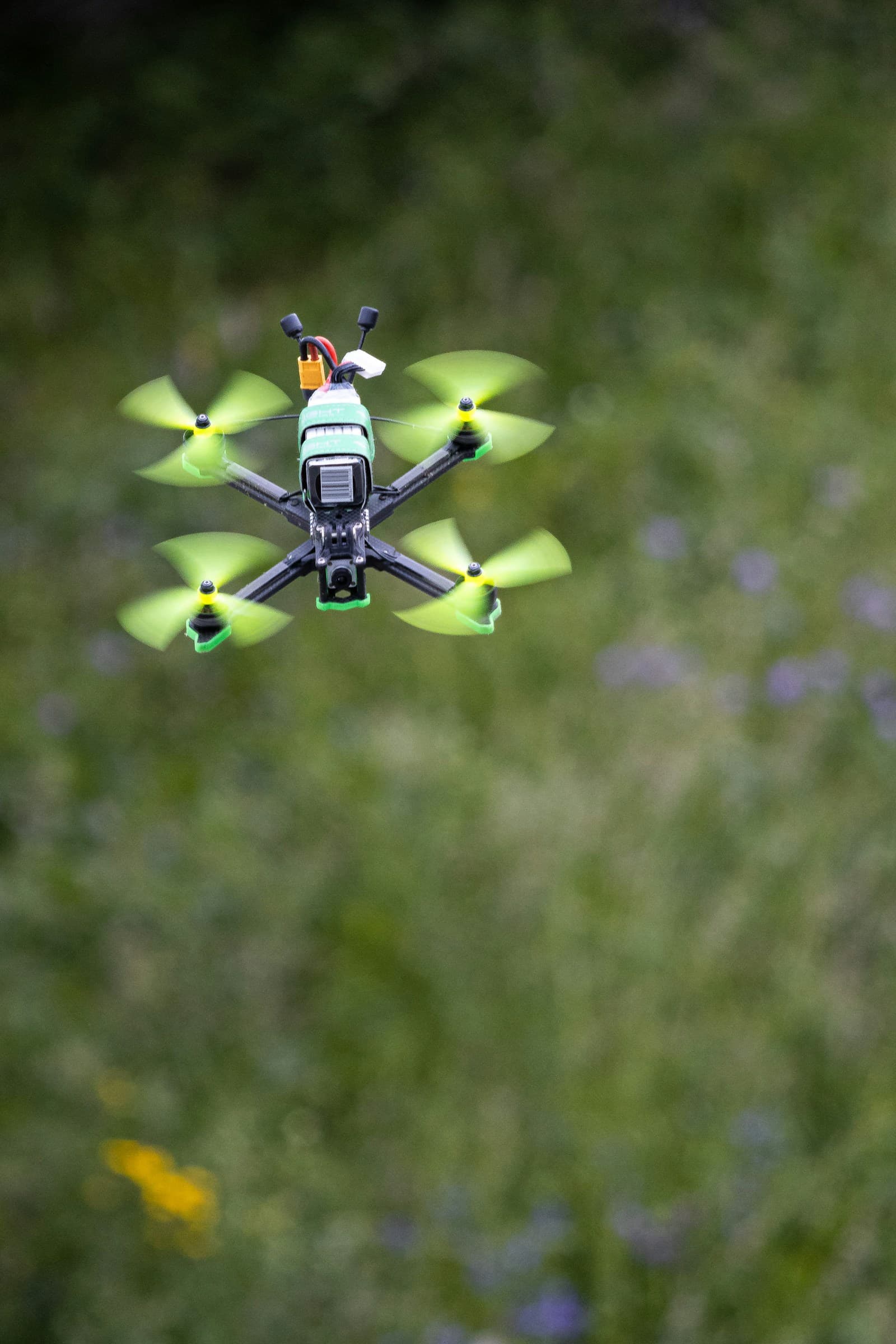
At approximately 08:00 local time (05:00 UTC) on Saturday, May 23, 2026, an unidentified drone crashed into Dridža Lake in Kombuļi Parish, Krāslava Municipality, south-eastern Latvia, and exploded on impact with the water. Local residents witnessed the crash and reported it to Latvia's State Security Service (VDD). Debris from what authorities described as a possible unmanned aircraft was recovered from the lake. No human injuries were reported; dead fish were observed in the lake following the explosion.
AirVeto's wind-model data for the event window: At 05:00 UTC on 23 May - during the crash window - the 1,000 m layer over Krāslava Municipality showed NW wind at 33.8 km/h.
The incident occurred approximately 20 km from the Belarusian border and roughly 100 km from the Russian border - in the same Latgale border region where two Ukrainian drones struck the Rēzekne oil-storage depot on May 7, 2026.
What witnesses saw
An eyewitness, Vadims Stepanovs, described watching the drone before impact:
"It flew over the lake, turned around, flew over an island, and then its engine shut off, it fell into the lake and exploded."
The account is consistent with a powered drone losing propulsion before hitting the water - not a controlled strike or intercept. No controlled detonation sequence was reported; the explosion appears to have occurred on contact with the lake surface.
Three agencies were deployed to the crash site
Three agencies deployed to the site:
- State Police, with additional police drone-unit equipment
- State Fire and Rescue Service, with boats to retrieve debris from the water
- National Armed Forces (NBS)
Debris was recovered from the lake. The type and origin of the drone had not been publicly confirmed at the time of reporting.
Acting Defence Minister Evika Siliņa, the former prime minister who resigned on 14 May following the political crisis triggered by the Rēzekne strikes, said she was in contact with responsible services working in the Krāslava region near the lake.
Viktorija Lenė, Deputy Chair of Krāslava Municipal Council, confirmed to media that the incident had taken place in Kombuļi Parish.
No alert was issued
The National Armed Forces (NBS) confirmed that its sensors had not detected the drone entering Latvian airspace before the crash. Because no incoming drone was tracked on approach, no SMS cell-broadcast warning was issued to residents in the area.
The detection gap follows a pattern visible in the 7 May Rēzekne incident, where NBS commander Kaspars Pudāns acknowledged that detection technology had failed. In the weeks since, Latvia has been under pressure to explain how low-flying or small objects continue to evade its air-picture systems along the eastern and south-eastern border.
The crash fits a 2026 pattern of unidentified drones in Latvian border regions
The Dridža Lake crash is the latest in a 2026 sequence of unidentified drone incidents in Latvia's border regions:
- March 25, 2026 - Dobročina village, Krāslava Municipality. A Ukrainian drone came down in Krāslava during a strike on Russian targets; another struck Estonia's Auvere power station the same night.
- May 7, 2026 - Rēzekne and Viļāni, Latvia. Two Ukrainian drones - identified by Russia as An-196 "Lutyi" strike UAVs - hit an oil-storage facility. Defence Minister Andris Sprūds and PM Evika Siliņa both resigned in the ensuing political crisis. See the Rēzekne / Viļāni incident page.
- May 19, 2026 - Estonia. A Romanian NATO F-16 shot down an intruding drone over Estonia, the first fighter intercept of an errant drone over Baltic NATO airspace. See the Estonia drone shootdown page.
The Dridža Lake crash shares Krāslava Municipality as its setting with the March Dobročina incident - two drone events in the same southeastern Latvian district within two months. The municipality sits at the point where the Latvian-Belarusian border curves closest to the Latgale interior.
The drone’s provenance had not been established in initial reporting: Ukrainian long-range strike, Russian provocateur, or an entirely different origin all remained possible.
Wind conditions over south-eastern Latvia
At 05:00 UTC on 23 May - during the crash window - the 1,000 m layer over Krāslava Municipality showed NW wind at 33.8 km/h. A steady flow pushing southeast at this level was the atmospheric background as the drone approached Dridža Lake. Once the engine cut out over the water, as the eyewitness described, the wind conditions at this layer became the governing factor for the final descent.
This reconstruction draws on reporting by LSM and LRT, and on AirVeto's wind-model data for the 05:00–06:30 UTC window on May 23, 2026. How the model is built and where it is reliable is on the methodology page.
Two things make this crash notable even with thin public facts: it happened in the same Latgale border district that has seen repeated drone crossings since March, and Latvia's alert system - again - did not trigger. The gap between what crashed in the lake and what the sensors caught is the open question.
Related location
- NATO eastern flank - The frontier where EU airspace meets Russia and Belarus across five NATO member states - the active zone of drone incursions, smuggling balloon recoveries, and Baltic Air Policing intercepts since 2025.
Sources
Last updated: