
NATO's eastern flank runs along five member states - Estonia, Latvia, Lithuania, Poland, and Finland (which joined in 2023) - sharing a combined land frontier with Russia and Belarus that extends roughly 2,500 kilometers from the Barents Sea coast to the Carpathian Mountains. It is the only part of NATO territory that is simultaneously contiguous with both Russia and Belarus, and the only section of the EU's eastern boundary where the two bordering states are not separated by neutral territory. That geographic fact makes it the most closely watched airspace in Europe - and the zone where wind data, drone alerts, and balloon recoveries have accumulated most rapidly since late 2025.
On AirVeto, the eastern flank view covers the wind field across all five member states at eight altitude bands from 80 meters to 7 kilometers. Orange border segments mark where wind is currently crossing from Russian or Belarusian territory within 85 degrees of the border-normal - the threshold AirVeto uses as its inflow indicator. At flank scale, several segments across different countries can activate under the same synoptic system simultaneously, which is why a single passing front sometimes produces orange readings on the Finnish-Russian border, the Lithuanian-Belarusian frontier, and the Polish-Belarusian border at the same time. This is regional wind context - a record of when the airspace geometry was compatible with cross-border movement - not a trajectory model and not a surveillance feed.
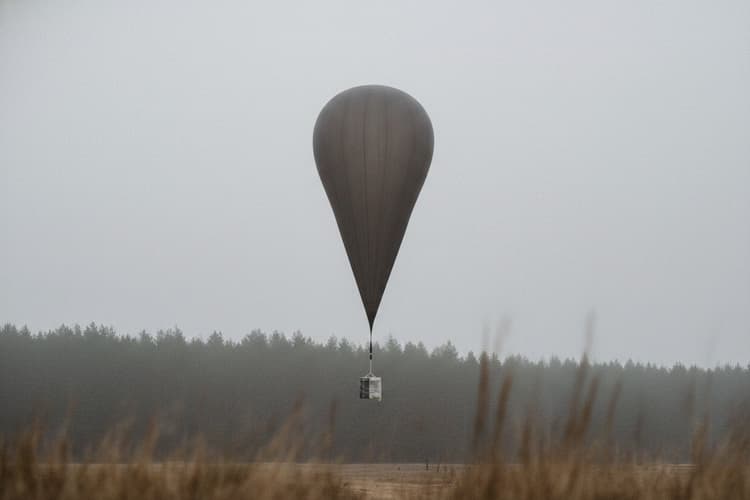
Smuggling balloons launched from Belarusian territory typically cruise between 2,000 and 8,000 meters. At those altitudes the mid-troposphere wind field governs drift; the boundary-layer wind near the ground is often decoupled and gives a misleading picture of what actually carries a balloon across a border. For balloon-type events on the eastern flank, AirVeto's wind field is directly analytical: it shows the drift path the balloon rode, and the orange inflow indicator at the relevant altitude confirms when conditions were compatible with a Belarusian-origin release. The 3,000-meter layer is the working default for drift reasoning.
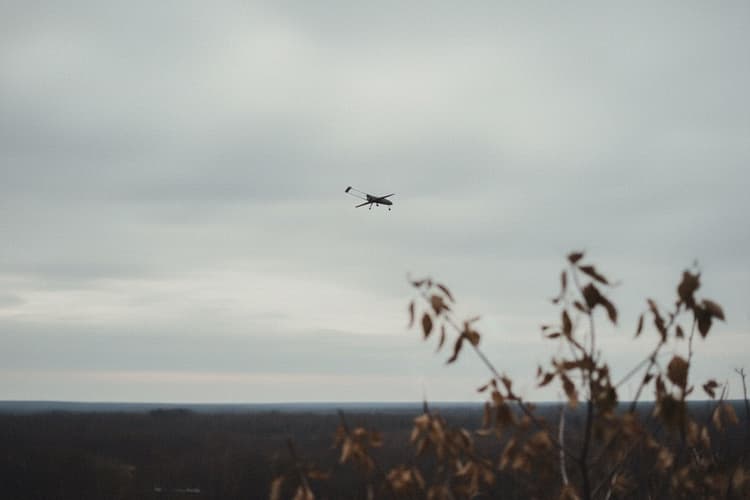
Navigation-guided drones targeting Russian infrastructure lose lock under Russian electronic warfare and stray into Baltic airspace. For these events AirVeto's wind layer shows the regional airflow at the drone's cruise altitude during its final, uncontrolled leg - it is not a release-point reconstruction and not a trajectory for a powered aircraft under guidance. Once a drone loses navigation, it becomes a partially wind-dependent object, and the wind field at that altitude is useful context for understanding which direction it drifted after guidance failed. It does not substitute for radar track or recovery reporting; it is upstream context. This distinction governs every drone-type entry in the incident archive.
Baltic Air Policing - NATO's standing air-surveillance mission rotated among allied nations at Šiauliai Air Base in Lithuania and Ämari Air Base in Estonia - has responded to repeated drone alerts on the eastern flank since late 2025. The documented pattern evolved: early scrambles were identification-only, confirming the object's type and heading without engaging. By mid-2026 that posture had shifted, with the first confirmed aerial intercept occurring over Latvia in June 2026. Balloon alerts over Lithuania have generated ground-response recoveries rather than air intercepts, since balloons typically descend after the payload is released. The incident archive below collects the individual events with reconstructed wind fields for each.
Five dedicated location hubs in the AirVeto system cover specific points on the eastern flank in detail. The Suwałki Gap - the 65-kilometer land link between Poland and Lithuania, and the only land connection between the Baltic states and the rest of the EU - is the most strategically analysed single point on the flank. Vilnius International Airport, 30 kilometers west of the Belarusian border, has been repeatedly closed by balloon incursions and has its own dedicated incident archive. The Polish-Belarusian border hub covers the EU's longest land frontier with Belarus, centred on the Podlaskie region. The Kaliningrad hub covers the Russian exclave bordered by Poland and Lithuania. The Gulf of Finland hub covers the Baltic maritime zone between Estonia and Finland, where AIS anomalies and GPS-spoofing reports have been documented alongside the drone alerts.
AirVeto is an analytical layer, not a monitoring service. The wind field and incident archive answer specific, historical questions - was the airspace geometry compatible with a cross-border release at this altitude on this date, and what happened at this location - not what is crossing right now. For real-time airspace monitoring, operators rely on radar, national defence networks, and official alert channels. AirVeto's role is to put the wind context on record alongside the incident, so the question of whether the wind could have carried it has a verifiable answer.
Incidents at this location
- 🇱🇻 · Jun 8, 2026 · Nautrēni Parish
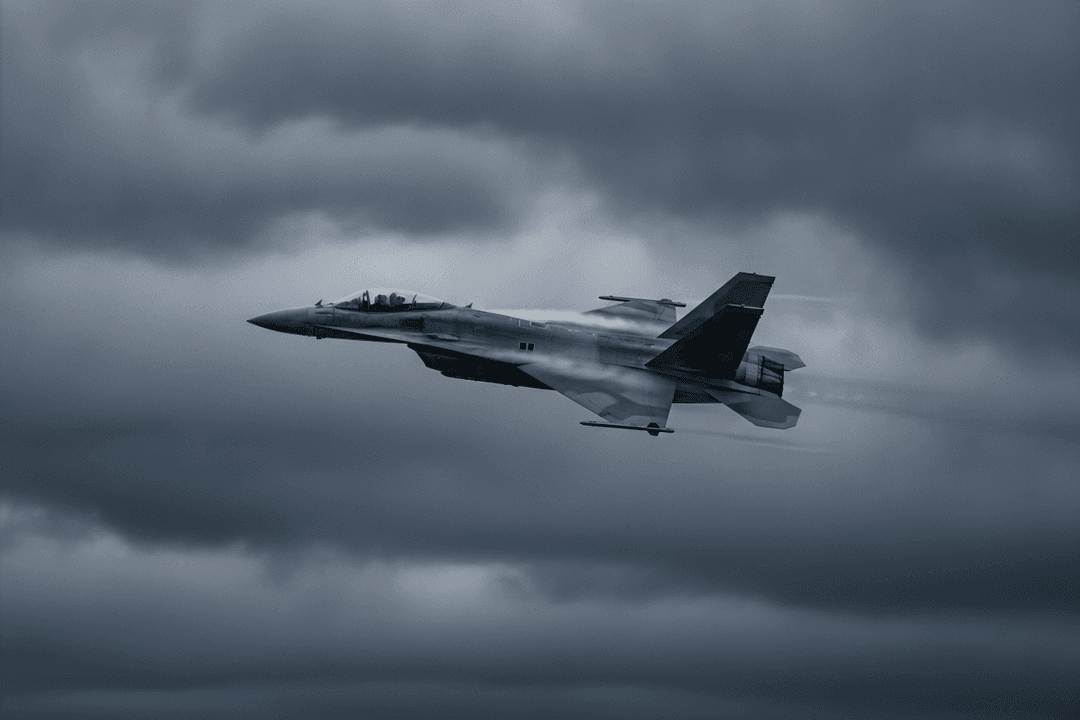
French jets shoot down drone over Nautrēni, Latvia's first
On June 8, 2026, NATO jets shot down a foreign drone over Nautrēni Parish, Rēzekne Municipality - the first confirmed aerial intercept of a drone entering Latvian airspace from abroad. - 🇪🇪 · May 19, 2026 · Kablaküla village
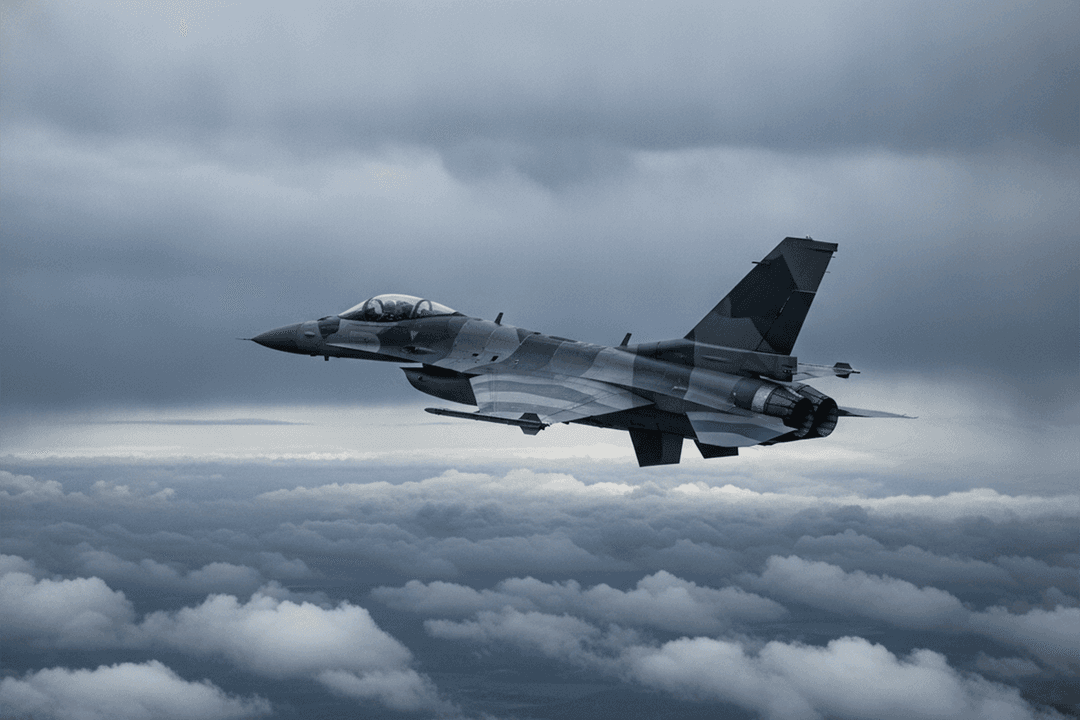
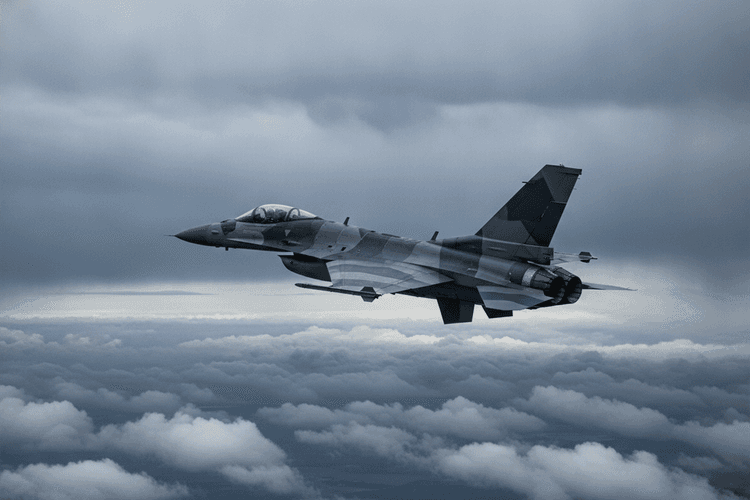
Romanian F-16 shoots down drone over Estonia, NATO first
On May 19, 2026, a Romanian NATO F-16 from the Baltic Air Policing detachment shot down an intruding drone near Kablaküla, Estonia - the first NATO fighter intercept of a drone over Baltic airspace. - 🇫🇮 · Mar 29, 2026 · Oravala
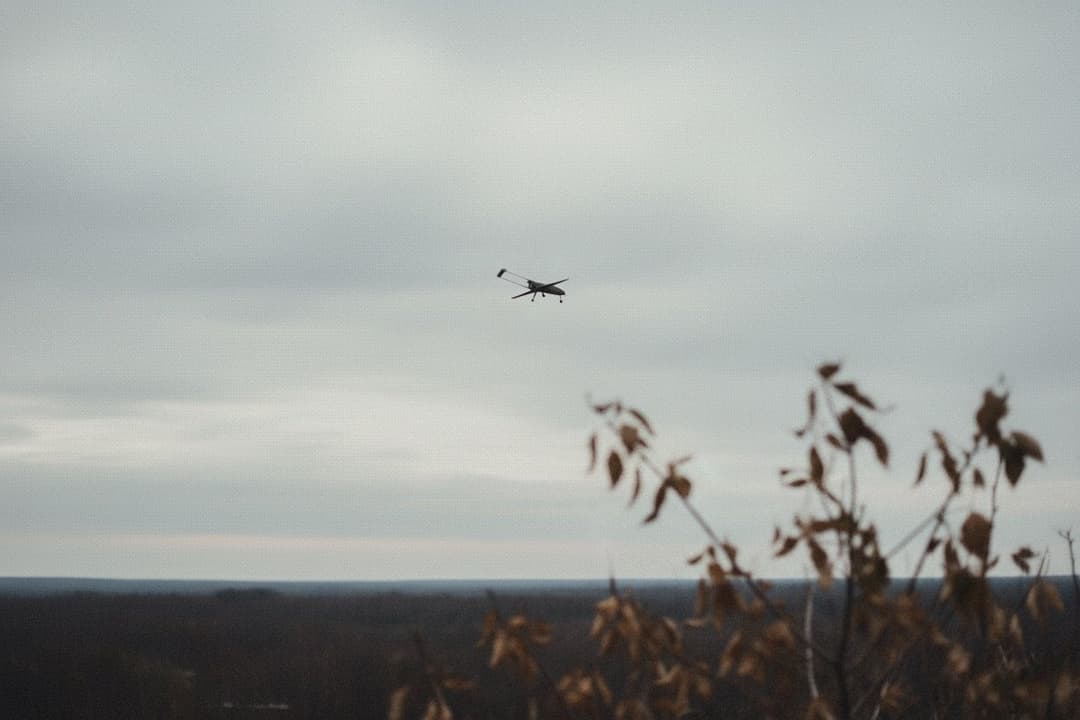
Ukrainian drones crash near Kouvola, Finland after EW jamming
Two Ukrainian drones crashed in southeastern Finland on March 29, 2026 after Russian EW jamming diverted them from a Ukrainian strike on Ust-Luga oil terminal. - 🇫🇮 · Mar 31, 2026 · Lake Pyhäjärvi
Ukrainian Chaika crashes into Finnish lake near Russia
A Ukrainian Chaika drone with an unexploded warhead crashed on frozen Lake Pyhäjärvi near Parikkala, Finland, on March 31, 2026, 2 km from the Russian border. - 🇫🇮 · Apr 11, 2026 · Perheniemi
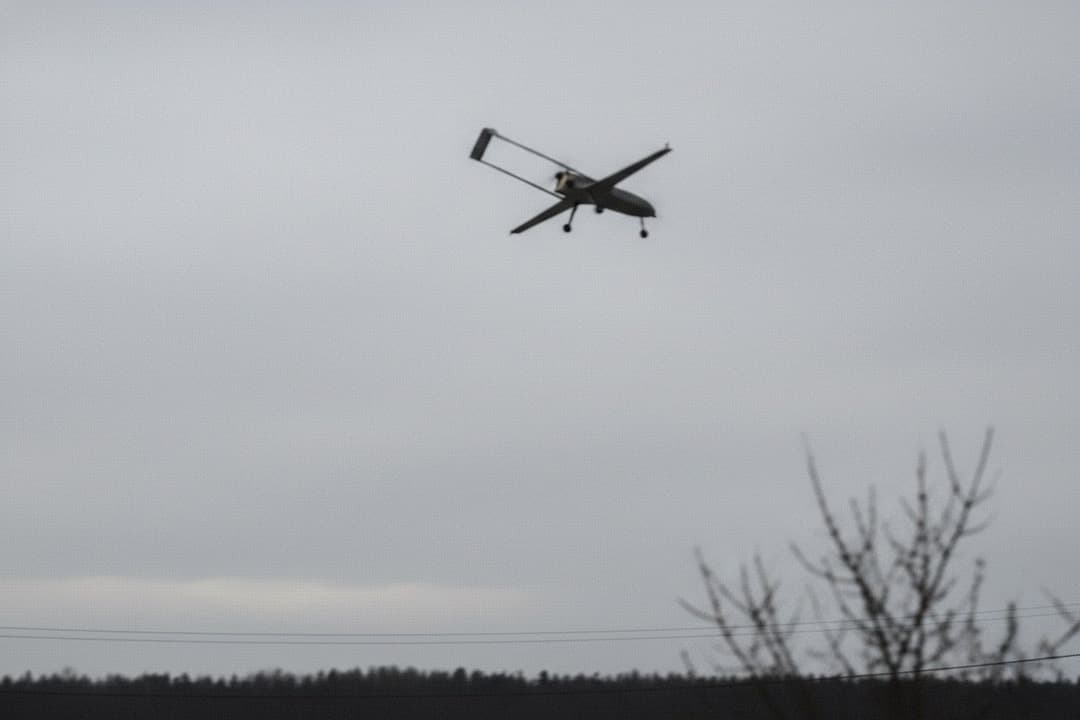
Ukrainian drone warhead detonates near Iitti, Finland
A Ukrainian drone with an unexploded warhead crashed in Perheniemi, Iitti, Finland on April 11, 2026; EOD detonated it around 20:00 EEST. NBI opened two probes. - 🇫🇮 · May 15, 2026 · Helsinki-Vantaa International Airport

Drone closes Helsinki-Vantaa airport in first-ever HEL shutdown
A drone alert closed Helsinki-Vantaa airport 04:00–07:19 EEST on May 15, 2026, triggering shelter-in-place for 1.8 million people; flights diverted to Stockholm and Rovaniemi. - 🇱🇻 · May 23, 2026 · Dridža Lake
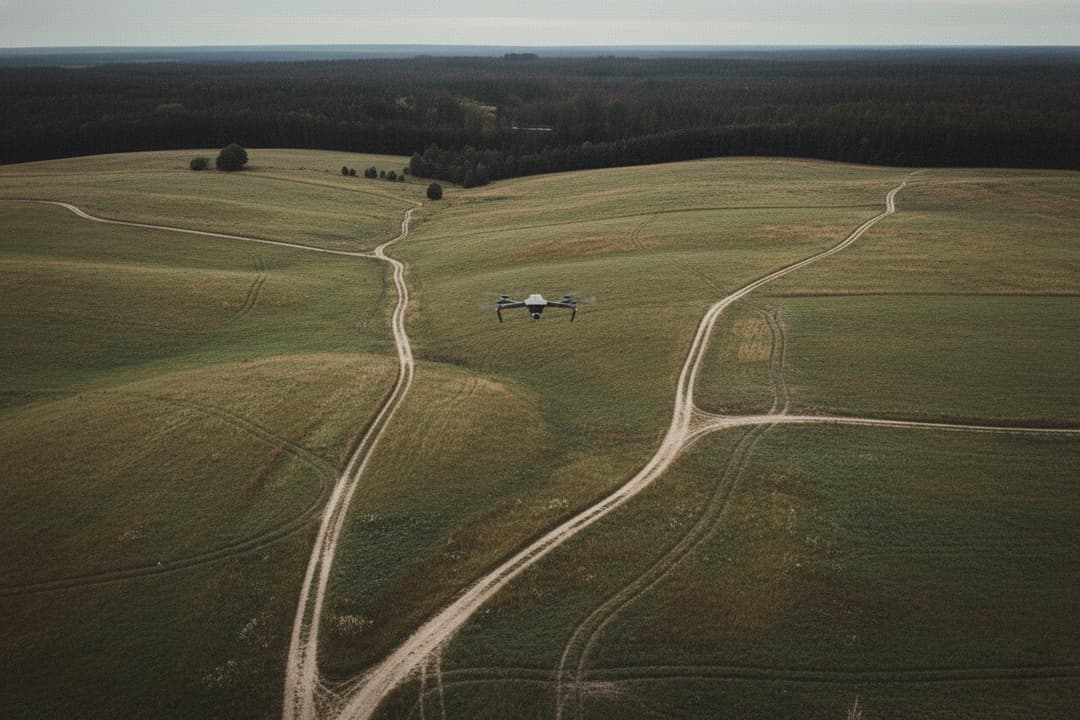
Drone explodes on impact with Dridža Lake, Latvia
An unidentified drone crashed into Dridža Lake in Krāslava Municipality, Latvia, on May 23, 2026 and exploded on impact; no injuries were reported, and no detection alert was issued beforehand. - 🇱🇻 · May 7, 2026 · Rēzekne and the Viļāni area
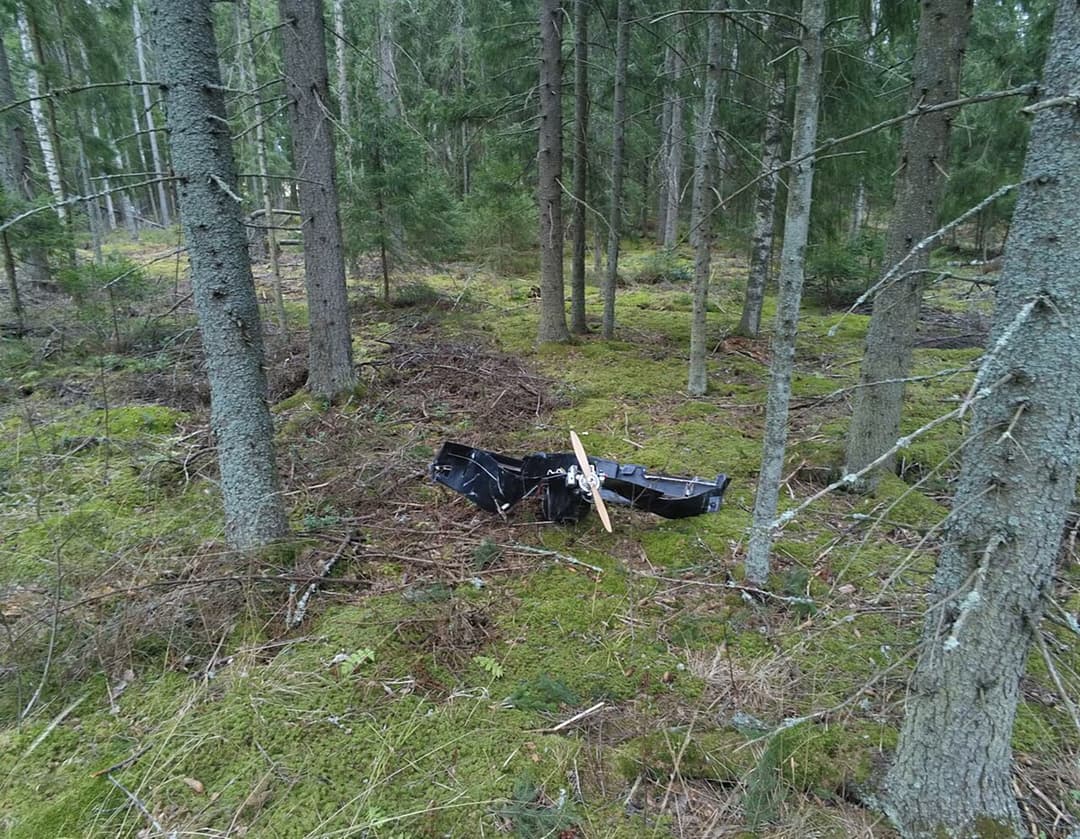
Drones strike Rēzekne oil depot, trigger Latvia political crisis
Two drones struck the Rēzekne oil-storage facility in Latvia on May 7, 2026, damaging four fuel tanks and triggering the resignations of the defence minister and prime minister. - 🇱🇻 · May 19, 2026 · Latgale region
Drones trigger five-county shelter alert in eastern Latvia
A drone entering from the direction of Russia triggered shelter-in-place orders across Latgale and Vidzeme on May 19, 2026, suspending train services across the affected zone. - 🇱🇻 · May 21, 2026 · Latgale region
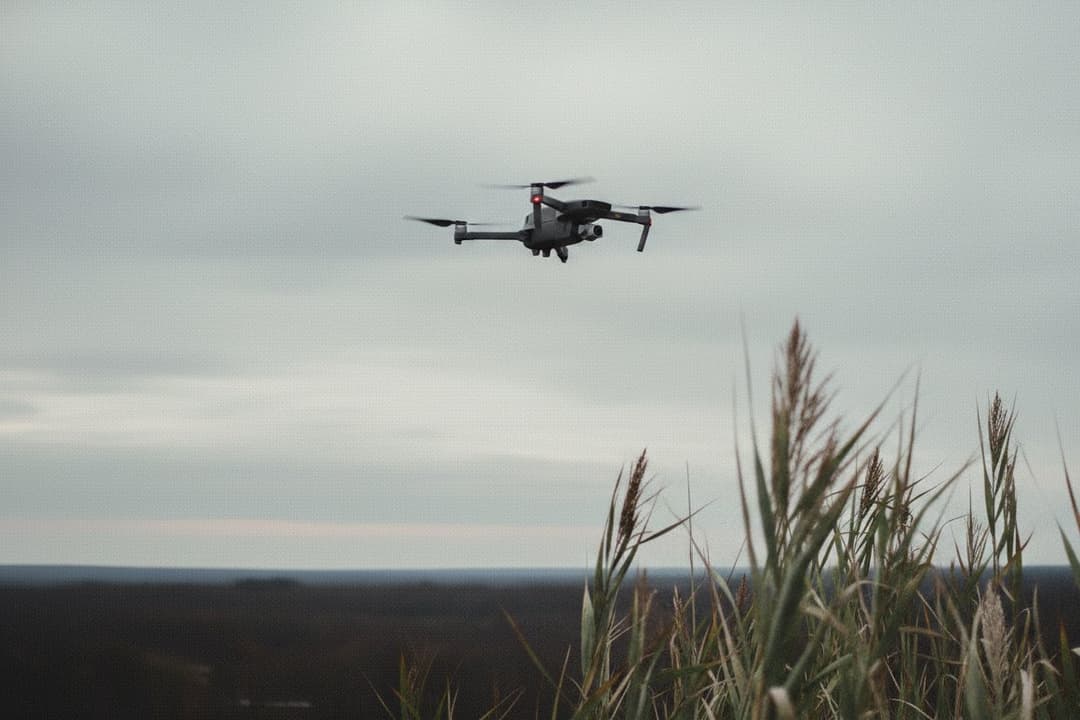
Two drone signatures vanish over Krāslava and Rēzekne, Latvia
A drone air-threat alert covered Krāslava, Rēzekne, Ludza, and Augšdaugava on May 21, 2026; a drone was detected but not recovered, two days after the five-county shelter of 19 May. - 🇱🇹 · May 20, 2026 · Vilnius and northeastern Lithuania
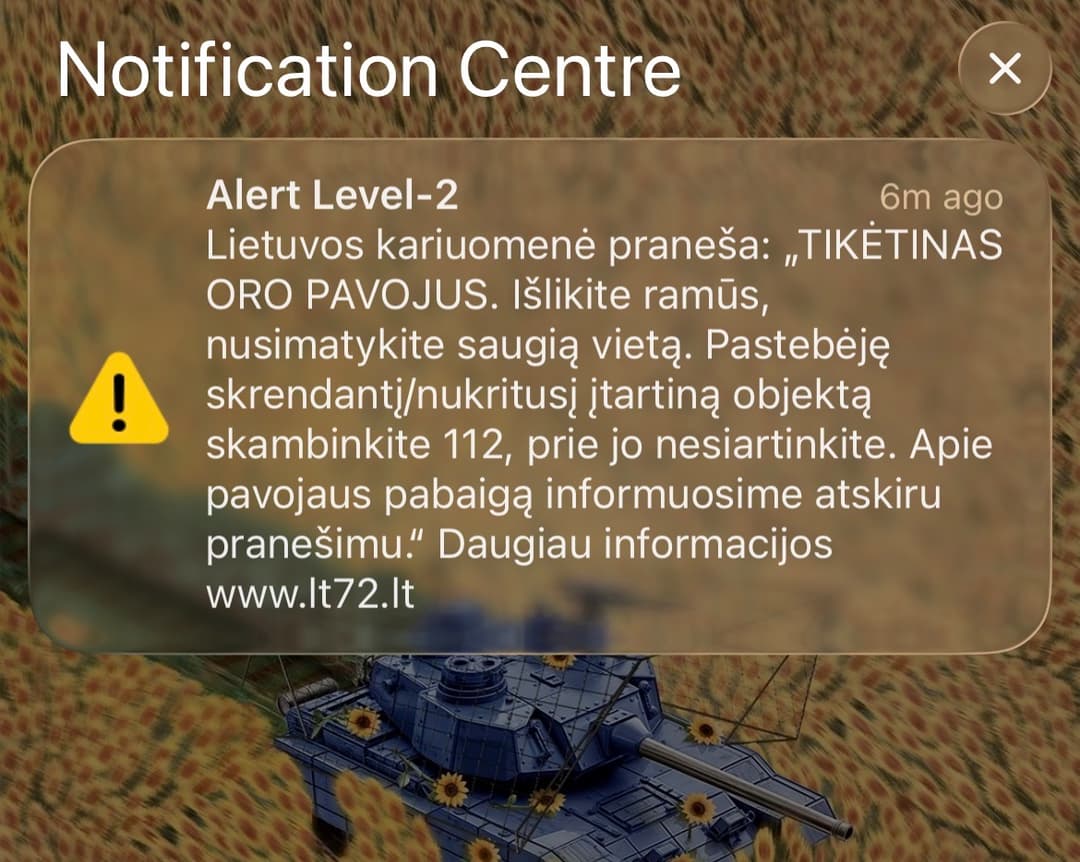
Drone alert shuts Vilnius airport, president moved to shelter
An unidentified radar mark from Belarus triggered Lithuania's air-danger alert on May 20, 2026, closing Vilnius Airport and moving officials to shelter; lifted at 10:58 with no impact confirmed. - 🇱🇹 · May 21, 2026 · Utena district
Two drones vanish from radar over Utena, Lithuania
Lithuania's second air-danger alert in two days - radar tracked two objects toward Utena on May 21, 2026; NATO fighters were scrambled, but both signatures were lost. - 🇱🇹 · May 17, 2026 · Samanė village
Drone found radar-undetected in Samanė, Utena district
A destroyed drone was found near Samanė village, Utena district, on May 17, 2026; Lithuanian radars had not detected it in flight, and preliminary markings suggested Ukrainian origin. - 🇪🇪 · Jun 3, 2026 · Eastern and southern Estonia
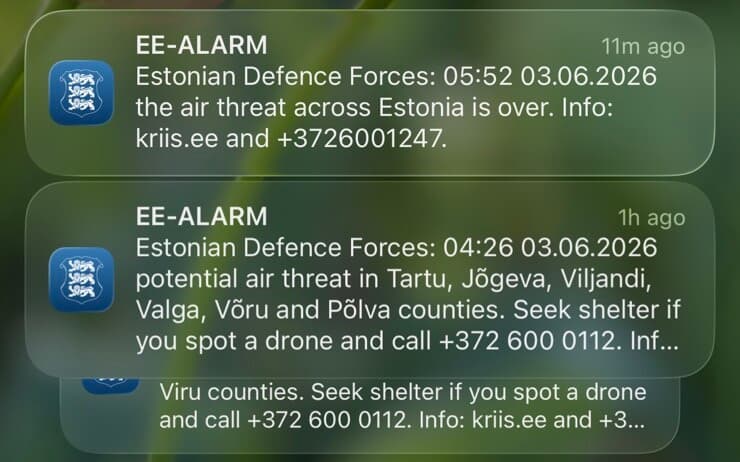
Drones trigger alerts across six counties in Estonia and Latvia
Overnight drone alerts across six Estonian counties and Latvia's Alūksne municipality on the night of June 2–3, 2026 - NATO air policing scrambled; no drone was confirmed destroyed. - 🇱🇹 · Jun 13, 2026 · Nemenčinė
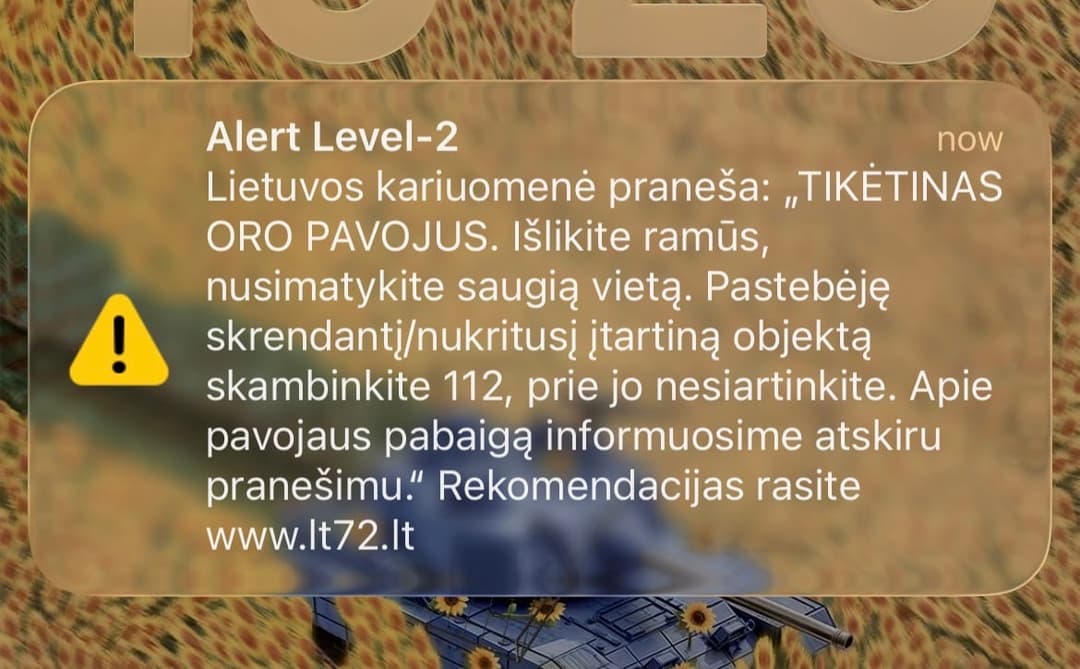
Balloon from Belarus triggers Vilnius alert, fighters scrambled
Lithuania issued a yellow-level air alert for Vilnius on June 13, 2026 after a meteorological balloon drifted from Belarus. All-clear after 23 minutes. - 🇱🇹 · Jun 20, 2026 · International airspace

Baltic Sea, 20 Jun 2026 - AN-30, Su-35 escort, transponder off
On June 20, 2026, NATO fighters identified and escorted an AN-30 and Su-24MR reconnaissance pair with Su-35 escort, flying dark from Kaliningrad to mainland Russia. - 🇱🇻 · Aug 30, 2026 · Demene Parish
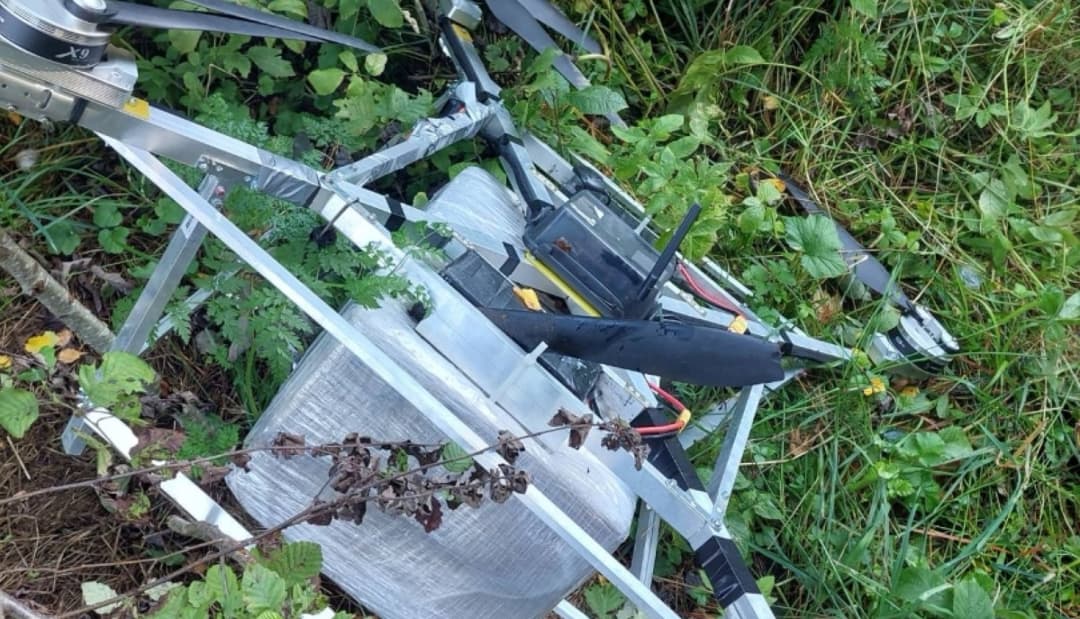
Demene drone, 30 Aug 2026 - 15,000 cigarettes seized
Latvian border guards found a drone carrying 15,000 smuggled cigarettes in Demene parish, Augšdaugava Municipality, on August 30, 2026. - 🇪🇪 · Mar 30, 2026 · Lääne-Viru and Ida-Viru counties

Seven-county drone alert triggers EE-ALARM across Estonia
Estonia issued EE-ALARM across seven counties overnight on March 30–31, 2026 after the EDF reported potential drone sightings. A Finnair flight turned back; the alert cleared by 06:00 on 31 March. - 🇱🇻 · Mar 25, 2026 · Dobročina
Ukrainian drone crashes in Dobročina, Krāslava, Latvia
A Ukrainian military drone crossed into Latvia from Russia and detonated near Dobročina village, Krāslava municipality, in the early hours of March 25, 2026. Radar and acoustic sensors tracked it. - 🇱🇹 · Mar 23, 2026 · Lake Lavysas
Ukrainian drone crashes into Lake Lavysas, Lithuania
A Ukrainian military drone crashed near Lake Lavysas, Varėna district, in the early hours of March 23, 2026. Radar missed it; the Prime Minister blamed Russian electronic warfare. - 🇵🇱 · Jan 28, 2026 · Przasnysz
Drone lands 70 meters from Polish EW base at Przasnysz
A drone crashed 70 meters from Poland's 2nd Radio-Electronic Centre at Przasnysz on January 28, 2026, with no intercept means deployed. Military police are investigating; origin undetermined. - 🇵🇱 · Dec 25, 2025 · Podlaskie Voivodeship / Baltic Sea
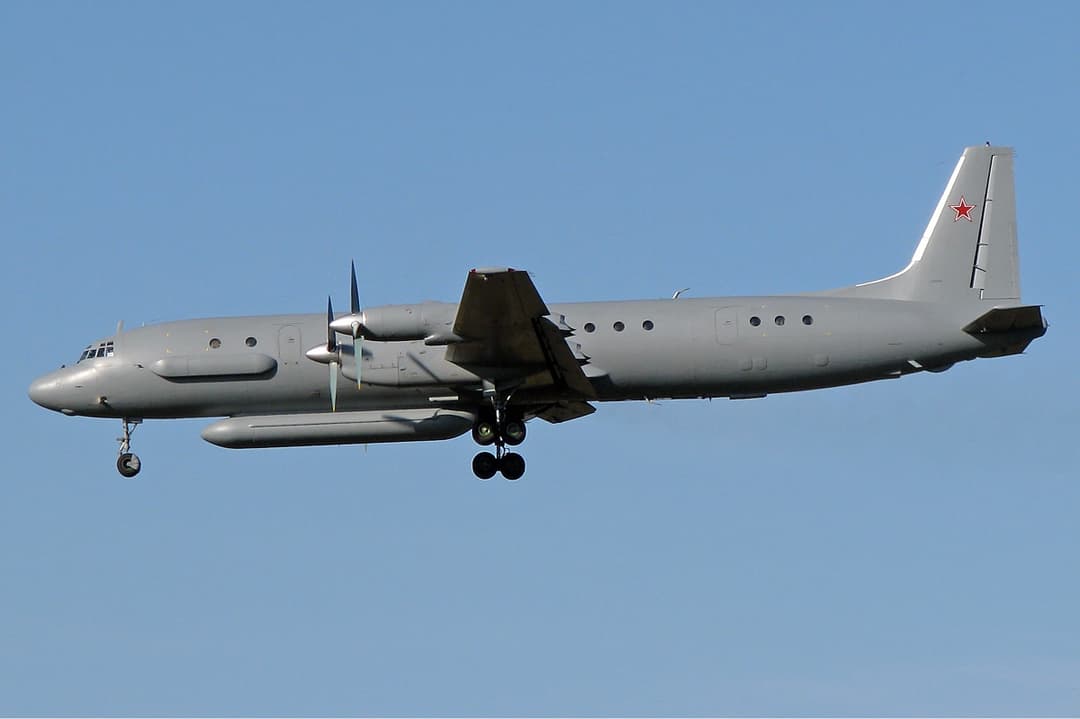
Russian IL-20M shadows balloon drop over Podlaskie, Poland
Polish jets intercepted a Russian IL-20M ELINT aircraft over the Baltic on December 25, 2025 while Belarusian balloons crossed Podlaskie - analysts called it a coordinated hybrid probe. - 🇱🇹 · May 19, 2026 · Trakai district

Smuggling balloons land near MP's home in Trakai, Lithuania
Two smuggling balloons carrying contraband cigarettes came down near a lake in Trakai district before dawn on May 19, 2026, a few houses from Lithuanian MP Edita Rudelienė's home. - 🇱🇹 · May 12, 2026 · Lauryno Ivinskio Street
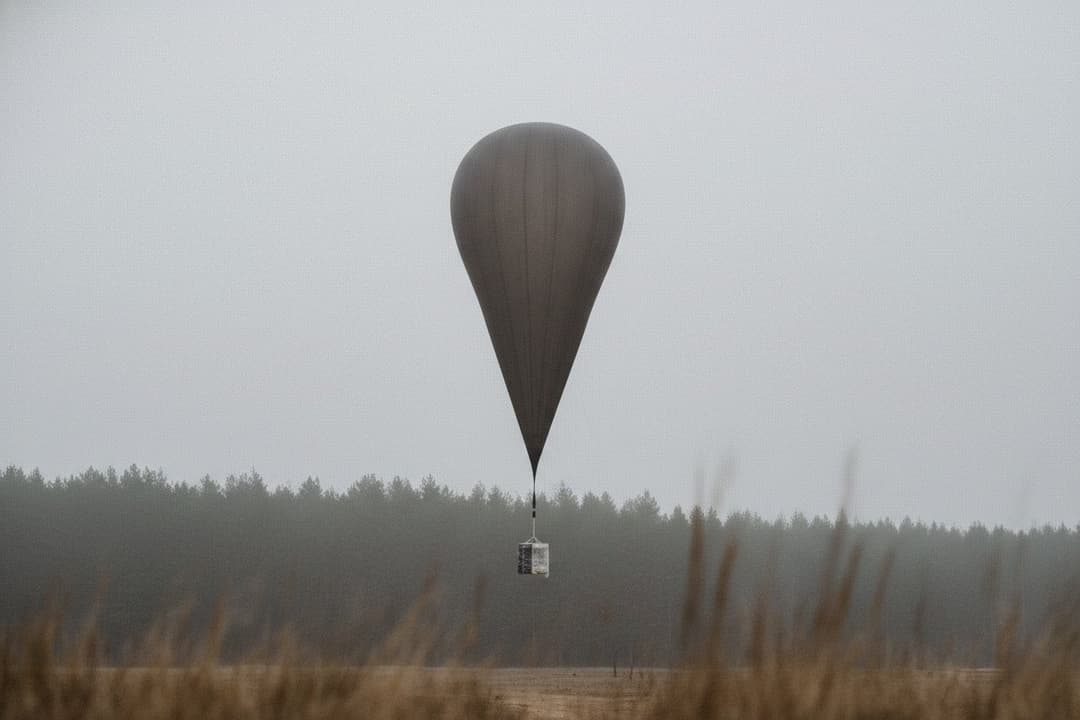
Belarus balloon carries 9,000 cigarettes into Kaunas, Lithuania
A balloon carrying ~9,000 cigarette packs landed in Šančiai, Kaunas, on May 13, 2026; the ICON wind field shows a sustained flow pushing north from the Hrodna (Grodno) oblast of Belarus. - 🇱🇹 · Jan 31, 2026 · Šventoji

Two smuggling balloons land on Šventoji coast, Lithuania
A twin-envelope balloon crossed Lithuania east to west at 1–3 km altitude on January 31, 2026, arriving over Šventoji on the Baltic coast at around 09:00 local time. - 🇱🇻 · Nov 23, 2025 · Latgale region

Seven smuggling balloons recovered across Latgale, Latvia
NBS radar tracked seven to eight Belarusian smuggling balloons crossing into Latgale on the night of November 23–24, 2025, carrying more than 720,000 cigarettes. - 🇵🇱 · Dec 24, 2025 · Podlaskie Voivodeship
Smuggling balloons land across Białystok and Podlaskie, Poland
On December 24, 2025, AirVeto's model flagged a Belarus→Poland crossing zone; Polish authorities overnight recovered four smuggling balloons - the first documented AirVeto prediction match. - 🇵🇱 · Jan 21, 2026 · Sokółka County
Belarus balloons close Podlaskie airspace for three nights
Polish military radar detected Belarusian smuggling balloons crossing into Podlaskie on January 21, 2026. A second wave on 31 January-2 February closed airspace; five smugglers arrested February 5. - 🇱🇹 · Feb 6, 2026 · Druskininkai
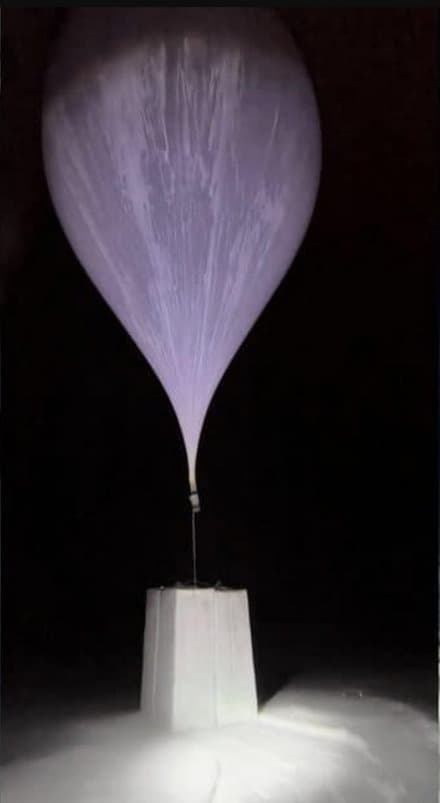
Record seven balloons land near Druskininkai, Lithuania
Seven balloons were intercepted and two individuals arrested in the Druskininkai area on February 6, 2026 - a daily record for Lithuania in 2026.
Related reading


Methodology: see /about/methodology. AirVeto is not for aviation, navigation, or safety-critical decisions.