
Drone lands 70 meters from Polish EW base at Przasnysz
A drone crashed 70 meters from Poland's 2nd Radio-Electronic Centre at Przasnysz on January 28, 2026, with no intercept means deployed. Military police are investigating; origin undetermined.
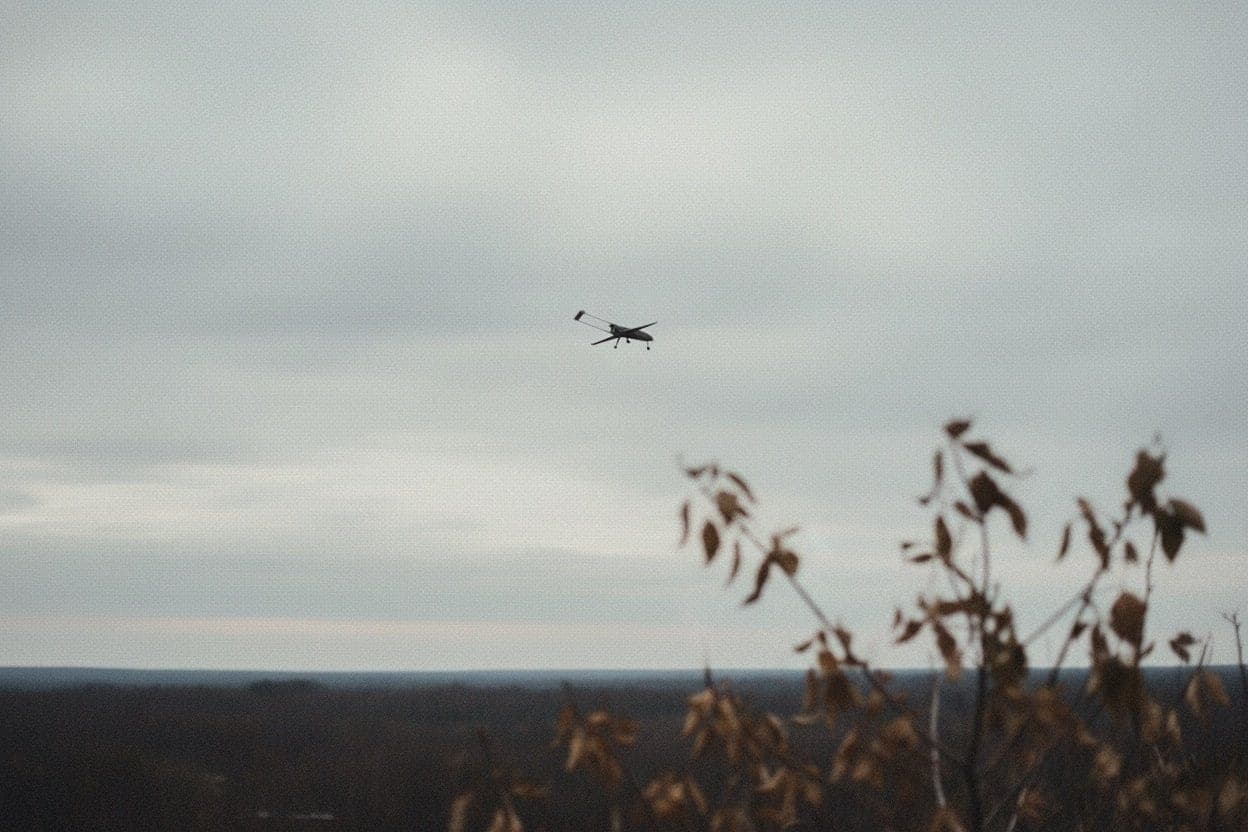
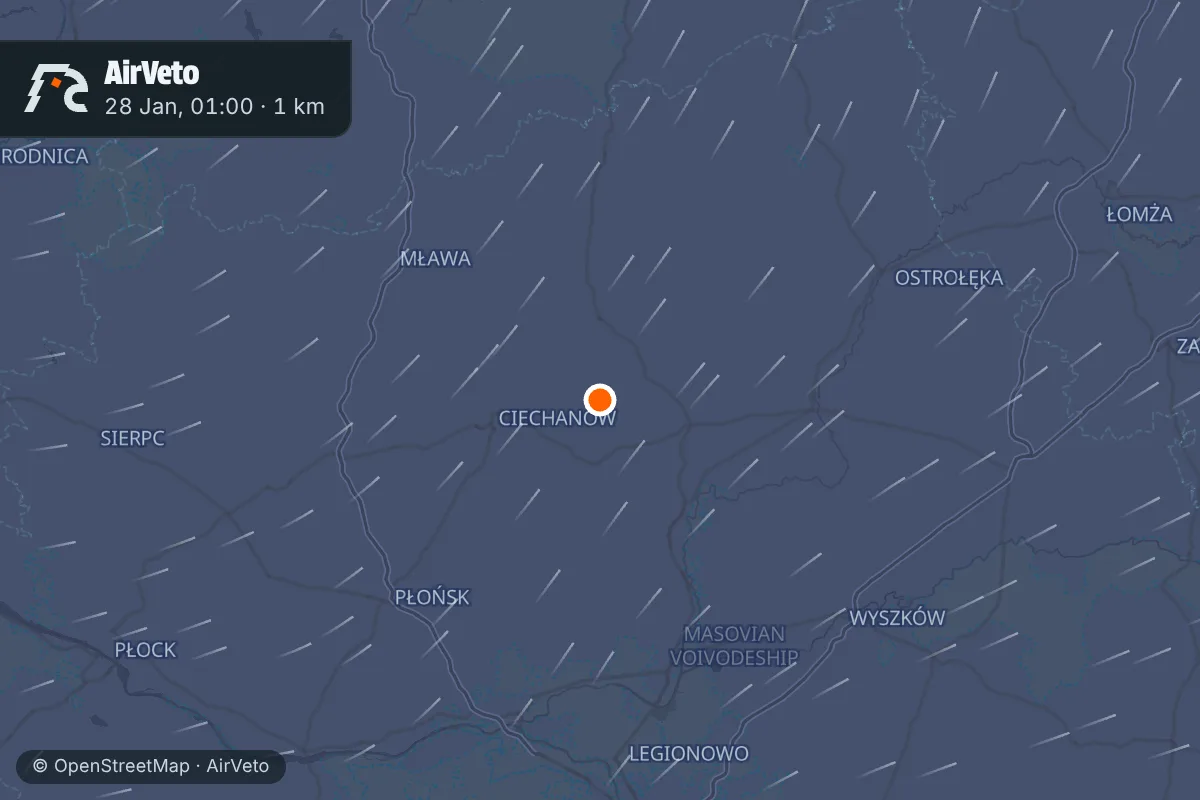
According to Anadolu Agency and Militarnyi, an unknown drone crashed 70 meters from the 2nd Radio-Electronic Centre - Poland's primary SIGINT and electronic-warfare installation - in Przasnysz, Masovian Voivodeship, at approximately 00:00 UTC on January 28, 2026. Poland had no intercept means deployed at the time of the crash. Military police opened an investigation; the drone's origin and type were not publicly determined. The crash proximity to a strategically sensitive facility, combined with the absence of any interception capacity, made the incident one of the most operationally concerning drone events recorded on NATO territory in 2025–26. AirVeto's wind reconstruction at 1,000 m covers central Poland during the January 28 overnight window.
The 2nd Radio-Electronic Centre - Poland's primary EW installation
The 2nd Radio-Electronic Centre (2. Centrum Radioelektroniczne) in Przasnysz is Poland's main facility for electronic intelligence (ELINT) collection, radar monitoring, and electronic-warfare operations in the northern sector of the Polish–Belarusian frontier. It is one of the primary military installations monitoring the Suwałki Gap - the 65 km strip of Polish-Lithuanian territory between the Kaliningrad Oblast and Belarus that is NATO's most strategically exposed land link, connecting Poland to Lithuania and the Baltic states.
A drone crash 70 meters from this facility - without any interception or detection that would have allowed interdiction before impact - represents a significant test of the facility's own close-in air-defence posture.
No intercept means - a capability gap exposed
The explicit statement from Polish military sources that no intercept means were available at the time of the crash is the most operationally significant detail. Despite being a SIGINT facility, the 2nd Radio-Electronic Centre did not have drone-intercept capacity deployed on the night of the event. This could reflect:
- A drone that entered the restricted zone from below radar coverage altitude
- A gap in perimeter sensor coverage that prevented early detection
- An absence of anti-drone jamming or kinetic intercept systems at the facility's immediate perimeter
The military police investigation opened in the days following the crash was, in part, designed to answer which of these gaps allowed the drone to reach the facility boundary uncontested.
Origin undetermined - three plausible hypotheses
Polish military police did not publicly assign responsibility for the drone at the time of publication. Three hypotheses circulated in defence-analysis circles:
- Belarusian intelligence collection - a deliberate reconnaissance flight targeting the EW facility's external configuration and radar profiles, consistent with the coordinated hybrid-probe pattern documented in the Christmas 2025 event.
- Russian diversion - a misdirected strike or reconnaissance drone launched from Russian-controlled Ukrainian territory on a northern arc, deflected by Russian EW or navigational error.
- Commercial misuse - a misidentified civilian drone. This hypothesis was considered low-probability given the facility's restricted-airspace designation and the absence of civilian flight activity in the zone.
Wind layer at 1,000 m over central Poland on 28 January
AirVeto's wind reconstruction covers the region at 1,000 m over Masovia during the January 28, 2026 overnight window. The embed above renders the wind field; methodology is described on the AirVeto methodology page.
The reconstruction above draws on reporting by Anadolu Agency, Defence Matters, and Militarnyi, and on AirVeto's wind-model data for the January 28, 2026 overnight window.
Polish airspace incident archive
- Osiny Shahed crash, August 20, 2025 - Poland
- Warsaw Belweder drone, September 15, 2025 - Poland
- Poland Christmas hybrid probe, December 25, 2025
- Podlaskie balloon incursion, January–February 2026 - Poland
The full record of drone and airspace incidents over Polish territory is collected at Dron nad Polską.
Related location
- NATO eastern flank - The frontier where EU airspace meets Russia and Belarus across five NATO member states - the active zone of drone incursions, smuggling balloon recoveries, and Baltic Air Policing intercepts since 2025.
Sources
- AA.com (Anadolu Agency) - Drone crashes near Polish electronic warfare base in Przasnysz (January 2026)
- Defence Matters - Unknown drone 70 meters from Poland's SIGINT base; no intercept available (January 2026)
- Militarnyi - Drone fell near 2nd Radio-Electronic Centre in Przasnysz; military police investigating (January 2026)
- Methodology
Last updated: