
French jets shoot down drone over Nautrēni, Latvia's first
On June 8, 2026, NATO jets shot down a foreign drone over Nautrēni Parish, Rēzekne Municipality - the first confirmed aerial intercept of a drone entering Latvian airspace from abroad.
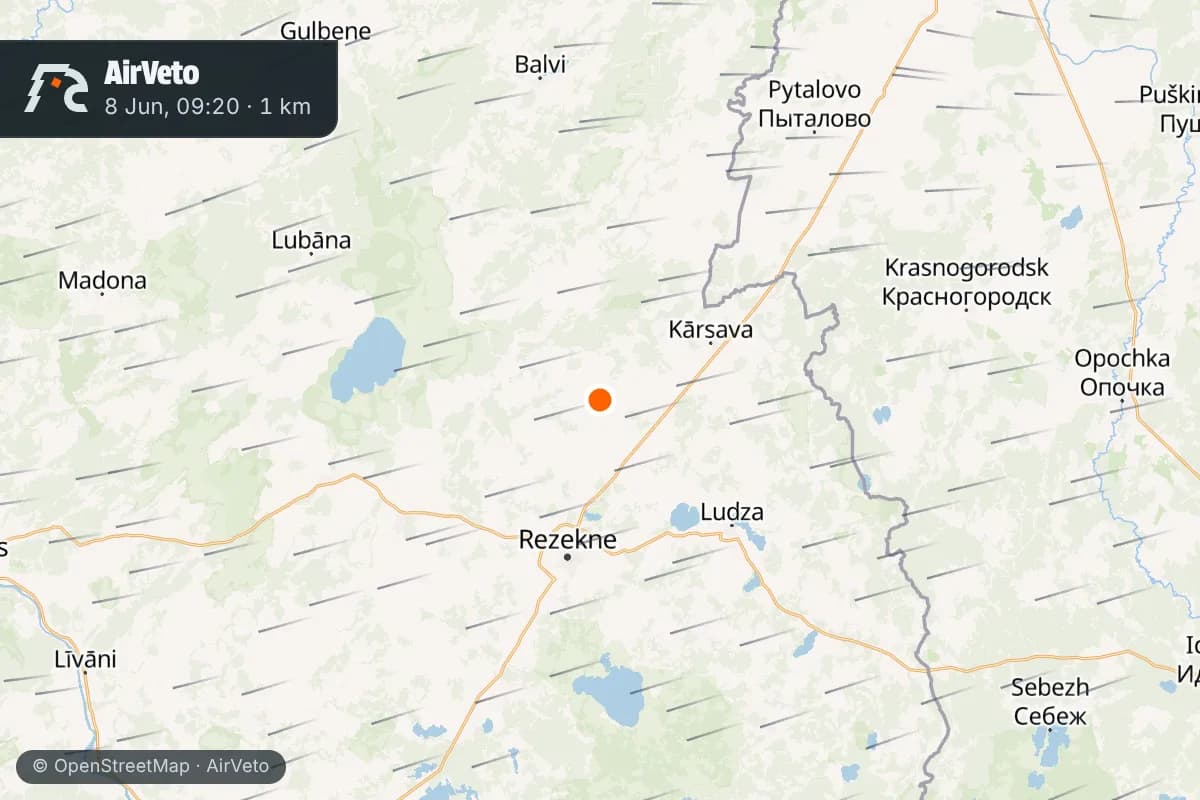
Latvia's National Armed Forces (NBS) confirmed on June 8, 2026 that NATO Baltic Air Policing jets shot down a foreign unmanned aerial vehicle over Nautrēni Parish, Rēzekne Municipality, after Russian electronic warfare diverted it into Latvian airspace from Russia. According to LSM, Latvia's public broadcaster, an airspace alert was issued for Ludza, Balvi, and Alūksne municipalities at approximately 09:20 local time (06:20 UTC); the drone was intercepted between Rēzekne and Kārsava, wreckage was recovered at the scene in Nautrēni Parish, and the alert was lifted at 10:30 local time (07:30 UTC). This was the first time Latvia had shot down a drone entering its airspace from abroad. AirVeto's wind layer for the 06:20–07:30 UTC window over eastern Latgale is in the map above.
The alert unfolded in two stages over seventy minutes
At approximately 09:20 local time (06:20 UTC), Latvia's National Armed Forces issued a cell-broadcast airspace alert covering Ludza, Balvi, and Alūksne municipalities - a yellow-level notification that a potential threat was present in Latvian airspace. Twenty minutes later, at approximately 09:40 local time (06:40 UTC), the NBS elevated the alert to orange for Rēzekne and Ludza municipalities, indicating that the threat was confirmed and immediate protective action was required.
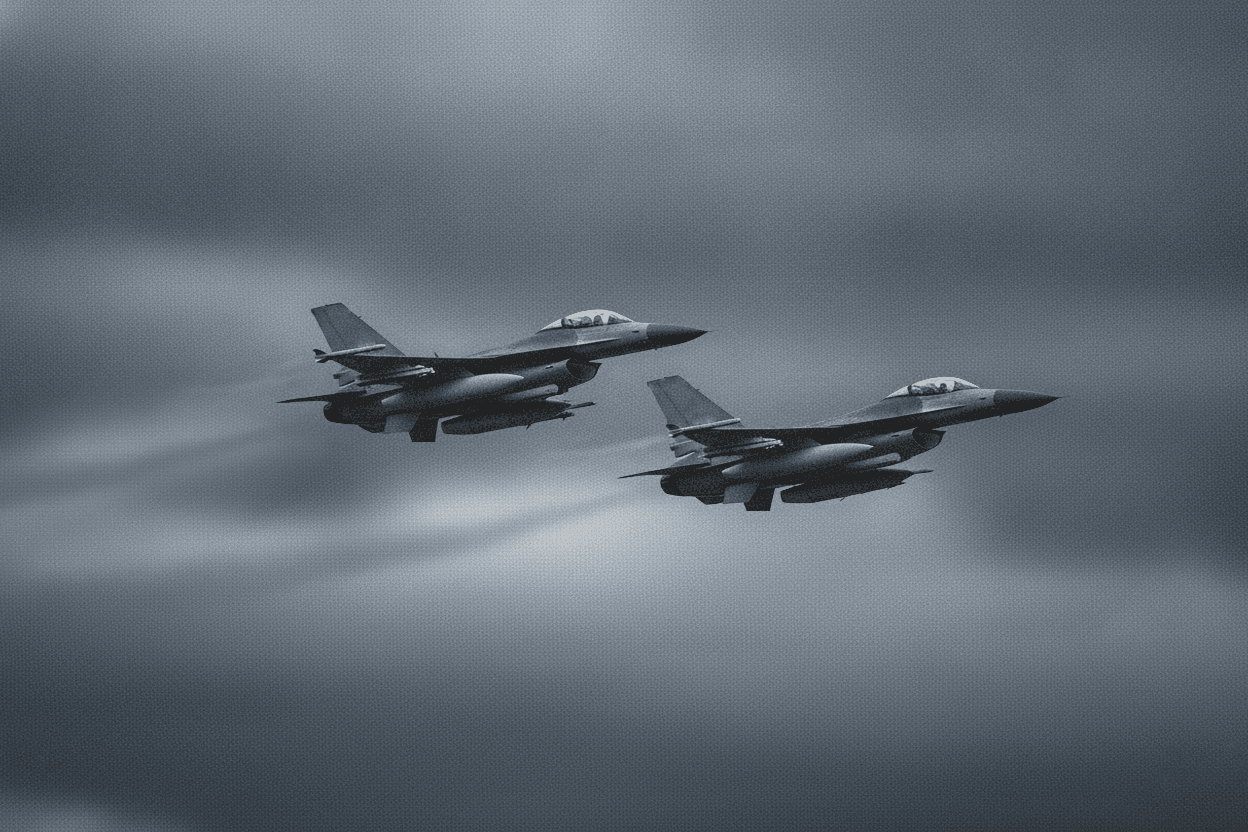
NATO Baltic Air Policing jets - French Rafale B aircraft flying from Šiauliai Air Base in Lithuania - intercepted and shot down the drone over Nautrēni Parish, in the area between Rēzekne and Kārsava. Wreckage was recovered at the scene. The NBS confirmed at 10:30 local time (07:30 UTC) that the airspace threat had ended and the alert was lifted across all affected municipalities.
Russian electronic warfare diverted the drone across the border
Latvian and NATO authorities attributed the incursion to Russian electromagnetic warfare. The NBS described the object as a foreign unmanned aerial vehicle that had entered Latvian airspace from Russia as a direct result of Russian electronic warfare interference - the same mechanism that has driven the sequence of drone crossings into Baltic NATO territory since March 2026.
The pattern is consistent: Ukrainian long-range drones are launched against Russian infrastructure targets, principally the Baltic-coast oil export terminals at Ust-Luga and Primorsk; Russian EW systems jam or spoof their navigation on final approach; the drones then deviate and enter Baltic airspace. Latvia's NBS and Baltic officials have consistently placed responsibility for these incursions on Russia, which uses the incidents to accuse NATO members of permitting Ukrainian operations from their territory.
The type of drone was not confirmed by Latvian authorities in initial reporting. No injuries were reported. Schools and infrastructure in the affected municipalities were not listed as damaged.
Latvia's first intercept - a policy shift carried out
On May 7, 2026, French Rafale jets on Baltic Air Policing duty were scrambled after three drones entered Latvian airspace; those drones crashed on Latvian territory without being shot down. NBS commander Kaspars Pudāns and then–Defence Minister Andris Sprūds cited safety criteria that had not been met for engagement - no assurance that debris would miss civilians or critical infrastructure. The Rēzekne / Viļāni drone strikes of 7 May damaged an oil-storage facility and set off the political crisis that led to Sprūds's resignation on 10 May and Prime Minister Evika Siliņa's resignation on 14 May.
Latvia's new Defence Minister, appointed after that crisis, stated publicly that drones entering Latvian airspace must be shot down. The 8 June intercept in Nautrēni Parish is the first execution of that stated policy: a drone entered Latvian airspace, NATO jets engaged it, and wreckage came down in Latvia rather than across the border.
The 19 May Estonia drone shootdown over Kablaküla was the first NATO fighter intercept over Baltic airspace, carried out by a Romanian F-16. June 8 is Latvia's first such intercept on Latvian soil.
This reconstruction draws on reporting by LSM, LRT, Bloomberg, and Euronews, and on AirVeto's wind-model data for the 06:20-07:30 UTC window over eastern Latgale on June 8, 2026. At 06:20 UTC on 8 June - at the start of the alert window - the 1,000 m layer over eastern Latgale showed E wind at 33.9 km/h. Moderate flow pushing west at this level was the atmospheric background for the approach and intercept. How the model is built and where it is reliable is on the methodology page.
The June 8 intercept is the latest incident in the 2026 series of drone incursions into Baltic NATO airspace. For the broader sequence, see the Estonia and Latvia drone alerts of 2–3 June, the Estonia drone shootdown of 19 May, and the 7 May Rēzekne / Viļāni strikes that reshaped Latvia's response posture.
Related location
- NATO eastern flank - The frontier where EU airspace meets Russia and Belarus across five NATO member states - the active zone of drone incursions, smuggling balloon recoveries, and Baltic Air Policing intercepts since 2025.
Sources
- LSM - Drone shot down by NATO jets in eastern Latvia (8 Jun 2026)
- LRT - NATO fighter jets shoot down a drone over Latvia (8 Jun 2026)
- Bloomberg - Latvia Says NATO Jets Shot Down Drone That Flew Into Airspace (8 Jun 2026)
- Euronews - Drone from Russia shot down in eastern Latvia, military spokesperson says (8 Jun 2026)
- AeroTime - NATO fighters shoot down drone after Latvia airspace alert (8 Jun 2026)
- Methodology