
Two drones vanish from radar over Utena, Lithuania
Lithuania's second air-danger alert in two days - radar tracked two objects toward Utena on May 21, 2026; NATO fighters were scrambled, but both signatures were lost.
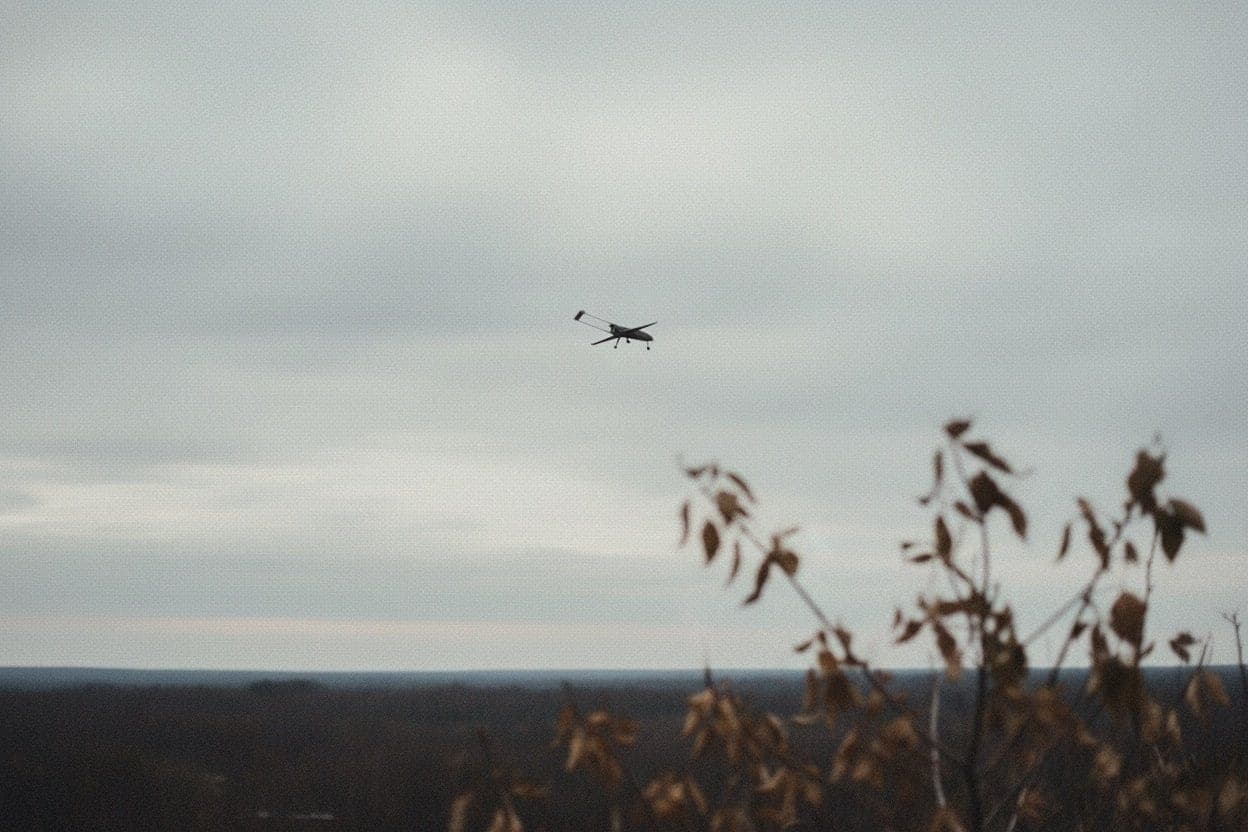
On the afternoon of Thursday, May 21, 2026, Lithuania issued an air-danger alert for the second day running after radar tracked two unidentified objects moving through its airspace toward the city of Utena. The Lithuanian Armed Forces followed the objects for roughly half an hour before both radar signatures were lost near Utena district. The alert was rescinded by 16:23 local time (13:23 UTC). NATO fighters were scrambled, a helicopter search began over the district, and by the evening of 21 May nothing had been found.
AirVeto's wind-model data for the event window: At 12:00 UTC on 21 May - at the start of the alert window - the 1,000 m layer across the zone between the Latvian frontier and Utena showed NW wind at 7.7 km/h.
As with the Vilnius-area alert one day earlier, the public record stayed thin after the all-clear. The objects were never visually identified, never held on Lithuanian radar long enough to classify, and never recovered. What is on the record is narrow: two contacts, a roughly 30-minute track toward Utena, and a search that had found nothing by evening.
The track and the alert
The objects entered from the direction of the Latvian frontier and were tracked on a course toward Utena. An air-danger alert was issued for Utena district and extended across eastern Lithuanian municipalities and the Vilnius area before being lifted by 16:23 local time.
NATO air-policing fighters were directed onto the contacts but could not confirm them visually - low cloud cover sat over the altitude band where the objects were detected. Lithuanian forces achieved neither a visual nor a sustained radar identification, and military-police aircraft did not hold the objects on their own radars either. Both signatures were lost near Utena district.
"The warning system is working; the algorithms are being refined."
That was the assessment of Rear Admiral Giedrius Premeneckas, commander of the Defence Staff, who noted that shifting weather and the pace of drone activity were straining the detection picture.
What the objects were - and weren't
Defence Minister Robertas Kaunas said a search was under way and that the objects were most likely Ukrainian drones blown off course - but was explicit that the question stayed open:
"No version is being ruled out."
Nothing was recovered. Across two consecutive days of alerts, neither episode produced a physical find - a reminder that an alert issued on a raw radar return tells the public that something was detected, not what it was.
A second consecutive day
The 21 May alert came directly after the 20 May alert that closed Vilnius Airport, and fits a longer run of drone-related events along the Baltic states' eastern frontier in May 2026 - among them a destroyed Ukrainian drone found in the same Utena district on 17 May and a NATO fighter shoot-down over Estonia on 19 May.
The recurring assessment from Baltic capitals is that these are Ukrainian long-range strike drones, aimed at Russian targets and pushed off course - by distance, by fuel, or by Russian electronic warfare. The 21 May contacts were not confirmed as such, and their origin was left open.
Wind conditions over the Latvian frontier–Utena zone
At 12:00 UTC on 21 May - at the start of the alert window - the 1,000 m layer across the zone between the Latvian frontier and Utena showed NW wind at 7.7 km/h. Near-calm conditions at altitude were the atmospheric background during the midday alerts.
Two days of alerts, two empty searches. What 21 May added was not a new fact about any single object but a pattern: a frontier where an unidentified radar track now reaches the public as an emergency before anyone can say what it is. The full archive of these events is indexed under incident archive; the model behind the wind layer is documented at methodology. The Lithuanian drone and airspace-alert events specifically are collected at the category hub: Dronai Lietuvoje (in Lithuanian).
The reconstruction above is based on reporting by LRT and 15min, and on AirVeto's wind-model data for the 12:50–13:30 UTC alert window on May 21, 2026.
Related location
- NATO eastern flank - The frontier where EU airspace meets Russia and Belarus across five NATO member states - the active zone of drone incursions, smuggling balloon recoveries, and Baltic Air Policing intercepts since 2025.
Sources
Last updated: