
Ukrainian Chaika crashes into Finnish lake near Russia
A Ukrainian Chaika drone with an unexploded warhead crashed on frozen Lake Pyhäjärvi near Parikkala, Finland, on March 31, 2026, 2 km from the Russian border.
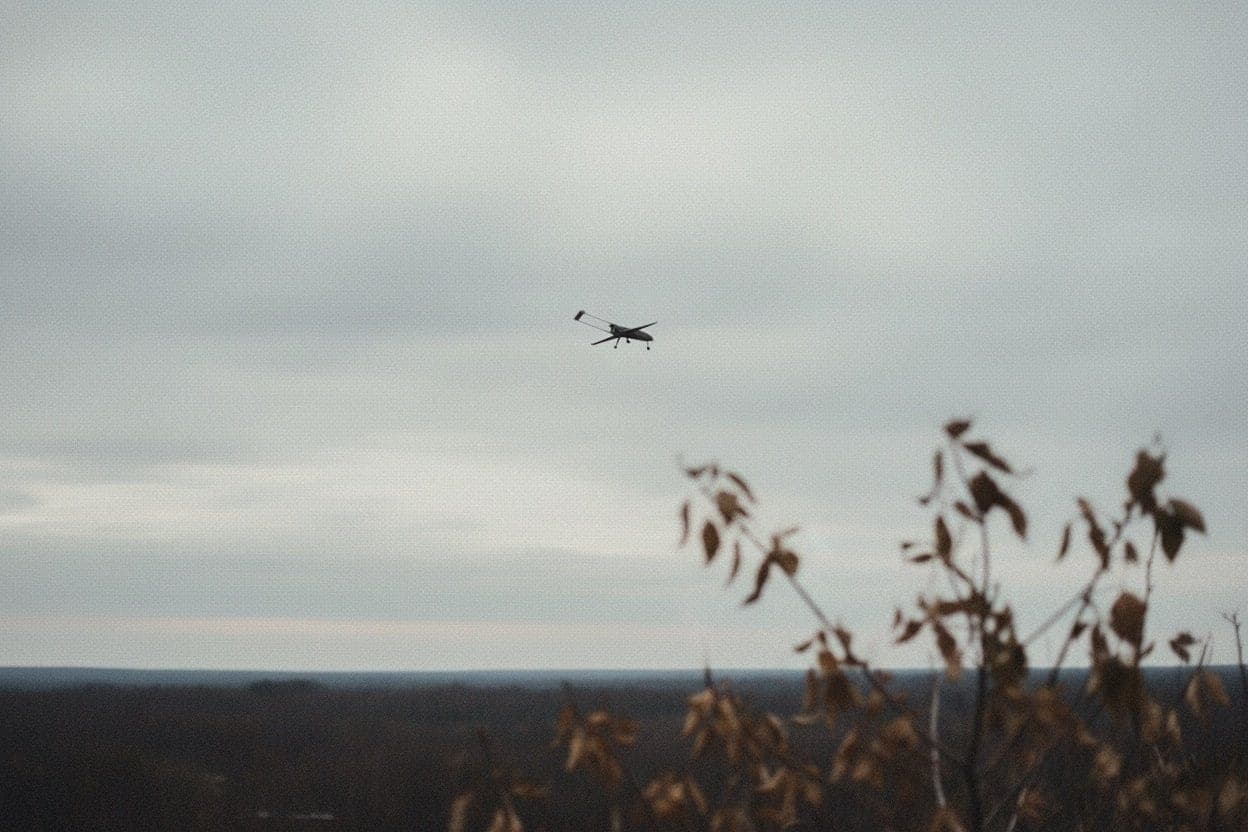
According to Yle and the Finnish Border Guard, a Ukrainian drone carrying an unexploded warhead crashed on frozen Lake Pyhäjärvi near Parikkala, South Karelia, at approximately 05:00 UTC on March 31, 2026 - just 2 km from the Russian border. The drone was the third Ukrainian UAV to enter Finnish airspace within one week, following two Chaika decoys that came down near Kouvola and Luumäki on 29 March. Finnish authorities cordoned off the crash site on the frozen lake surface and destroyed the warhead in a controlled detonation that afternoon. AirVeto's wind reconstruction at 1,000 m covers the southeastern Finland–Russian border zone during this window.
Finland's Border Guard cordoned the lake site before first light
Parikkala municipality lies at the southeastern tip of Finland's border with Russia, in the South Karelia region. Lake Pyhäjärvi straddles the Parikkala–Kitee municipal boundary; its eastern shore reaches within 2 km of the Russian frontier. Finnish authorities were alerted to the crash in the early morning hours of 31 March. The Border Guard (Rajavartiolaitos) sealed the approach routes to the lake and established a cordon. Because the crash site was on open ice, investigators had clear sight lines to the wreckage but used robotic equipment for the initial approach given the unexploded warhead.
The Finnish Air Force confirmed that the object had been tracked on radar as it crossed into Finnish airspace from the east - from the direction of Russia - rather than from the Gulf of Finland route used by the 29 March drones. This suggests the drone may have been part of the same Ust-Luga strike wave as the earlier pair but on an arc that took it further north before GPS-jamming-induced deviation sent it across the border.
The warhead was destroyed in a controlled detonation
Finnish explosive ordnance disposal (EOD) teams reached the lake site after the morning cordon was established. They confirmed the presence of an intact warhead assessed as a shaped charge consistent with the class carried by Ukrainian Chaika and similar decoy drones. The controlled detonation was carried out during the afternoon of 31 March; no injuries or structural damage were reported. South Karelia is sparsely populated in this border zone, and no evacuation of residential areas was necessary.
The incident was the third unexploded-warhead find in Finland within two days, following the Kouvola warhead detonated on the evening of 29 March. Finland's National Bureau of Investigation (NBI) extended its criminal investigation from the Kouvola pair to include the Parikkala find, raising the active investigation count.
President Alexander Stubb addressed the Parikkala incident as part of the broader series, calling the cumulative pattern "a clear escalation" and stating that Finland was sharing all incident data with NATO's Baltic Air Policing mission. Stubb reiterated that there was no military threat to Finland itself, but that Russian electronic warfare was systematically disrupting Ukrainian strike operations in ways that were affecting NATO airspace.
This was the third drone, not the third incident
Finnish and international media framing of the 29–31 March sequence requires care. The Kouvola crash on 29 March involved two drones simultaneously - one near Kouvola (Oravala) and one near Luumäki. The Parikkala crash two days later was a third drone - making it the second incident date but the third physical UAV find. The NBI opened separate investigations for each find.
Finland's NBI later confirmed, as part of its April 2026 assessment, that all three drones were Chaika decoys - not AN-196 Liutyi long-range strike drones. The Chaika, with a wingspan of approximately 2.5 m and a unit cost around $500 USD, is designed to overwhelm Russian air-defence radar and force interceptor expenditure rather than strike targets directly.
Russian EW from the Leningrad region was the assessed cause
As with the 29 March pair, Ukrainian and Finnish officials pointed to Russian electronic warfare jamming as the cause of the deviation. GPS-spoofing causes a drone's autopilot to misidentify its position, producing a course correction that carries it away from the intended route. For drones targeting the Ust-Luga oil terminal on the southern Gulf of Finland coast, the intended route keeps them over open water; any northward displacement - including a false eastward GPS fix that triggers a corrective westward turn - can push the drone over the Parikkala border zone.
The proximity of the crash site to the Russian frontier (2 km) makes this the closest of the March 2026 Finnish incidents to Russian territory.
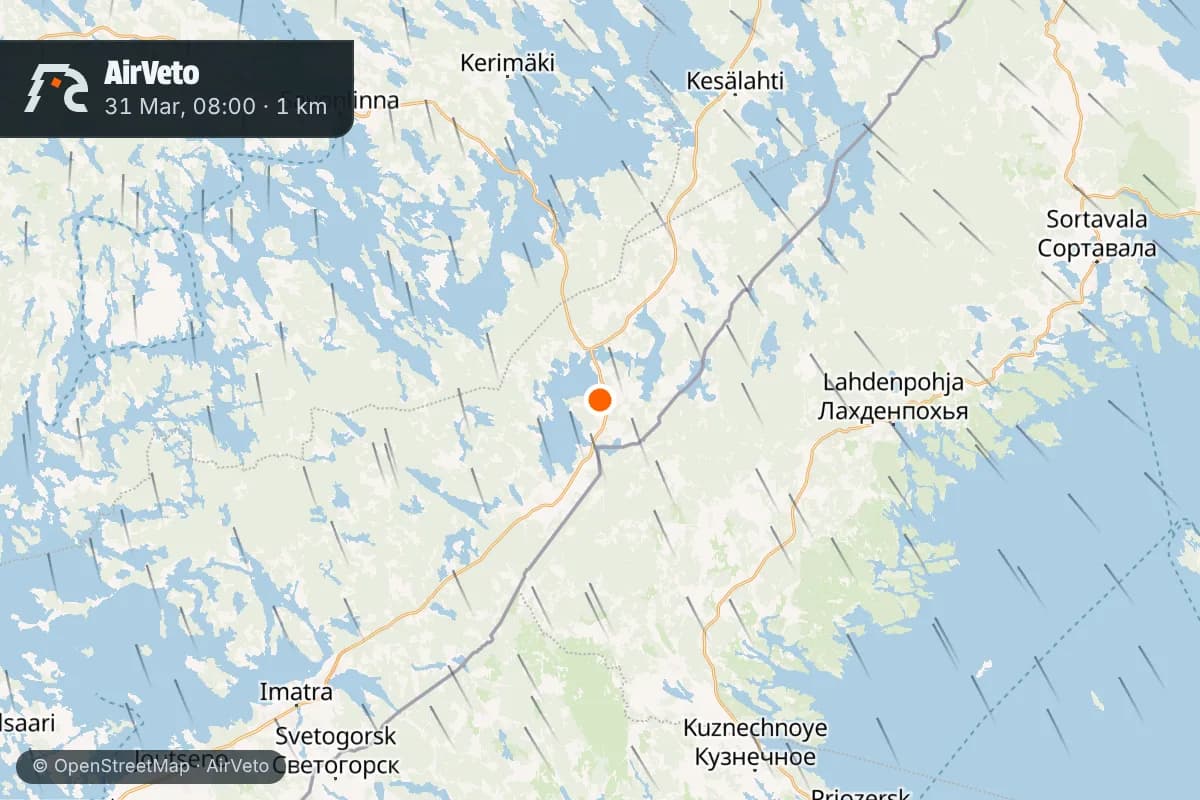
Wind layer at 1,000 m over the southeastern Finland border zone on 31 March
AirVeto's wind reconstruction covers the region at 1,000 m (where drones in this class cruise) over southeastern Finland and the Russian border zone during the early morning window of March 31, 2026. The embed above renders the wind field at the time of the incursion; methodology is described on the AirVeto methodology page.
This reconstruction draws on reporting by Yle, Helsinki Times, and Meduza, and on AirVeto's wind-model analysis at 1,000 m for the March 31, 2026 border zone window.
This incident extends the March 2026 Baltic drone cluster
The Parikkala crash is the fourth node in the March 2026 Baltic states drone incursion cluster, extending the Ust-Luga wave that began on 23 March with the Varėna crash in Lithuania. Full cluster cross-links:
Related location
- NATO eastern flank - The frontier where EU airspace meets Russia and Belarus across five NATO member states - the active zone of drone incursions, smuggling balloon recoveries, and Baltic Air Policing intercepts since 2025.
- Finland - Finland shares a 1,340-kilometer border with Russia and recorded four drone finds in spring 2026 - the densest EW-diverted drone cluster in any NATO member state that period.
Sources
Last updated: