
Two drone signatures vanish over Krāslava and Rēzekne, Latvia
A drone air-threat alert covered Krāslava, Rēzekne, Ludza, and Augšdaugava on May 21, 2026; a drone was detected but not recovered, two days after the five-county shelter of 19 May.
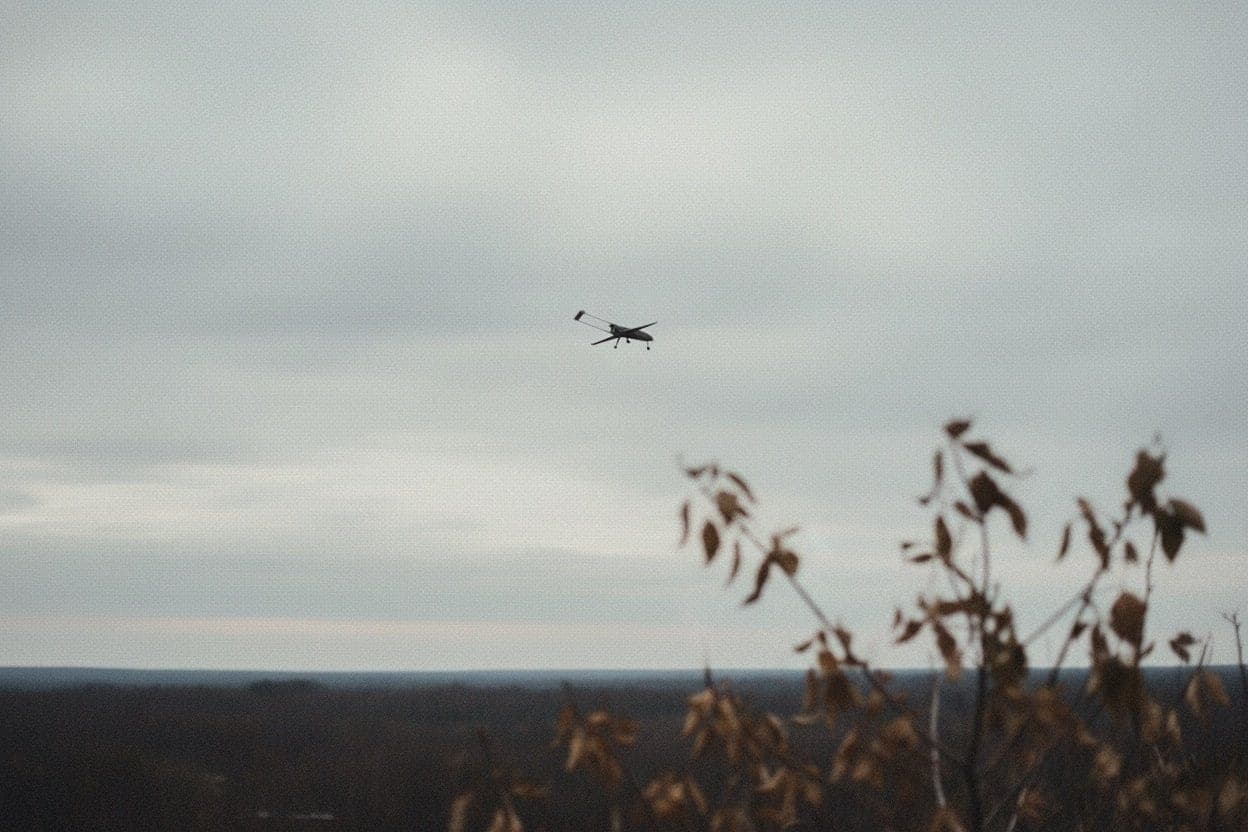
According to LSM and Euronews, Latvian authorities issued another drone air-threat alert for the Latgale region at approximately 10:00 UTC on May 21, 2026, covering Krāslava, Rēzekne, Ludza, and Augšdaugava counties. A drone was detected in the alert zone but was not recovered; its fate - landing, return to origin, or destruction - was not publicly confirmed. The alert came two days after the five-county shelter of 19 May and connects to a subsequent incident at Drīdža Lake on 23 May, establishing three alerts over the same Latgale zone within five days.
The 21 May alert covered four of the five counties from the 19 May event
The 21 May alert zone - Krāslava, Rēzekne, Ludza, and Augšdaugava - overlapped almost entirely with the 19 May five-municipality shelter zone (which had additionally included Daugavpils). The recurrence of an air-threat alert over the same geographic footprint within 48 hours signals either repeated launch attempts from the same origin area or a sustained patrolling UAV that Latvian authorities tracked intermittently.
Krāslava, at the confluence of the Latvian, Lithuanian, and Belarusian border zones, is the southernmost municipality in the alert zone. Rēzekne, roughly 90 km north of Krāslava, is Latgale's largest city and sits on the main rail and road axis connecting the region to Riga. The zone between these two centres is the primary transit area for objects entering Latvia from Belarus.
Drone detected but not recovered - pattern consistent with observation flights
The fact that the drone was detected on radar but not recovered - and did not crash - is consistent with a reconnaissance or pressure pattern rather than a misdirected strike drone. Observation UAVs that loiter within a country's airspace before returning to origin are harder to document as incidents and harder to shoot down than fast-moving strike drones: Latvian air-defence assets were not reported to have engaged the object.
Three Latgale alerts in five days - the Drīdža Lake connection
The 21 May alert is the middle event in a five-day sequence. The 19 May alert was the first; a third event involving a drone found near Drīdža Lake (Latgale) occurred on May 23, 2026. The Drīdža Lake event completed a three-alert cluster - May 19, May 21, May 23 - over the same Latgale zone within five days.
This compression of alerts signals an operational tempo that Latvian authorities and NATO Baltic Air Policing had not previously seen in Latvia: earlier drone events were weeks apart. The May 2026 cluster suggests a shift to sustained, repeated probing.
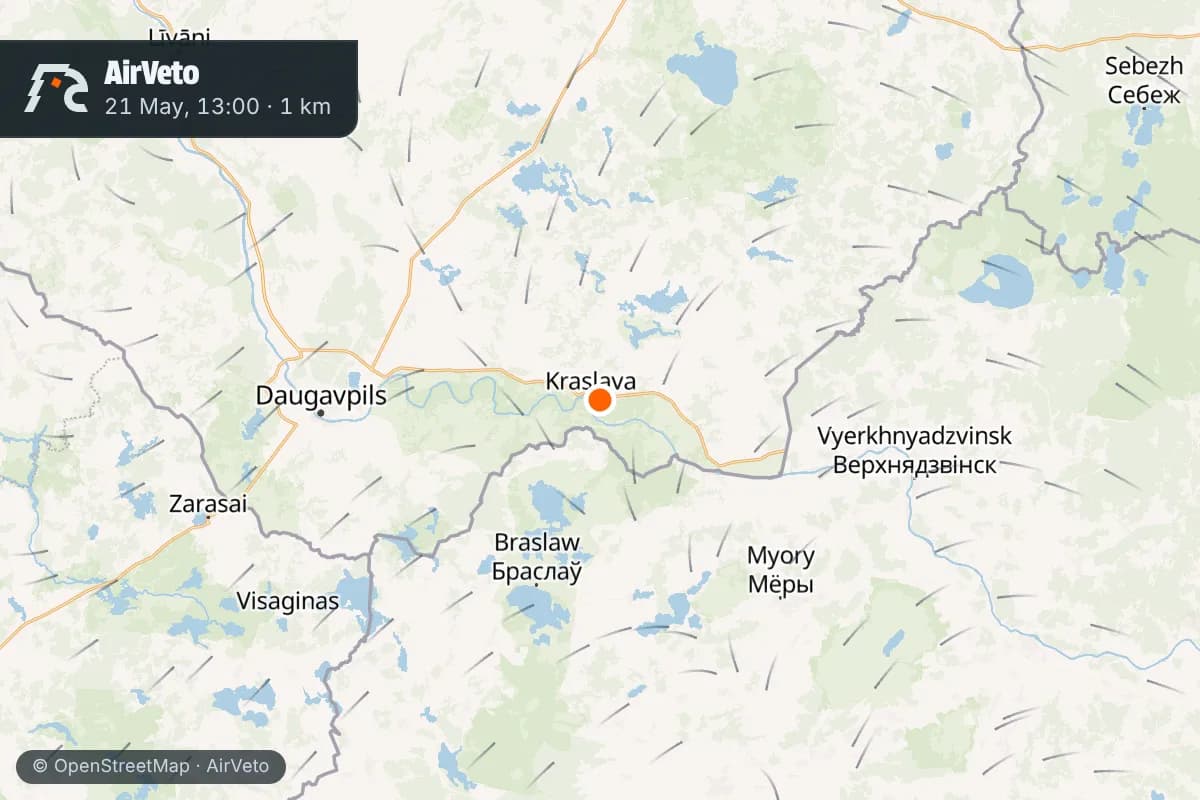
Wind layer at 1,000 m over the Latgale border zone on 21 May
AirVeto's wind reconstruction covers the region at 1,000 m over eastern Latvia and the Belarusian border zone during the May 21, 2026 alert window. The embed above renders the wind field; methodology is described on the AirVeto methodology page.
This reconstruction is based on reporting by LSM and Euronews, and on AirVeto's wind-model data for the May 21, 2026 event window over the Latgale border zone.
Latvia drone cluster - May 2026
Related location
- NATO eastern flank - The frontier where EU airspace meets Russia and Belarus across five NATO member states - the active zone of drone incursions, smuggling balloon recoveries, and Baltic Air Policing intercepts since 2025.
Sources
Last updated: