
Seven smuggling balloons recovered across Latgale, Latvia
NBS radar tracked seven to eight Belarusian smuggling balloons crossing into Latgale on the night of November 23–24, 2025, carrying more than 720,000 cigarettes.
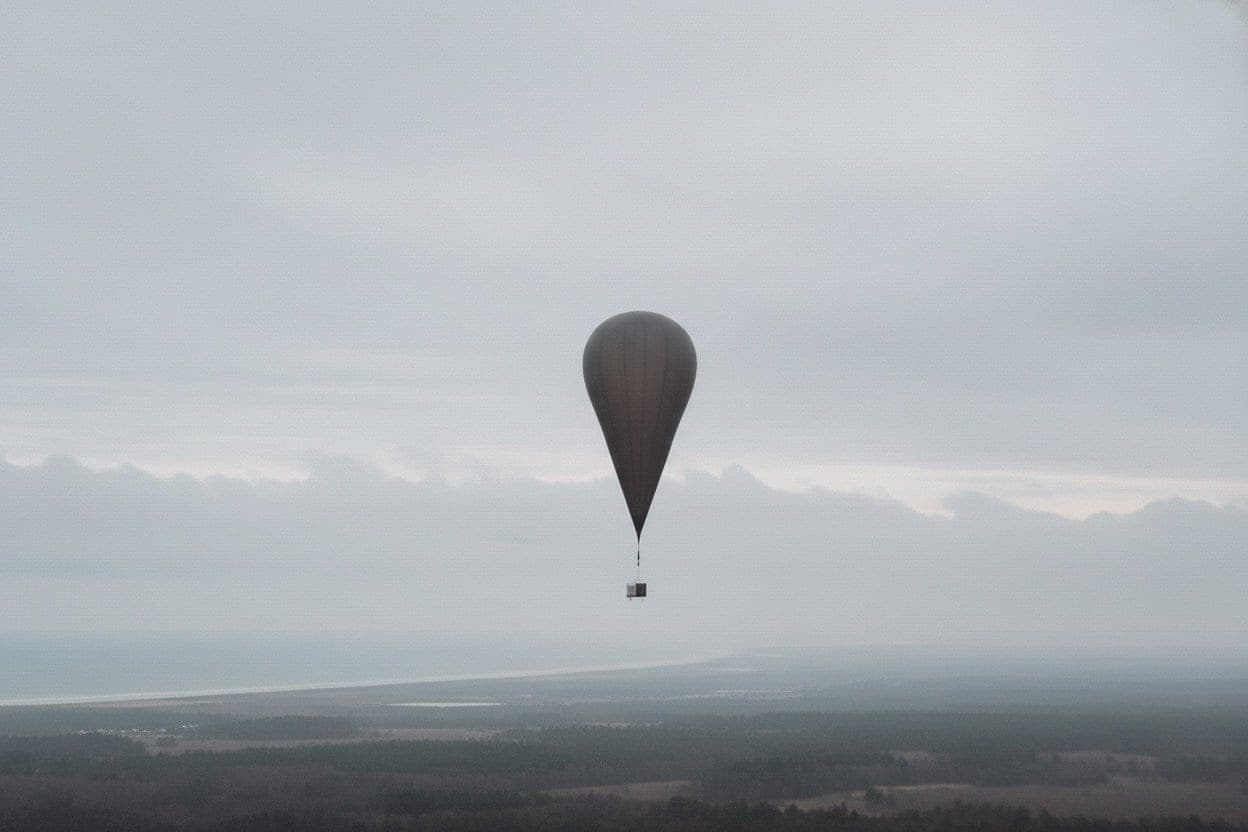
According to BNN-news and LSM, Latvia's National Border Guard (NBS) radar tracked seven to eight smuggling balloons crossing from Belarus into the Latgale region during the night of November 23–24, 2025 (21:00–04:00 UTC) - the first such event documented in Latvia. The balloons carried more than 720,000 cigarettes in total, contained in GPS-fitted pods designed to be located by ground teams after landing on the Latvian side.
Seven balloons in one night - Latvia's highest-volume event
The NBS radar track of seven to eight balloons in a single night was the first documented balloon-smuggling event in Latvia - establishing that the Belarus smuggling network's reach extended beyond Lithuania and Poland into Latvian airspace. This was not a new high-water mark for Latvia; it was the first data point. The event confirmed that the smuggling network's operational reach extended to Latgale.
Each balloon carried a pod containing approximately 60,000–120,000 cigarettes; the confirmed total across the night exceeded 720,000 cigarettes, consistent with large-capacity helium weather balloons used across the Belarusian frontier. The GPS trackers sewn into the cargo pods serve the same function AirVeto's wind model serves from the outside: real-time location tracking of where a wind-borne object is heading and where it lands.
NBS confirmed that radar contact was maintained for each of the seven balloons throughout their crossing; the subsequent ground recovery on the Latvian side was a matter for border police and customs.
Latgale's geographic position mirrors the Podlaskie border zone
Latgale is the easternmost region of Latvia, sharing a border with both Belarus and Russia. Its terrain - flat agricultural land interspersed with lakes and forest - is well-suited to balloon operations: ground recovery teams can reach landing zones without crossing major infrastructure, and low population density reduces the likelihood of civilian witnesses.
The Belarus–Latgale crossing axis is geographically parallel to the Belarus–Podlaskie axis in northeastern Poland, approximately 250 km to the south. Both routes operate under the same logic: balloons are launched from Belarusian territory at night, carried westward by the dominant synoptic flow, and recovered by waiting ground teams. The two routes appear to be operated by separate networks using similar methods.
The Latgale activity connects to the May 2026 drone pressure
The November 2025 balloon activity documented in this event becomes the backdrop for the May 2026 drone alerts in the same geographic zone. The May 19, 2026 five-county drone shelter and the May 21, 2026 Latgale drone threat both cover the same Latgale border zone. The escalation from balloon-sized cargo objects in late 2025 to UAVs in spring 2026 tracks the broader pattern across the Baltic states: balloons establish the route, drones follow.
Wind layer at 3,000 m over the Latgale crossing zone on 23–24 November
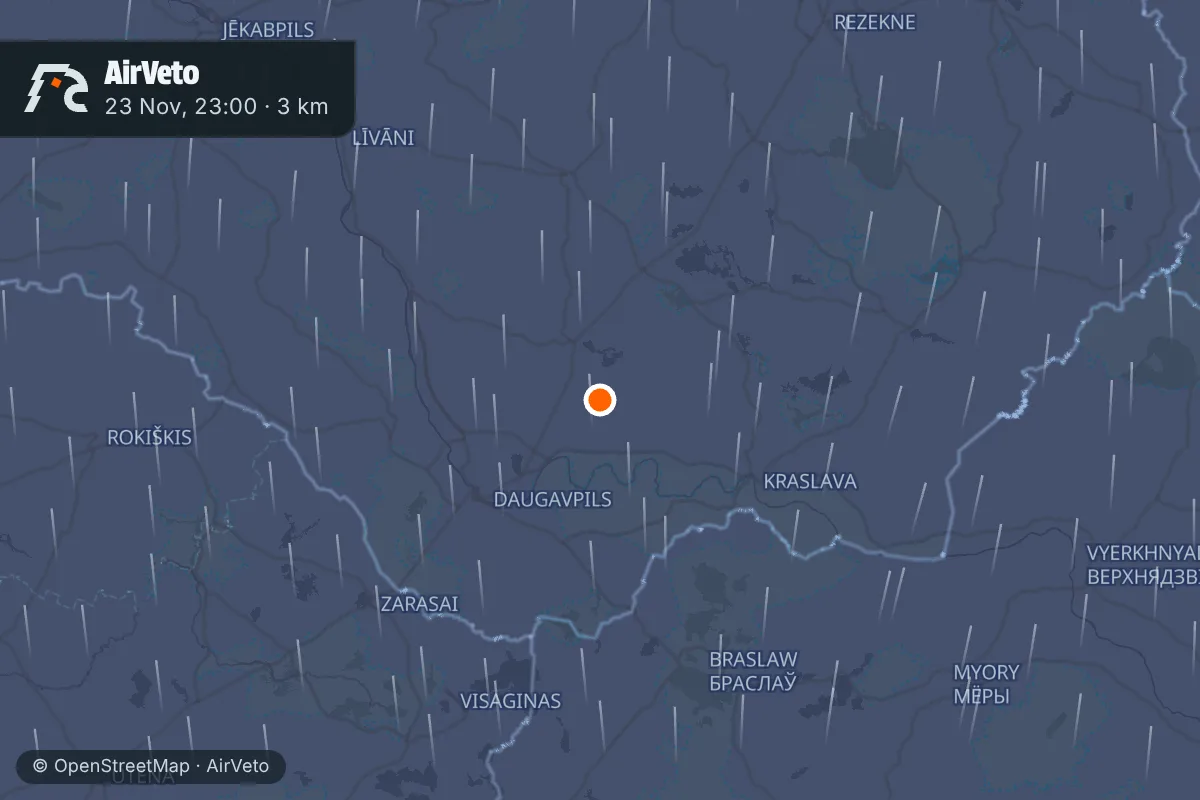
AirVeto's wind reconstruction covers the region at 3,000 m (the cruising altitude of helium smuggling balloons) over the Latgale border zone during the crossing window of the night of November 23–24, 2025. The embed above renders the wind field; methodology is described on the AirVeto methodology page.
At 3,000 m over the Latgale plain in late November, synoptic winds typically push west to southwest as the Siberian High extends westward across the Baltic. A balloon released from 5–15 km inside Belarus on a flow pushing west reaches Latvian territory within one to two hours.
This reconstruction draws on reporting by LSM and BNN-news, and on AirVeto's wind-model analysis of the wind field at 3,000 m over the Latgale crossing zone on the night of November 23–24, 2025.
Latgale archive
Related location
- NATO eastern flank - The frontier where EU airspace meets Russia and Belarus across five NATO member states - the active zone of drone incursions, smuggling balloon recoveries, and Baltic Air Policing intercepts since 2025.
Sources
- BNN-news - Latvian border guards track seven smuggling balloons from Belarus in one night (November 24, 2025)
- Reform.news - Seven balloons, 420,000 cigarettes: Latvia's biggest smuggling-balloon night (November 2025)
- LSM (Latvian Public Broadcasting) - NBS radar tracks Belarusian smuggling balloons in Latgale (November 2025)
- Methodology
Last updated: