
Seven-county drone alert triggers EE-ALARM across Estonia
Estonia issued EE-ALARM across seven counties overnight on March 30–31, 2026 after the EDF reported potential drone sightings. A Finnair flight turned back; the alert cleared by 06:00 on 31 March.
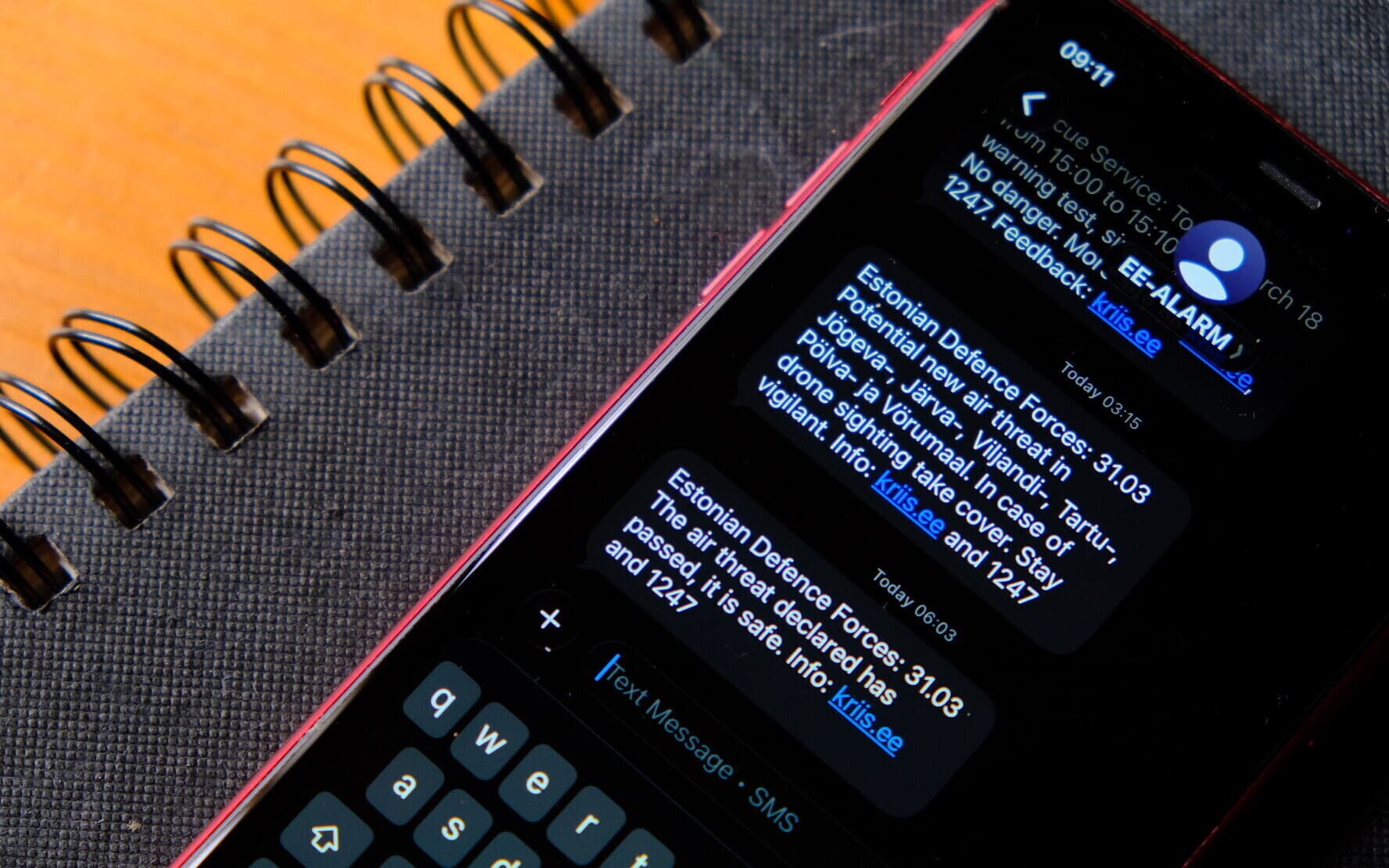
At 00:30 local time (22:30 UTC on 30 March) on Tuesday, March 31, 2026, Estonia activated its EE-ALARM public warning system for Lääne-Viru and Ida-Viru counties after the Estonian Defence Forces (EDF) reported potential drone sightings over eastern Estonia. By approximately 00:45 local time the alert expanded to five additional counties: Jõgeva, Põlva, Tartu, Valga, and Võru, covering a broad sweep of eastern and southern Estonia. A Finnair Helsinki-Tartu service turned back over central Estonia during the alert window. Authorities declared the threat over by 06:00 local time (03:00 UTC) on 31 March.
The event produced no confirmed drone crash on Estonian soil. It was the second drone air-threat alert in Estonia in less than a week, following the Auvere power station strike on March 25, 2026.
What Estonian authorities reported
The EDF stated that it had detected "potential air threats" and was tracking possible drone sightings over eastern Estonia. Authorities issued the initial EE-ALARM for Lääne-Viru and Ida-Viru counties at approximately 00:30 local time, then extended coverage to Jõgeva, Põlva, Tartu, Valga, and Võru counties roughly fifteen minutes later. The expansion brought the total to seven counties, reflecting uncertainty about the objects' tracks and the precautionary logic that governed the March series of alerts.
No drone wreckage or confirmed crash site on Estonian territory was reported during or after the alert. The absence of physical evidence distinguished this event from the 25 March Auvere strike, where a drone struck the power station chimney and was destroyed on impact. The EDF made no public statement identifying a specific drone type or confirmed trajectory.
Aviation impact
A Finnair flight operating the Helsinki-Tartu route turned back over central Estonia and returned to Helsinki-Vantaa Airport during the alert window. The return service, the Tartu-Helsinki departure, was cancelled as a result. At least one departing Tallinn flight was also disrupted by the overnight alert.
The aviation disruptions marked the second time in six days that drone activity over Estonian airspace had affected commercial flights. The recurrence reinforced pressure on Estonian authorities and EASA to establish clearer protocols for airspace management during Baltic drone-threat episodes.
Context: same Ukrainian strike wave that hit Estonia on 25 March
The overnight alert coincided with a Ukrainian mass-strike campaign against northwestern Russia, targeting St. Petersburg-area infrastructure. Ukrainian forces were striking Baltic oil export terminals at Primorsk and Ust-Luga with long-range drones in this period. Russian electronic warfare assets along the Baltic coastline, deploying GPS jamming and spoofing, repeatedly pushed Ukrainian drones off their set flight paths during these raids. Corrupted navigation then carried some objects toward Baltic NATO territory rather than the intended Russian targets.
This same pattern had produced the Auvere power station strike on March 25, 2026, six days earlier, and the Varėna district drone crash in Lithuania on March 23, 2026. The 31 March alert was consistent with stray drones from the same recurring source: Ukrainian platforms targeting Russian Baltic oil infrastructure, deflected by Russian EW into Estonian airspace.
Wind conditions over eastern Estonia
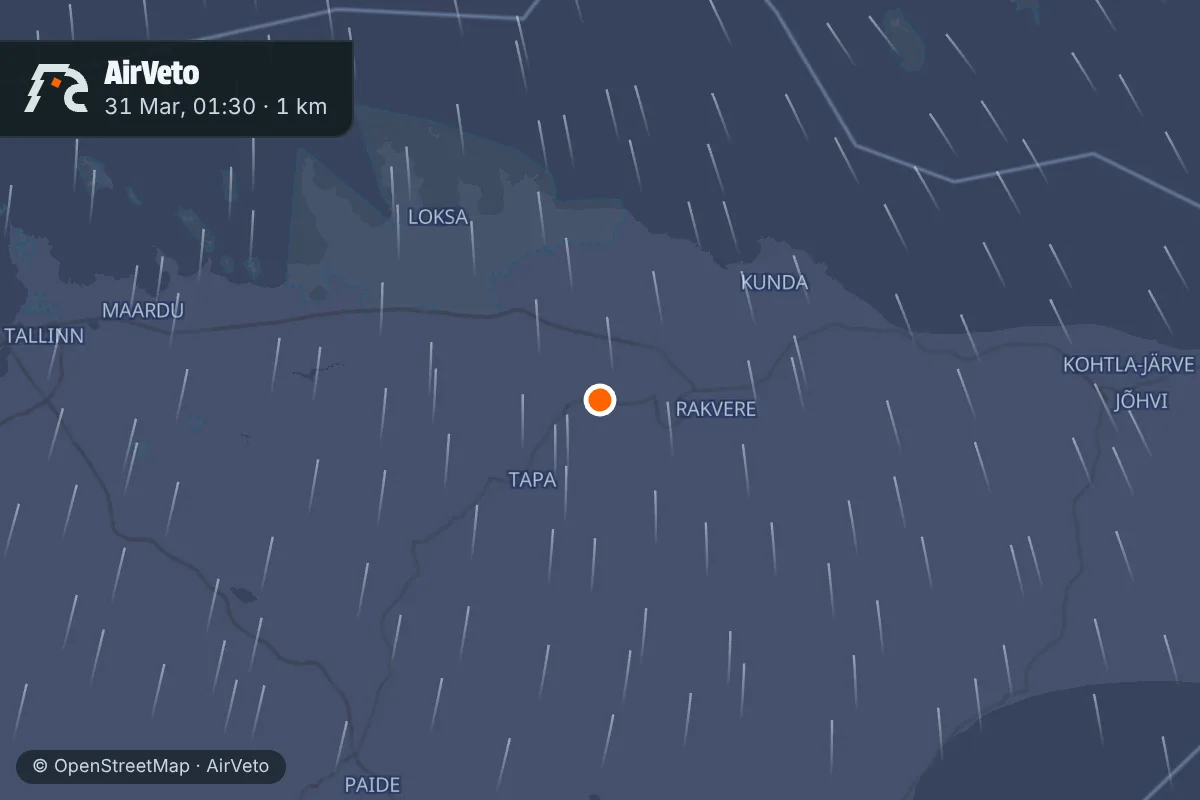
At 22:00 UTC on 30 March - at the start of the overnight alert window - the 1,000 m layer over eastern Estonia showed wind pushing north at 26.8 km/h. Light flow at this level was the atmospheric background for the overnight alerts. How the model is built and where it is reliable is described on the methodology page. This reconstruction draws on reporting by ERR, AP, and Estonian World, and on AirVeto's wind-model analysis for the March 30–31, 2026 alert window.
Related location
- Gulf of Finland - Baltic Sea arm separating Estonia from Finland, bounded to the east by Russia - GPS-spoofing reports and stray drones.
- NATO eastern flank - The frontier where EU airspace meets Russia and Belarus across five NATO member states - the active zone of drone incursions, smuggling balloon recoveries, and Baltic Air Policing intercepts since 2025.
Sources
Last updated: