
Geran-2 drone crashes near Kopanka, Moldova, 13 Jul 2026
A Russian Geran-2 drone crossed into Moldova and exploded near Copanca during an overnight strike on Odesa, prompting Chișinău to summon Russia's ambassador and issue a formal protest.
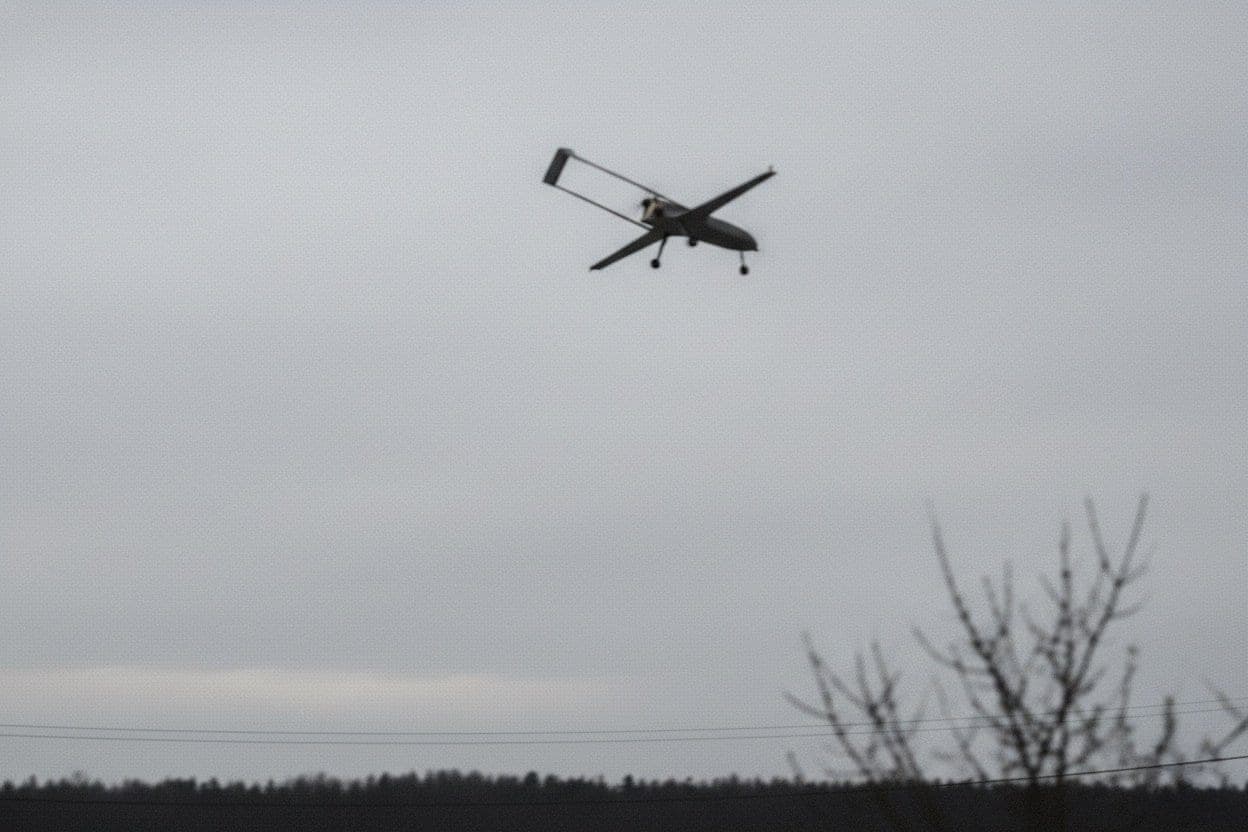
A Russian Geran-2 loitering munition crossed into Moldovan territory and exploded on the outskirts of Copanca, a village of roughly 5,000 people in Căușeni District, during Russia's overnight aerial bombardment of Ukraine's Odesa region. Moldovan police received a report via the 112 emergency line at approximately 01:03 local time (22:03 UTC) that a small drone-like aircraft had come down near the village. No injuries were reported. The strike wave that carried it across the border was large: Ukraine's Air Force said Russia launched three Kh-59/69 guided missiles and 134 strike and decoy drones overnight, of which Ukrainian air defences intercepted 126.
AirVeto's wind-model data for the event window: At 21:00 UTC on 12 July - at the start of the approach window - the 1,000 m layer over southeastern Moldova showed WSW wind at 19.3 km/h.
Moldova's government called it a sovereignty violation
Moldova's Foreign Ministry described the crash as a serious violation of national sovereignty and said it created risks to the security of citizens. On 14 July the ministry summoned Russian Ambassador to Chișinău Oleg Ozerov and handed him a formal note of protest, the second such note Moldova has issued this year over a cross-border drone incident.
Căușeni District sits on the right bank of the Dniester, in southeastern Moldova, roughly 30 km from the Ukrainian border along the most direct line between Russia's overnight strike route on Odesa and Moldovan territory, the same general approach line that has carried Russian drones and debris into Romania's Danube-delta counties throughout 2025 and 2026.
Russia disputed the account without offering an alternative
Ambassador Ozerov told reporters the Moldovan account "must be investigated and verified," saying Russia could not confirm anything without establishing the drone's origin, reconstructing its flight path, and reviewing photographic evidence. He said no wreckage had been shown to him, and raised two specific questions about Moldova's version of events: why the drone's payload had not exploded on impact if it was carrying explosives, and why nearby residents reported not hearing the aircraft approach.
The response follows the same shape AirVeto has documented after comparable cross-border strikes on the Romanian side of the same approach. See the Galați apartment-block strike of May 29, 2026, where Russia's government also disputed attribution without providing a competing account of what happened. Neither Moldova's Foreign Ministry nor the reporting outlets have indicated Russia presented supporting evidence for its account of the Copanca crash.
Wind conditions over southeastern Moldova
At 21:00 UTC on 12 July - at the start of the approach window - the 1,000 m layer over southeastern Moldova showed WSW wind at 19.3 km/h. Light flow pushing ENE at this level was the atmospheric background for the crossing and crash. Full methodology is on the AirVeto methodology page.
This reconstruction is based on reporting by Kyiv Independent, Anadolu Agency, MoldPres, and Ukrainska Pravda, and on AirVeto's wind-model analysis for the 21:30–22:30 UTC window on July 12, 2026.
Sources
- Kyiv Independent - Russian drone crashes in Moldova, attacks across Ukraine injure at least 57 (13 Jul 2026)
- Anadolu Agency - Moldova summons Russian ambassador over drone incident (14 Jul 2026)
- MoldPres (Moldova state news agency) - Russia's ambassador summoned to Foreign Ministry
- Ukrainska Pravda - Russian Shahed drone goes into Moldova, explodes near Kopanka (13 Jul 2026)
- Methodology