
Preilack substation sabotage, 1 Sep 2026 - grid unharmed
Homemade explosive and incendiary devices hit the Preilack switching station feeding Germany's Jänschwalde power plant on September 1, 2026; officials called it an attempted act of sabotage.
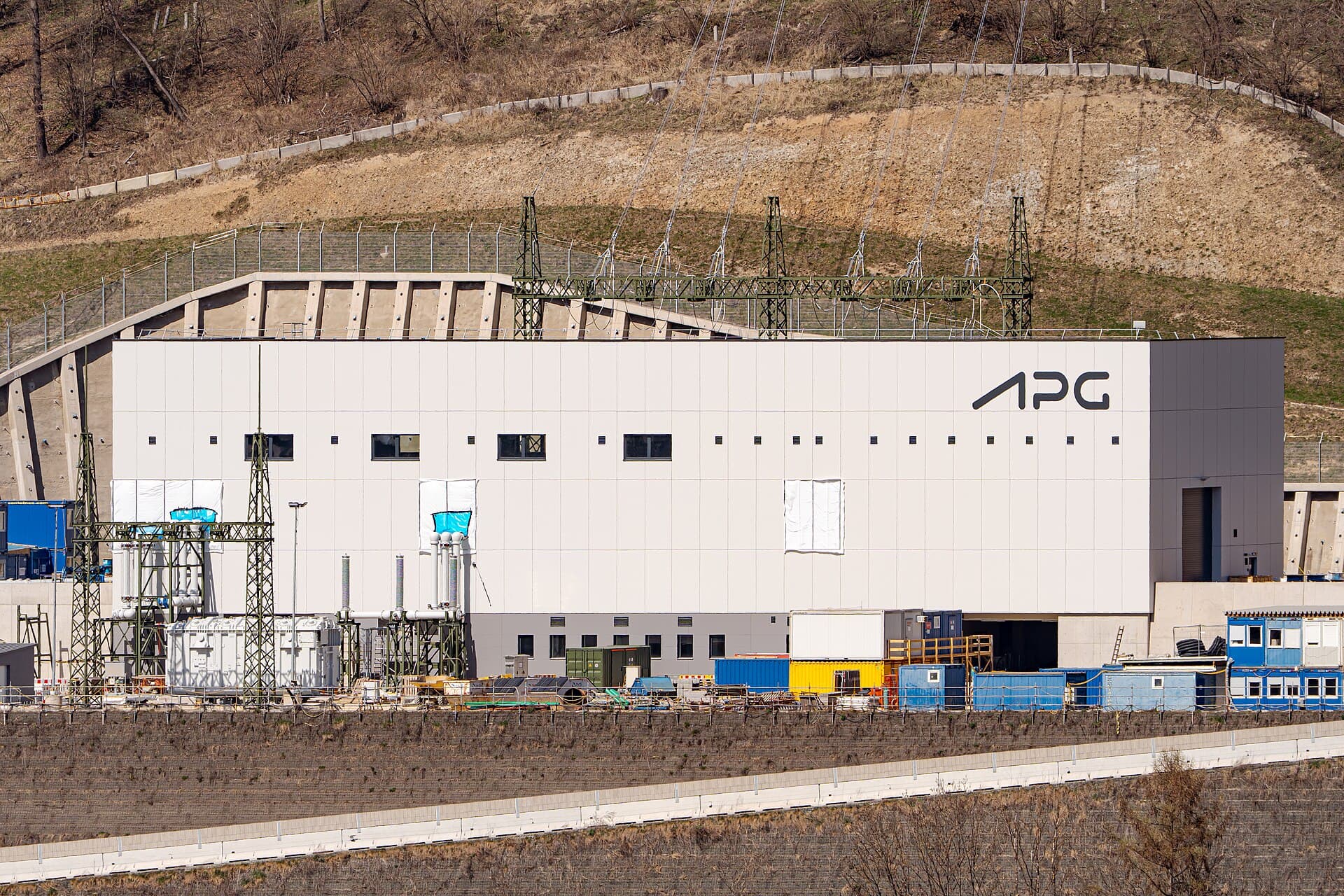
Just after 07:30 local time (05:30 UTC) on September 1, 2026, homemade explosive and incendiary devices were found at the Preilack switching station in Turnow-Preilack, Brandenburg, the high-voltage node that feeds the nearby Jänschwalde lignite plant into the 380-kV grid run by transmission operator 50Hertz. At least one device detonated, damaging transmission lines and producing a fireball investigators believe came from a short circuit; a "two-digit number" of further devices were later found unfired and defused. No one was hurt. Accounts of the supply impact differ: Euronews and France24 reported 50Hertz describing a brief service interruption with lines quickly restored, while ZDFheute reported no outage at all. Brandenburg's state premier, Dietmar Woidke, called it an attempted act of sabotage.
Devices disguised as fireworks were used against live transmission lines
Grid operator 50Hertz described the objects as resembling "commercially available New Year's fireworks," but Brandenburg's state criminal police avoided that word entirely, calling them "unconventional explosive and incendiary devices." Brandenburg Interior Minister Jan Redmann was blunter: "Das waren ganz sicher keine Silvesterraketen," he said, "these were certainly not fireworks." According to ingenieur.de, the devices were built to introduce conductive material into the substation's high-voltage lines; two attempts succeeded and additional attempts failed, with one producing the fireball. Police have not disclosed how the devices were launched or placed.
The Jänschwalde plant lost a generating block at the same time
LEAG's 500-megawatt Block B at the Jänschwalde plant, roughly five kilometers from the substation, tripped offline as the sabotage unfolded. LEAG and 50Hertz are still investigating whether the shutdown was directly triggered by the substation damage or by the grid's own protective systems reacting to the disturbance; no causal link has been confirmed. The wider network rerouted power through alternative lines rather than going dark. That's the grid's standard (n-1) resilience rule at work: it must keep functioning even after losing any single critical connection.
Police are investigating on suspicion of terrorism, with no named suspect
Cottbus police opened an investigation on suspicion of forming a terrorist organization, disrupting public utilities, causing an explosion, and destroying critical infrastructure; Potsdam police headquarters later took over public communications on the case. Investigators have not identified who built or planted the devices, and are weighing multiple explanations, including foreign state-directed sabotage and domestic far-left extremism, without ruling either in or out. Woidke described the sabotage attempt as methodical and pointed to what he called a worryingly high frequency of similar incidents against German infrastructure this year.
The second German grid sabotage attempt in 24 hours
The following evening, 2 September, unidentified actors damaged five lignite-fired generating units, at RWE's Neurath and Niederaußem plants near Rommerskirchen in North Rhine-Westphalia, on the opposite side of the country. The units, totaling 4.2 gigawatts of capacity, were mostly feeding the grid at the time; imbalance prices briefly spiked to roughly €5,000 per megawatt-hour before supply stabilized. North Rhine-Westphalia's interior minister, Herbert Reul, said authorities are examining whether the two incidents are connected. AirVeto's reconstruction of the pattern across Germany's diplomatic, infrastructure, defense-industrial, and military fronts that week covers both grid incidents alongside a firebombed Munich defense-industry building and Germany's closure of a Russian consulate over the Leipzig/Halle airport drone plot.
Preilack joins a run of unresolved sabotage incidents tied to Ukraine's war effort
Preilack is the latest in a series of fires, blasts and sabotage attempts this year at German and allied sites connected to Ukraine's military supply chain or wider defense posture, following the Milrem Robotics arson in Tallinn on 15 August and the WB Electronics drone-parts plant arson in Skarżysko-Kamienna, Poland on 31 August. Unlike those two, which investigators quickly treated as probable sabotage against defense manufacturers, Preilack targeted general civilian power infrastructure with no direct link to weapons production, a broader kind of target that, if state-directed, would mark an escalation from the supply-chain-specific pattern AirVeto has tracked through August.
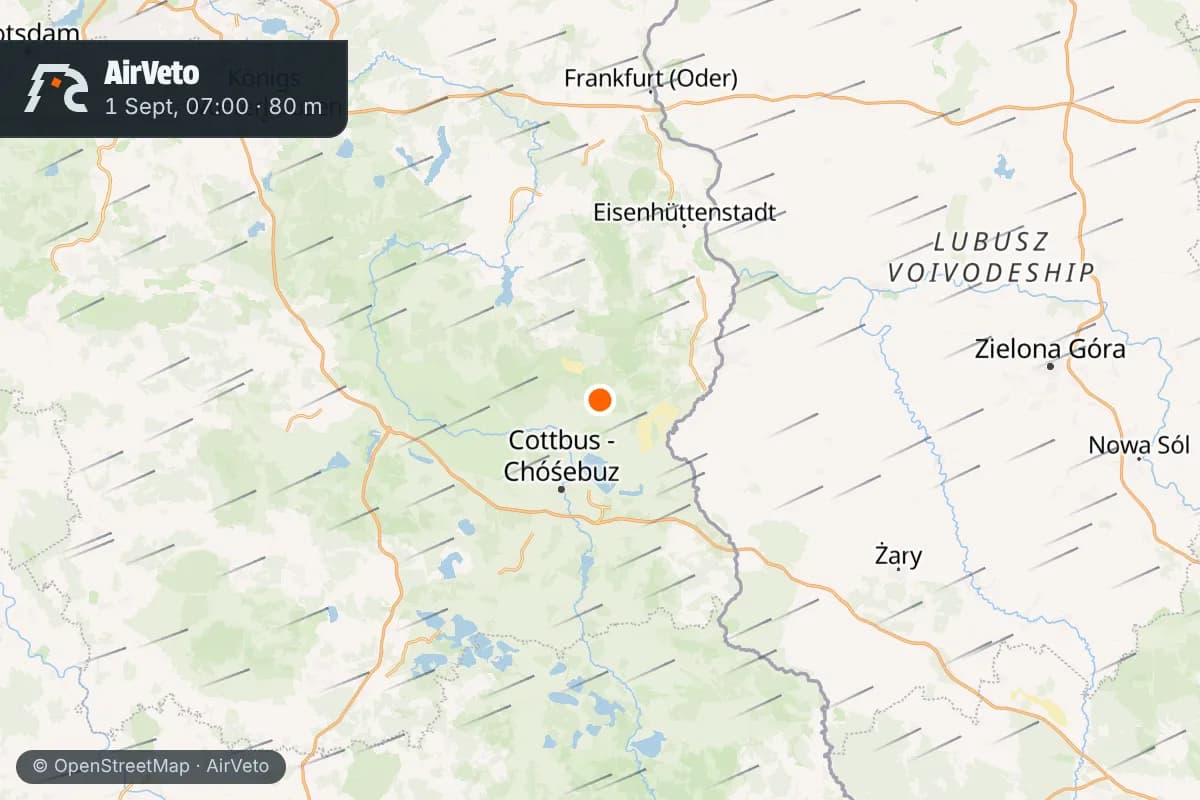
Wind conditions over Turnow-Preilack
This reconstruction is based on reporting by Euronews, ZDFheute, ingenieur.de, United24Media and France24, and on AirVeto's wind-model data for the event window. How AirVeto builds this field, and where it is reliable, is described on the methodology page.
Investigators in Brandenburg have not said when they expect to determine whether Preilack was foreign-directed sabotage or a domestic act, and LEAG and 50Hertz have not confirmed whether the Block B shutdown was a direct consequence of the substation damage. AirVeto will update this page if either question is resolved.
Sources
- Euronews - Rockets fired at substation in Brandenburg in suspected deliberate attack (1 Sep 2026)
- ZDFheute - Sabotageakte in Brandenburg: Polizei geht Terrorverdacht nach (1 Sep 2026)
- ingenieur.de - Selbstgebaute Flugkörper am Stromnetz: Dann fällt Block B in Jänschwalde aus (2 Sep 2026)
- United24Media - Homemade rockets reportedly hit one of Germany's largest power plants in sabotage attempt (1 Sep 2026)
- France24 - Explosives used in sabotage attack on German power lines (1 Sep 2026)
- Methodology