
Contraband drone from Belarus intercepted at Prūdelis
VSAT border guards at Prūdelis village used anti-drone equipment to take over a cigarette-smuggling drone from Belarus. After the control signal was overridden, the drone crashed to the ground.
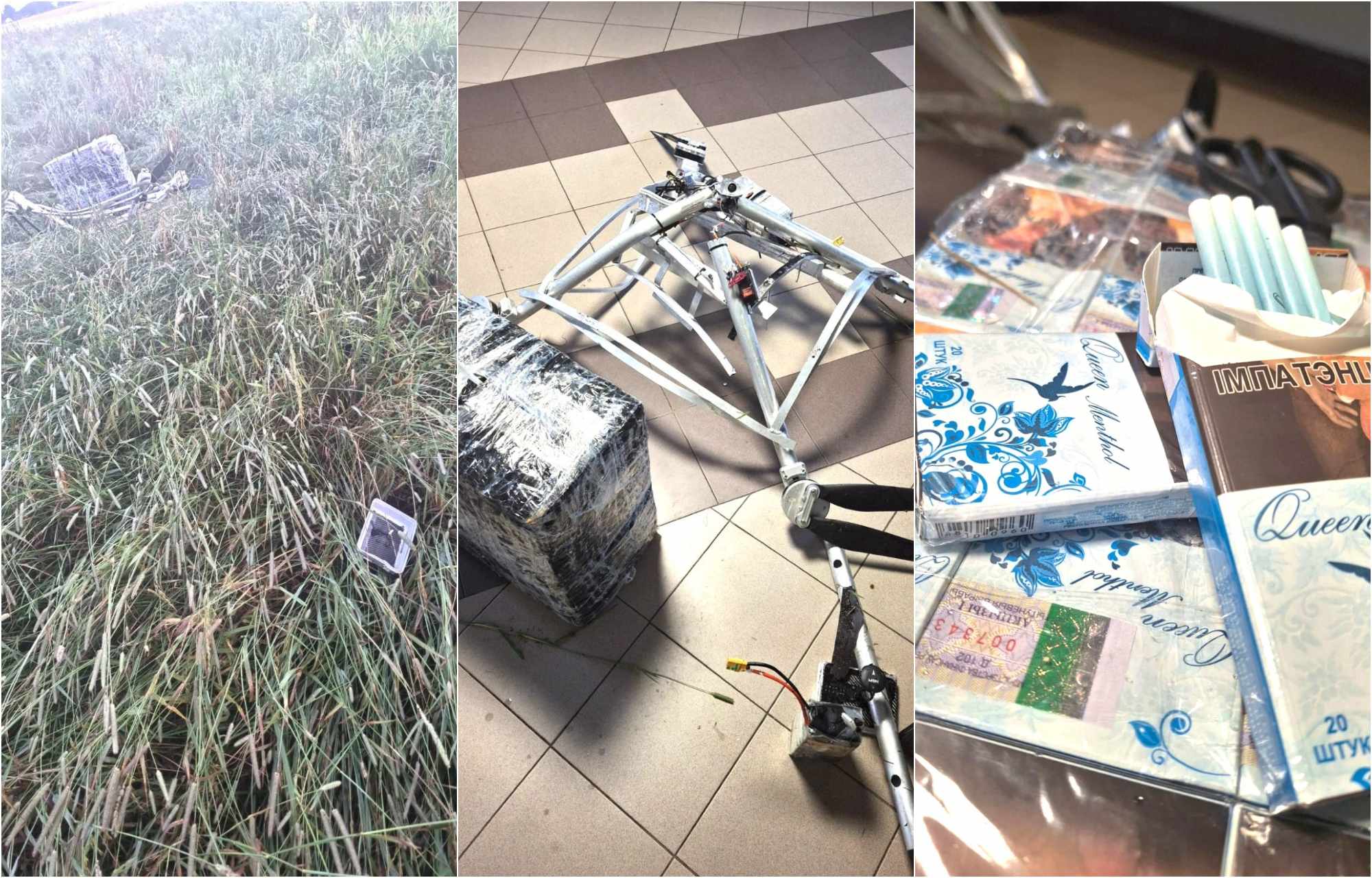
On July 9, 2026, Lithuanian border guards at Prūdelis village in Kalesninkų seniūnija used anti-drone equipment to take over a contraband drone inbound from Belarus, approximately 500 meters from the border. The drone was carrying Belarusian cigarettes. After VSAT officers overrode its control signal, the drone lost its original flight path and crashed into a field near the interception point.
Camera monitoring at the border post gave officers time to deploy countermeasures before the drone cleared the zone
VSAT officers detected the incoming aircraft through the border post's monitoring camera system. The drone was spotted as it crossed from Belarusian territory toward Prūdelis village. Visual acquisition gave officers enough warning to position anti-drone equipment at the interception point - the detection-to-response sequence that VSAT has documented across multiple southern Lithuania border incidents in the first half of 2026.
Officers took control of the drone's signal, but the aircraft crashed rather than landing intact
Using anti-drone equipment, VSAT officers overrode the drone's control link. The aircraft did not land under directed control: after the signal was taken, the drone flew a short distance further before making uncontrolled ground contact. The crash site produced the field-debris scene documented in VSAT's post-incident photographs - airframe down in open terrain, cargo nearby.
The cargo was Belarusian cigarettes - the standard commodity on this border route
The drone carried cigarettes from Belarus. The commodity profile matches the pattern across southern Lithuanian border drone interdictions: Belarusian tobacco, lower-excise than EU equivalents, moved across the border in small per-aircraft payloads. The economics sustain high-frequency runs because each flight is individually low-risk and individually profitable at the excise differential.
The Prūdelis interception comes two days after VSAT landed four contraband drones in a single operation at Druskininkai on July 7, 2026 - the largest simultaneous interception in VSAT operational records. Prūdelis is in a different district (Šalčininkų vs. Varėna), a different border post, but the same operational context: VSAT units across southern Lithuania are maintaining active countermeasure operations against Belarus-origin tobacco smuggling.
The interception method differs between the two incidents. At Druskininkai, VSAT "nutupdė" the drones - landed them with intact payloads recovered in sequence. At Prūdelis, officers took control of the signal but the aircraft crashed. Both outcomes confirm the same underlying capability: border guards detecting and engaging Belarus-origin smuggling drones before cargo delivery.
This account is based on the VSAT press release of July 9, 2026. VSAT is the Lithuanian State Border Guard Service, the official authority for Lithuanian land and coast border incidents; its press releases are the primary on-record source for this type of incident.
The full archive of contraband drone incidents across the Baltic border is indexed at incident archive. Lithuanian drone and airspace-alert incidents are collected at Dronai Lietuvoje (in Lithuanian).
Related location
- Suwałki Gap - The 65 km land corridor linking Poland to Lithuania - and the EU's only land connection to the Baltic states.
Sources
- VSAT - Pasieniečiams perėmus kontrabandos skraidyklės su rūkalais valdymą, ši tęsėsi į žemę (July 9, 2026)
- LRT - Pasieniečiai Šalčininkų rajone perėmė kontrabandininkų skraidyklę su rūkalais (July 9, 2026)
- 15min.lt - Pasieniečiai Šalčininkų rajone perėmė kontrabandininkų skraidyklę su rūkalais (July 9, 2026)
- Methodology