

Lithuania's Armed Forces and National Crisis Management Centre sent a yellow-level ("TIKĖTINAS ORO PAVOJUS" - probable air threat) cell-broadcast at 13:08 local time (10:08 UTC) on September 13, 2026, covering Vilnius city and the Elektrėnai and Trakai districts. Yellow is the middle tier of Lithuania's three-level system: a possible threat is being monitored, but no dangerous object is confirmed inside Lithuanian territory. Red would mean an object is in the airspace; white is the all-clear.
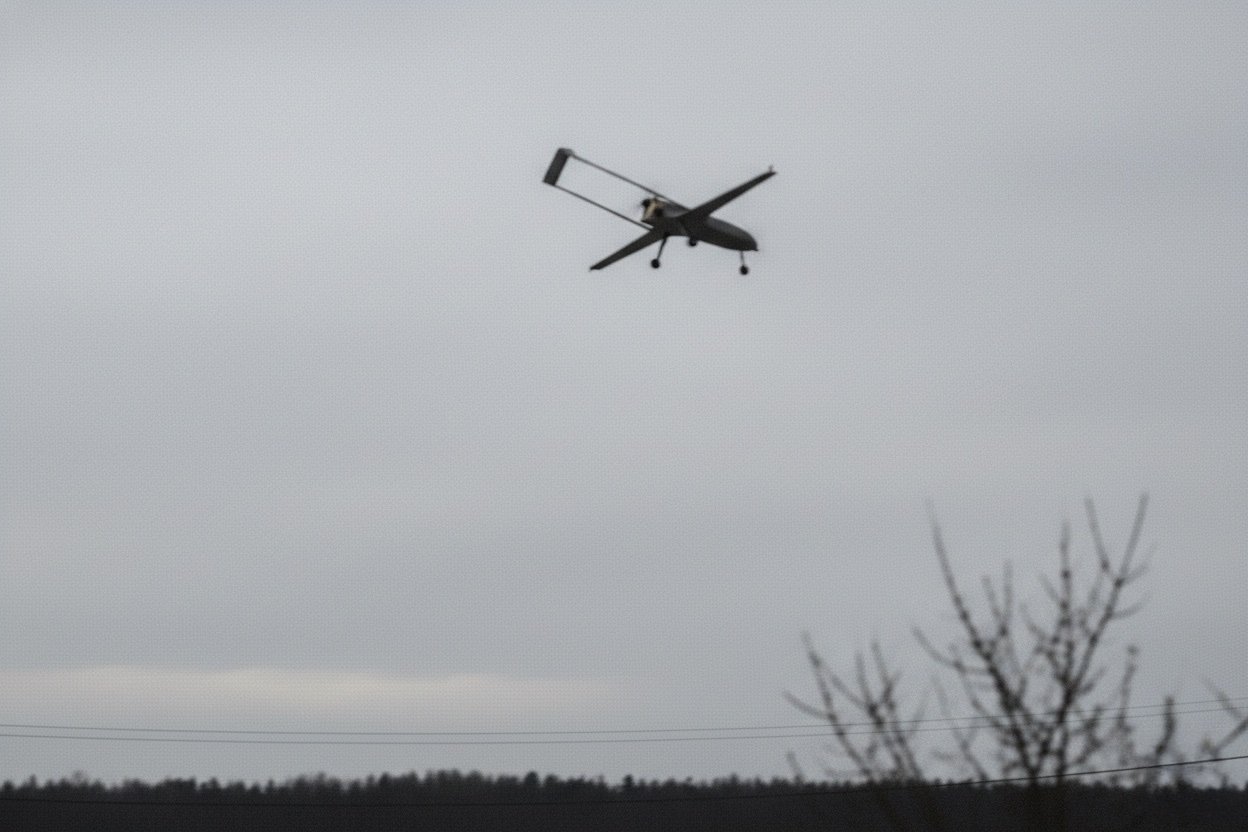
The notification read: "Potentially detected drone. Find safe place. If you see suspicious object, keep away, call 112. Wait for the all-clear." Residents were told to identify a safe location, avoid approaching any suspicious object, call 112 if one is spotted, and await further official announcements. NATO air policing aircraft were sent up to verify the radar contact.
The radar mark was a bird flock
The all-clear ("balta" - white) came at 13:37 local time (10:37 UTC), 29 minutes after the alert was issued. The National Civil Protection and Rescue Department (NKVC) identified the object: the radar returns had come from a flock of birds, not a drone. NKVC explained that initial radar data can show similar markings for birds and small unmanned aircraft, which is why the verification took the extra time.
Wind conditions over Vilnius
At 10:00 UTC on September 13, the 1,000 m layer over Vilnius showed WSW wind at 30.3 km/h. At 2,000 m the wind shifted to WNW at 21.7 km/h; at 3,000 m W at 23 km/h. This reconstruction is based on the Lithuanian Armed Forces' cell-broadcast via LT72, corroborated by LRT's follow-up reporting, and on AirVeto's wind-model data for the alert window. Full methodology is on the AirVeto methodology page. The full Baltic airspace alert archive is at the incident archive.