
Russian drone delays Zelenskyy, sets off RO-Alert
A Russian drone crossed Moldova into Romania and crashed near Mihăileni Vechi on 8 September 2026, closing Moldovan airspace and delaying Zelenskyy's flight to Oslo.
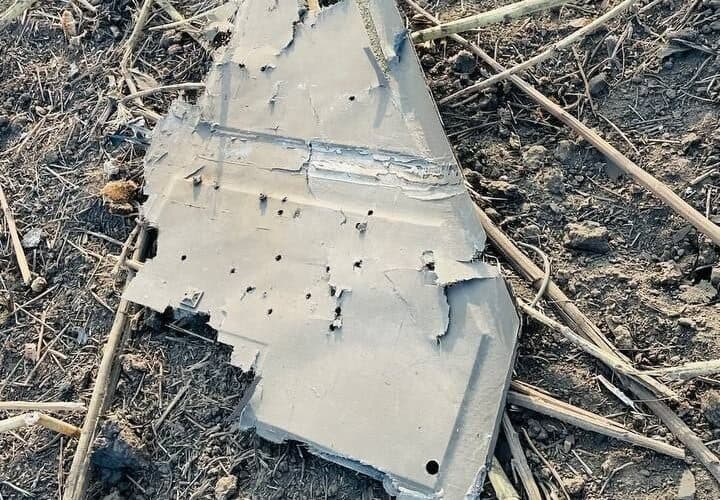
Moldova closed its national airspace on the afternoon of Tuesday, September 8, 2026, after a Russian drone entered from the direction of Ukraine - and held President Volodymyr Zelenskyy's flight to Oslo on the ground at Chișinău International Airport until the drone was accounted for. Zelenskyy, travelling with First Lady Olena Zelenska to the funeral of Norway's King Harald V, took off later than scheduled and reached Oslo that evening. The same drone triggered RO-Alert warnings in five Romanian counties before crashing in a Moldovan sunflower field near Mihăileni Vechi, Rîșcani District.
Norwegian Prime Minister Jonas Gahr Støre told the broadcaster NRK that Zelenskyy's aircraft "was almost hit by a drone as it was about to take off from Moldova" - a line other outlets have run as a near-miss in the air. The published timeline does not support that. The aircraft was on the ground throughout, and it was cleared for take-off only once the drone had already come down, roughly 160 km from the airport. What is documented is a delay and an airspace closure; what other headlines describe - a drone bearing down on a moving aircraft - is not.
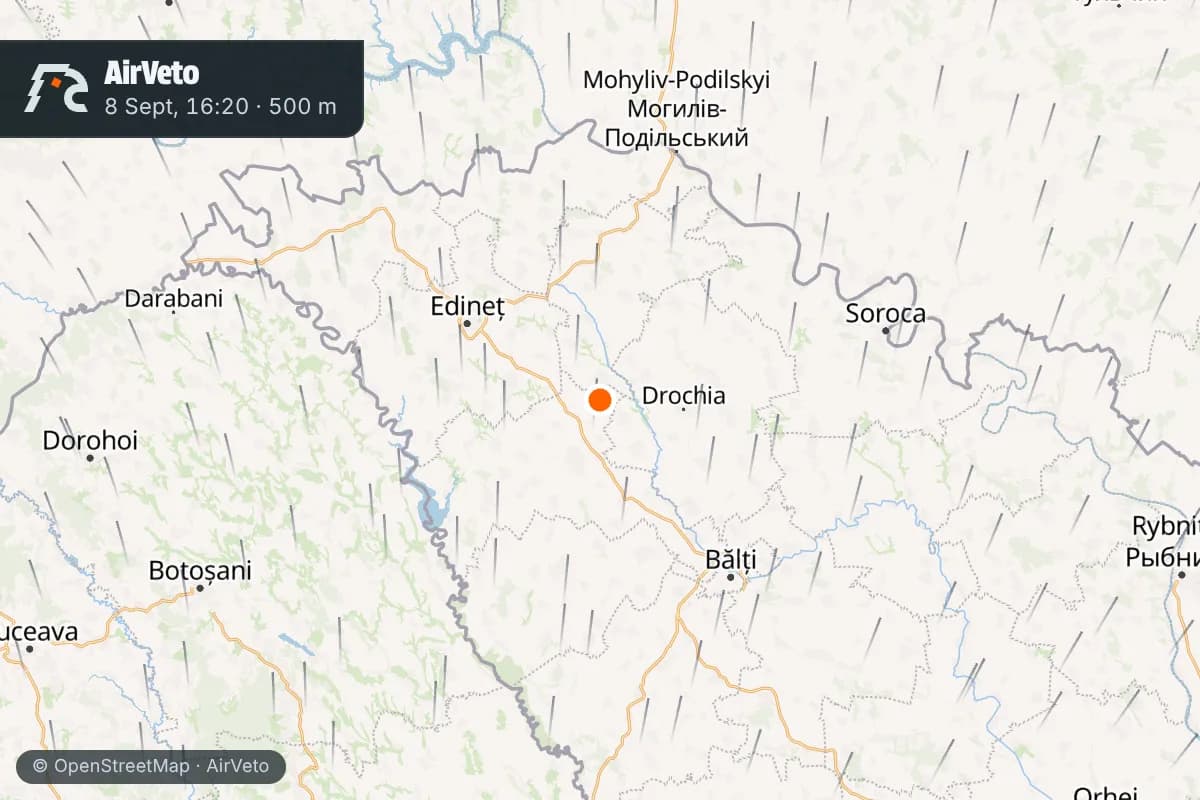
How the drone moved: Ukraine, Moldova, Romania, and back
Moldova's military detected the drone entering national airspace at 16:20 EEST (13:20 UTC). It crossed Moldovan territory and, at 16:47 EEST, Romania's Ministry of National Defence picked it up on radar 18 km north of the town of Roman. Romanian authorities sent RO-Alert warnings to residents of Botoșani, Iași, Neamț, Vaslui, and Suceava counties, telling them to shelter in basements in case of falling debris, and Iași International Airport suspended flights. Two Spanish F-18s, part of NATO's air-policing mission in Romania, were scrambled but did not engage.
The drone re-crossed into Moldova, and at 17:26 EEST (14:26 UTC), Moldovan police were notified it had crashed near the village of Mihăileni Vechi. The impact started four fires in a sunflower field. Moldovan police said fragments recovered from the site belonged to a turbojet-powered aircraft consistent with a Shahed/"Geran"-type design, fitted with metal-ball shrapnel intended to increase lethality; explosive-ordnance specialists were still working to determine the exact type and mass of the charge. No casualties were reported.
This is the second confirmed Moldova-Romania cross-border drone event in under a month: on 16 August, a separate drone that crossed from Moldova into Galați County was shot down by Spanish F-18s 17 minutes after detection - a NATO engagement, unlike the 8 September drone, which crashed on its own after Romanian jets did not fire.
Accounts differ on the drone count. Moldova's defence ministry and the Kyiv Independent describe a single Shahed-type drone, tracked continuously from its entry near 16:20 EEST through its crossing into Romanian airspace at 16:37. CNN reported that a second drone also crossed into Moldovan airspace and continued over Romania, citing unnamed officials. It is not established whether that is a second aircraft or the same track reported twice by different sources; no outlet has published two distinct flight paths.
What delayed Zelenskyy's flight
Zelenskyy's aircraft was waiting at Chișinău International Airport and was cleared for take-off only once it had been established that the drone had come down - which happened near Mihăileni Vechi, about 160 km from the airport by the Associated Press's figure, consistent with the coordinates of the two sites. By the time the aircraft rolled, the drone had been destroyed for some time and was 160 km away. That sequence rules out an encounter in the air during take-off, whatever Norway's account implies.
Norway's state secretary, Bhanuja Rasiah, gave NRK a narrower version than Støre's: "There was a drone threat in the airspace over Moldova yesterday, which delayed Zelenskyy's flight." A source in the Ukrainian presidency called the suggestion of risk to the aircraft "exaggerated." Ukraine has not addressed the incident on the record.
What none of the three accounts settles is how close the drone came to Chișinău at any point - nobody has published a radar track, a separation distance, or a time of closest approach. The closest approach is undocumented, not small; "nearly hit" is a characterization from one head of government's remarks, not a distance anyone has measured.
Whether the drone was aimed at the aircraft is a separate, open question. Moldova's ambassador to the United States, Vladislav Kulminski, told CNN: "We do not believe in jet propelled drones just flying into Moldova's territory for surveillance purposes while [the] Ukrainian president's airplane is on the ground." He said an investigation into whether the drone was targeting Zelenskyy was under way, and that it was "too early to say." That is the honest state of it: a suspicion from a Moldovan official, an open investigation, and no published finding - short of the assassination-attempt framing some coverage has reached for.
Wind conditions over Rîșcani District
At 13:00 UTC on 8 September, the 500 m layer over the crash site showed S wind at 19.4 km/h, a push to the north. At 2,000 m the wind shifted to W at 7.5 km/h, a push east; at 3,000 m WNW at 15.8 km/h, a push toward the ESE.
This reconstruction draws on reporting by the Kyiv Independent, Digi24, Veridica.md, Cotidianul.md, ZUGO.md, Moldova 1, NBC News, CNN and the Associated Press as carried by KESQ, and NRK as carried by CBS News and Euromaidan Press, and on AirVeto's wind-model data for the 13:20-14:26 UTC window on September 8, 2026. How the model is built and where it is reliable is on the methodology page. A full archive of drone and airspace incidents across the EU's eastern border is at the incident archive.
Sources
- Kyiv Independent - Russian drone violates Moldovan and Romanian airspace, crashes in Moldova (8 Sep 2026)
- Digi24 - Alertă de dronă în cinci județe din estul României (8 Sep 2026)
- Veridica.md - O dronă a traversat R. Moldova și a căzut în apropiere de satul Mihăilenii Vechi, raionul Rîșcani (8 Sep 2026)
- Cotidianul.md - Noi detalii despre drona căzută la Mihăilenii Vechi: Avea încărcătură explozivă și bile metalice pentru nimicire (9 Sep 2026)
- ZUGO.md - O dronă a explodat la Rîșcani. Detalii de la poliție (9 Sep 2026)
- Moldova 1 - Russian drone flying illegally over Moldova disrupted flights, delaying Zelensky's departure from Chisinau airport (8 Sep 2026)
- NBC News - Flight carrying Zelenskyy to Norway was delayed in Moldova because of drone incursion (9 Sep 2026)
- CBS News - Zelenskyy's plane almost hit by drone en route to Norway king's funeral, prime minister says (9 Sep 2026)
- Euromaidan Press - A drone nearly hit Zelenskyy's plane taking off from Moldova, Norway's PM says (9 Sep 2026)
- CNN via KESQ - Russian drone incursion delayed Zelensky's departure from Moldova (9 Sep 2026)
- Kyiv Independent - Russian drone in Moldova nearly hit Zelensky's plane, source says (9 Sep 2026)
- Methodology
Last updated: