
Russia tightens its side of the Estonia and Finland border. Estonia's own minister points to desertion, not a threat from outside
FSB curfews and checkpoint moves on Russia's Estonia and Finland border drew a theory from Estonia's interior minister: Russians avoiding conscription.
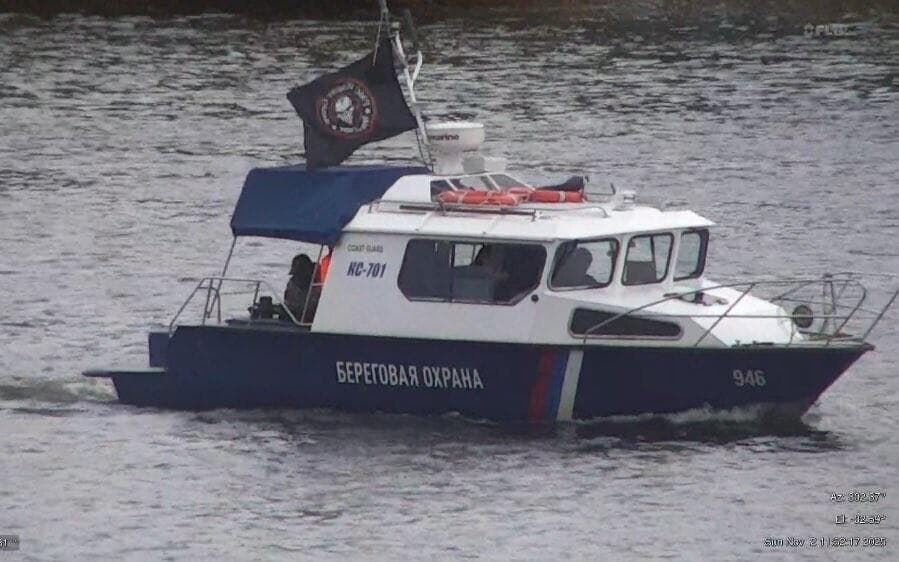
Russia's FSB imposed a curfew and a five-kilometer nighttime movement ban along its side of the Estonia border, in the Kingisepp and Slantsy districts, from September 16 to 26, per ERR. Estonia's interior minister, Igor Taro, said on the record that the measures "could be connected to an attempt to prevent citizens from fleeing the country," not to any threat from Estonia. AirVeto has reconstructed 5 airspace incidents in Estonia in 2026, a pattern that neither confirms nor rules out Taro's read.
What the FSB restricted
The border directorate of the FSB's St. Petersburg and Leningrad Oblast branch said the measures in Kingisepp and Slantsy were needed to "prevent violations of border and migration regulations" and "protect aquatic biological resources," per ERR - the resources in question are in Lake Peipus, on the restricted zone's southern edge, per tv3.lt. The restrictions themselves covered a ban on small vessels along a stretch of the Narva River, a nighttime movement ban outside populated areas in the five-kilometer border strip, and a ban on hunting and carrying firearms in the same zone.
Russia tightened its side of the Finland border too, per tv3.lt, citing Astra and regional officials. Checkpoint controls got stricter at the Shuja post in Karelia, 110 km from the Finnish border, with fines up to 7,000 rubles (about 72.5 euros) for drivers who don't stop when ordered. A witness told Astra that FSB officers started photographing tourists' passports and recording accommodation and transport contacts in August, with male travelers drawing particular scrutiny. Over the past two years, the FSB has also moved checkpoints further from the border itself: one post near Kostomuksha relocated from 35 km inland to roughly 100 km.
Estonia's own read: desertion, not a threat from outside
Andris Viltsin, Estonia's border representative on the Estonian-Russian border, told ERR the Police and Border Guard Board (PPA) had advance knowledge that Russia would restrict movement in border areas, though Russia never formally notified Estonia. He called the restrictions not routine, but not extraordinary either, noting Russia's border zone is already more tightly controlled day to day than Estonia's side.
Taro went further, tying the timing to Russia's recent State Duma elections. "There have certainly been various theories about another round of forced mobilization," he told ERR, adding that Russia's difficulty staging "their election spectacle" and the restrictions it required "naturally" leave nothing ruled out. He said few Russians want to fight and die, and suggested the measures could be aimed at stopping citizens from leaving the country rather than at Estonia. He stressed that evading military service alone doesn't qualify someone for international protection.
The restrictions weren't purely theoretical. Viltsin told tv3.lt that this week, a man crossed the temporary control line on the Narva River from the Russian side into Estonia and was detained. He turned out to be a Jordanian citizen and was taken to a detention center in Narva, not a Russian citizen fleeing conscription, but a sign of how closely the river crossing is now being watched from both banks.
The restrictions fit a wider pattern
Ukrainian President Volodymyr Zelensky has previously warned Russia plans to mobilize around 300,000 people following the September Duma elections, per ERR. The Leningrad Oblast restrictions also followed "Sodruzhestvo 2026," force-structure exercises in the same region aimed at preventing what Russia called a potential incursion onto its own territory, per tv3.lt. FSB Border Service head Vladimir Kulishov accused Estonia and Finland in May of violating border agreements and warned of rising "provocations," a claim neither Western government has confirmed.
AirVeto's own archive shows no Estonian airspace incident during the September 16-26 restriction window, and none of the year's 5 has occurred in the Kingisepp-Slantsy border zone Russia restricted. The closest is the Auvere power station drone in March, in the same Ida-Viru county as Narva but six months before the curfew. The Latvia-Estonia drone shootdown in May happened further south, in Jõgeva County. The pattern is a domestic Russian one, playing out entirely on Russia's side of a border AirVeto otherwise tracks for what crosses it, not for what happens behind it.