
A Ukrainian Ground Robot Watched Its Own Rear Camera to Dodge an FPV Drone
A Termit UGV swerved out of an FPV drone's path mid-delivery on July 30, 2026, the operator spotting the threat through the robot's own rear-facing camera.
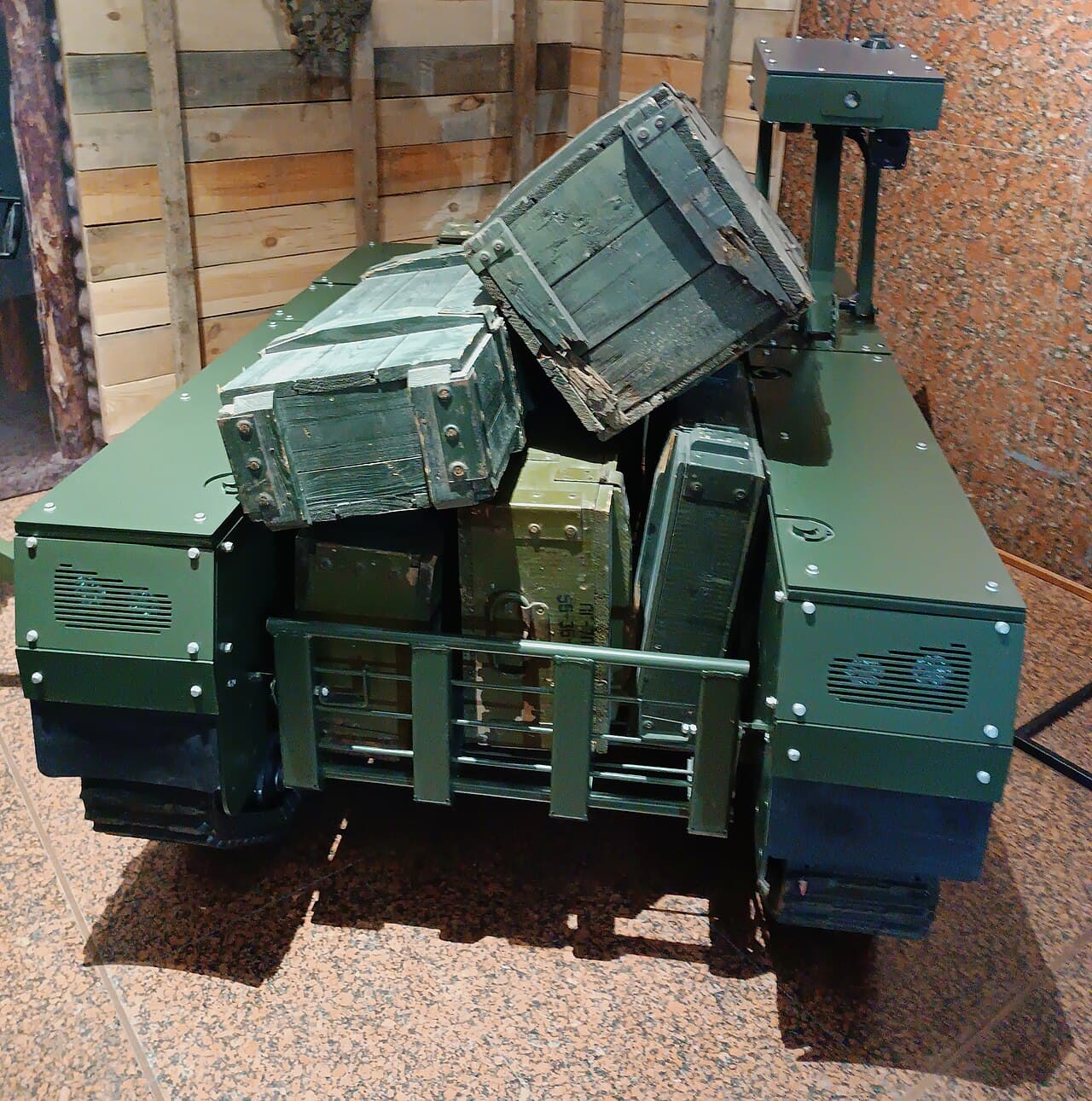
A Ukrainian Termit ground robot swerved left at the last moment on July 30, 2026, avoiding a trailing Russian FPV drone during a cargo run, after its operator spotted the drone closing in on the robot's own rear-facing camera feed, according to footage published by OSINT613. Mezha's own reporting on the same footage headlines it as the robot continuing its mission after the drone's pass.
The operator flew defense the way an FPV pilot flies offense
Most reporting on Ukraine's ground-robot logistics runs describes what the vehicle carries and where it goes, not what happens when something goes wrong en route. Here, the record is the failure case: at 15:55 UTC on 30 July, an FPV drone closed in on the Termit from behind while it was mid-run. The published footage shows the drone entering frame on the robot's rear camera, and the operator swerving the vehicle left in the final seconds, putting it outside the drone's approach angle. The drone missed, per OSINT613's post of the footage; Mezha's separate report on the same event describes the Termit continuing its mission afterward.
A ground vehicle borrowing an FPV pilot's own situational-awareness trick
Russian and Ukrainian FPV operators have spent two years of the war developing a visual vocabulary for reading an incoming drone's flight path in the seconds before impact - closing angle, altitude change, terminal-dive cues. What this footage shows is a UGV operator applying the same read to a rear-facing feed instead of a first-person one, on a vehicle that has no armament and no way to out-accelerate an FPV drone, only steering. The evasion works because a Termit is nimble enough to change heading before an FPV's terminal dive locks in, not because it can outrun one.
Termit is a logistics platform, not a combat one
Termit is a Ukrainian-made tracked ground robot used for supply runs, casualty evacuation, and other logistics tasks behind and near the front line, carrying cargo that would otherwise require a soldier to move on foot under fire. It has no offensive systems of its own; its survivability depends on operator awareness and terrain, not armor or countermeasures. That makes this incident notable in its own right. No jamming or hard-kill system was involved. An unarmed logistics platform survived direct FPV targeting on the operator's skill alone, a different survivability story than the armed or expendable ground robots AirVeto has covered previously.
What this adds to the pattern of ground robots on both sides of the front
Ukraine and Russia have both fielded ground robots with rear- and side-facing cameras primarily to help operators navigate rough terrain and reverse out of dead ends, not to watch for airborne threats. This incident is a sourced case of that same camera coverage being used for the second purpose, by a human operator making a manual judgment call rather than any automated threat-detection system. Whether that becomes a trained standard practice for UGV operators, or stays an isolated case captured on one video, is not something the available footage can answer on its own.