

A heavy-lift drone carried a mine-armed ground robot to a Russian position, released it, and flew home before the robot came under fire. Russian battlefield footage circulated on 19 July; Forbes confirmed the same operation with additional detail on 3 August.
A heavy-lift drone dropped an ARK-1 carrying an anti-tank mine onto a Russian position
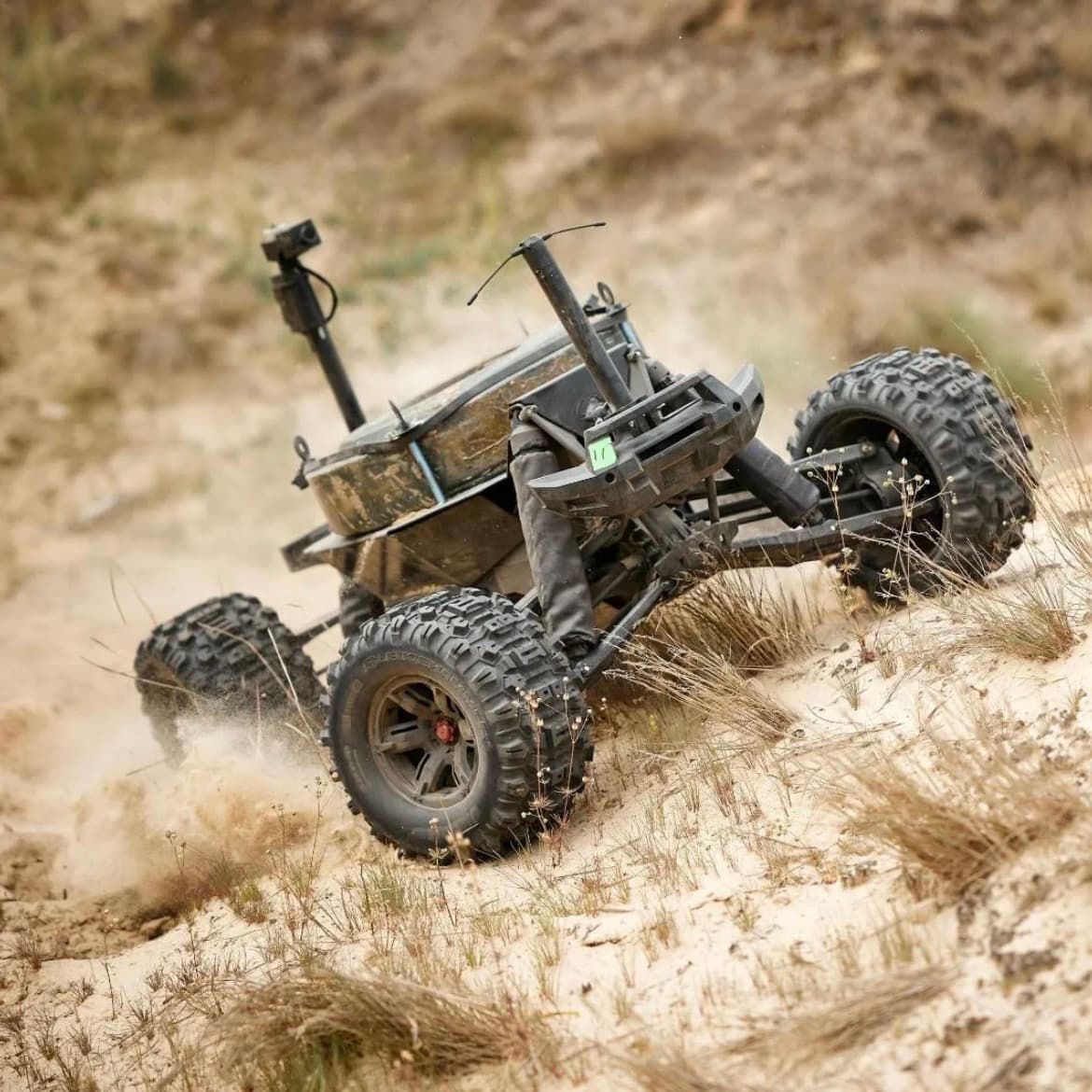
A large hexacopter transported a small robot identified as an ARK-1 to a Russian position, where it deployed carrying a TM-62 anti-tank mine. The delivery drone stayed well outside the range of Russian defensive fire and jamming; the robot covered the final distance on the ground. Footage of the operation circulated via the Russian Telegram channel "Archangel of Special Forces" on 19 July, which described it as a "kamikaze robot" delivered "via air to destroy Russian positions." SOFX and Euromaidan Press reported on the thermal footage independently; Forbes followed on 3 August with operational detail - the mine type, standoff distance, and ARK-1 platform specifications.
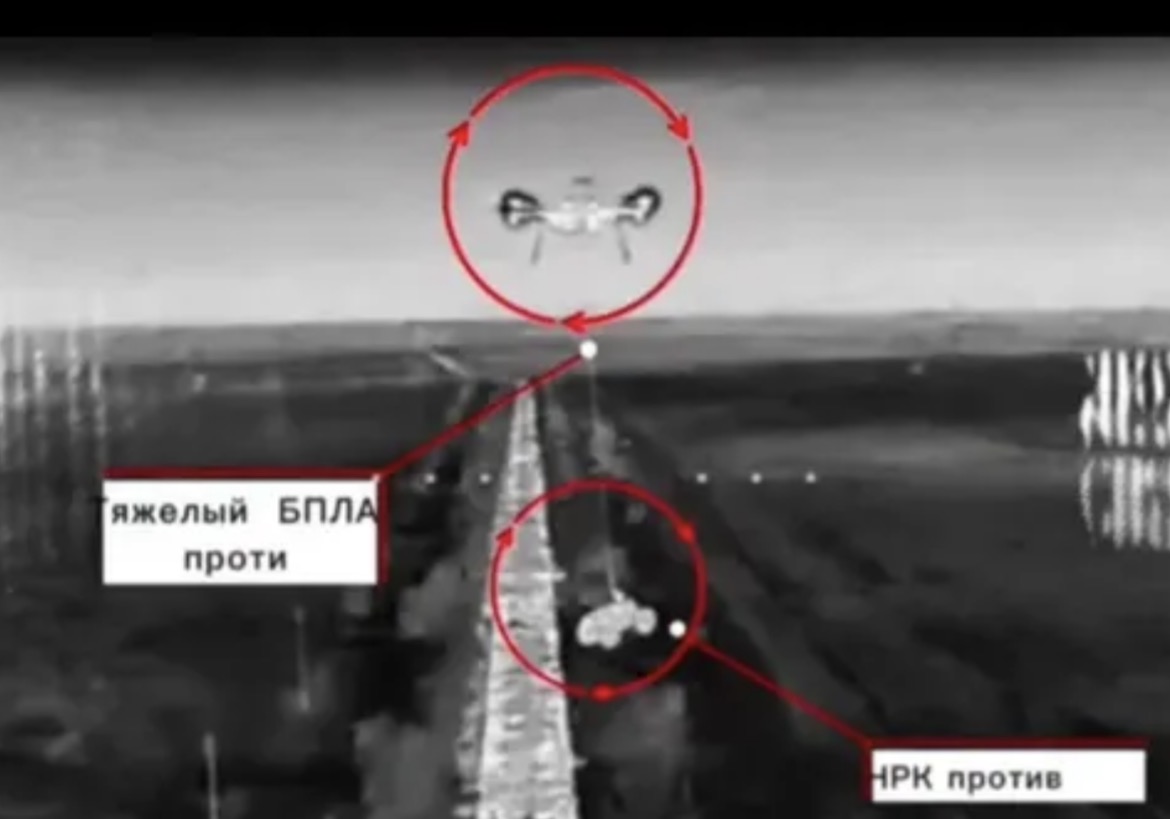
Euromaidan Press could not confirm the outcome: "What happened next is unclear. Did the exploding UGV successfully strike its target?" This is the first recorded instance of the tactic that any outlet has pointed to, not necessarily the first time Ukraine ran it. Ukraine's ARK-1 programme has been conducting mine-laying and demolition missions for months; an earlier, undocumented air-delivery test cannot be ruled out.
The ARK-1 itself is a small all-terrain platform capable of 25 mph with a 9-mile operational range and a 33-pound payload capacity, the size of an explosive charge the multicopter can carry to the drop point. It carries a Starlink satellite receiver, which is what makes it operable at any distance once released: per Janes, a company representative described its control range as unlimited, "we can drive it around here from Kyiv."
The delivery mechanism separates two risks that a conventional insertion bundles together. The heavy-lift multicopter drops its payload at a standoff distance, outside the range where Russian jamming and FPV interception are most effective, then returns to base for reuse. The small ground robot then covers the final distance on its own, at ground level, where it is harder to spot than an aerial platform.
As Forbes notes, a drone could have dropped the mine directly. Routing it through a ground robot instead adds the option of a delayed or repositioned strike: once on the ground, the robot can wait until Russian forces are spotted nearby, maneuver into position, and detonate. An FPV lurking in ambush carries a smaller warhead and moves at altitude where it can be spotted and engaged with a shotgun. A robot at ground level, moving quietly, is harder to detect and stops for nothing short of direct fire.
The U.S. military trialled the same air-delivery concept between 2003 and 2014 and abandoned it each time
Forbes traces three separate U.S. programmes that demonstrated aerial delivery of ground robots but never reached operational deployment. In 2003, the Unmanned Aerial Vehicle Battlelab dropped small ground robots by parachute from a drone at 400 feet for an urban reconnaissance mission. In 2009, the Army Expeditionary Warrior Experiment demonstrated a Fire Scout helicopter landing a Dragon Runner robot. In 2014, a K-MAX uncrewed helicopter delivered an SMSS supply vehicle weighing nearly two tons as part of a logistics demonstration.
None of these became operational deployments. Ukraine, operating on a fraction of the U.S. defence budget, combined available heavy-lift multicopter technology with a small explosive-carrying robot and ran the mission in action, twice, within three weeks. China has already demonstrated a multicopter dropping an armed quadruped robot, indicating it is developing its own version of the same doctrine in parallel.
For context on the sea-delivery variant of the same insertion problem (getting a payload to a target without exposing a crewed vehicle), see AirVeto's earlier coverage of the Kinburn Spit operation, in which Ukraine's 123rd Brigade used an unmanned surface vessel to land an armed ground robot on Russian-occupied territory. Ukraine now has two working answers to that problem: sea delivery via USV, and air delivery via heavy-lift drone. The question left open is scale.
The live map shows current wind conditions over the eastern Ukraine front, where these deliveries have been recorded.