
CIA director flew to Moscow after NATO's Kaliningrad surge
CIA Director John Ratcliffe flew into Moscow on August 25, 2026 aboard the US C-17 that landed a week after NATO's largest Kaliningrad air package of the year, CBS News reported.
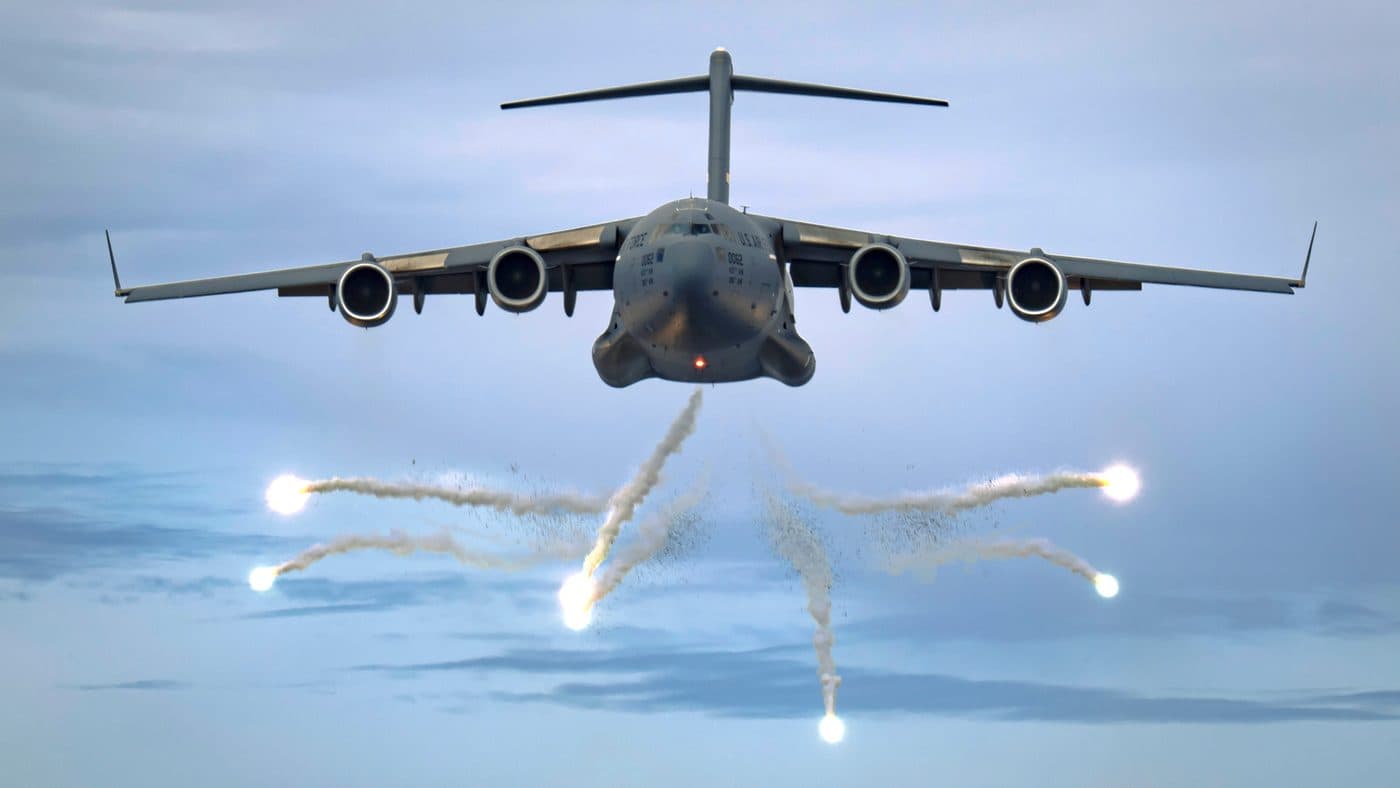
CIA Director John Ratcliffe flew into Moscow aboard a US Air Force C-17 on August 25, 2026 for meetings with senior Russian officials, CBS News first reported, citing sources; it is his first trip to Moscow since taking office and the highest-level visit by a Trump administration official to Russia since January 2026. Axios reported that the US had told Ukraine ahead of the trip that a senior delegation was heading to Moscow and asked Kyiv to hold off on strikes against the city from Monday through Wednesday of that week. Neither government has disclosed what the meetings covered.
The visit was unannounced, and the agenda is still undisclosed
CNN reported the visit was unannounced and that Ratcliffe met Russian officials without a stated purpose; a US official confirmed the meetings but declined to describe their substance, per Axios. The aircraft that carried Ratcliffe, a Boeing C-17A Globemaster III, had departed Joint Base Andrews on August 23, 2026 and staged in Riga for two days before continuing to Moscow.
Ratcliffe left Moscow the same evening, and the Kremlin denies any talks were planned
The C-17 left Moscow later that day, heading back toward Riga, flight-tracking data showed. The War Zone reported it as the first known visit to Moscow by a sitting CIA director since William Burns traveled there in 2021, before Russia's full-scale war on Ukraine began. Kremlin spokesperson Dmitry Peskov said he had no information about the aircraft and that no talks between Russian and US officials were planned.
The visit lands inside a year-long, still-stalled US-Russia-Ukraine negotiating track
Putin has visited the US once before during the war: Trump and Putin met at Joint Base Elmendorf-Richardson in Anchorage, Alaska, on August 15, 2025, Putin's first visit to a Western country since Russia's full-scale war on Ukraine began in 2022, and the summit ended without a deal, Al Jazeera reported. Talks continued into 2026 without resolving the core issues: US, Ukrainian, and Russian delegations met in Abu Dhabi in late January and early February 2026, producing a 157-for-157 prisoner exchange but no agreement on territory, the Irish Times reported.
Zelenskyy proposed a face-to-face meeting with Putin in June 2026, first by open letter, then by naming Switzerland, Türkiye, or the US itself as a neutral venue; Putin said he "did not see the point," and Kremlin aide Yuriy Ushakov said Russia had received no formal offer to hold it in the US, per Euromaidan Press. Four days before Ratcliffe's flight landed, on August 21, 2026, Russian Federation Council foreign affairs committee chairman Grigory Karasin said Moscow was ready to discuss new proposals from the US specifically and saw "no obstacles" to a meeting with US special envoy Steve Witkoff and Jared Kushner, Al Jazeera reported.
Ratcliffe's flight does not confirm what those meetings produced, but it places the CIA director inside the same active, if stalled, negotiating track a senior Russian official had just named acceptable US counterparts for, days before the aircraft landed.
NATO had just flown its largest Kaliningrad package of the year
On August 18, 2026, seven days before Ratcliffe's flight, NATO flew an unannounced package of roughly 25 aircraft along the Kaliningrad border, Stars and Stripes reported: a NATO E-3A AWACS, a US EA-37B Compass Call electronic-warfare aircraft, Polish surveillance jets, tankers, and US and Norwegian fighters. Flight-tracking accounts logged three AWACS aircraft and multiple tankers still active near Kaliningrad the following day, and a US Air Forces in Europe official confirmed the exercise was scheduled to run multiple days. AirVeto's brief on that exercise covers the full aircraft list and its own separate, unresolved timing question: whether it responded to a Russian embassy threat against the UK.
No official link is stated between the visit and the Kaliningrad surge
No US, Russian, or NATO official has stated a connection between Ratcliffe's Moscow visit and NATO's Kaliningrad package, and a CIA director's meetings in Moscow and a NATO surveillance package over Kaliningrad are, on their face, different tracks run by different institutions for different reasons. The absence of a stated link is what's sourced here, not evidence the two are unrelated. What is confirmed is timing: the CIA director crossed into Russian airspace the same week NATO's most visible allied air presence near Kaliningrad this year was still active in the same border region.
A full archive of drone, balloon, and military-aircraft activity across the EU's eastern border, including the Kaliningrad exclave, is at the incident archive.
Update, August 26, 2026: no Putin meeting confirmed, and a leading theory names a NATO warning
Ratcliffe met Russian intelligence officials, not Putin, Euronews reported: the Kremlin said no meeting with Putin was planned, though Peskov said Putin was briefed on the talks afterward. The outlet laid out three possible reasons for the visit: continuing the pressure behind the strike-pause request already reported by Axios, a US warning to Moscow over signs of further Russian mobilisation, and friction between Washington and Moscow over Iran, Russia's closest Middle East partner.
The same outlet drew the precedent directly: the last sitting CIA director to visit Moscow before Ratcliffe, William Burns, traveled there in November 2021 to warn the Kremlin against attacking Ukraine and lay out the consequences Washington believed would follow, per Euronews. That warning did not hold. Russia's full-scale war on Ukraine began three months later.
Euronews also described Ratcliffe as one of the Trump administration's officials most supportive of continued US assistance to Ukraine, including intelligence support for Kyiv's long-range strikes. A CIA director occupying that position is now the one carrying whatever message went to Moscow this time.
The most specific claim so far comes from the Wall Street Journal, cited by The War Zone: people briefed on the visit said Ratcliffe warned Putin against striking NATO countries, following new US intelligence assessments that Putin could test the alliance's resolve with a limited strike on an allied country, most likely a Baltic state, within the next few years. Bloomberg offered a separate account, reporting that Putin is weighing an escalation of strikes on Ukraine, potentially including nuclear-capable weapons, after concluding that peace talks have reached a dead end. Neither claim is officially confirmed, and Trump has called the visit "semi-routine."
The same week, an explosive-laden drone found near a Ukrainian cargo plane at Leipzig/Halle Airport in Germany bore hallmarks that a US official linked to Russia's GRU military intelligence directorate, per reporting cited by The War Zone. No outlet has tied that finding to Ratcliffe's visit specifically; both sit inside the same reported pattern of Russian pressure on NATO's eastern flank this month, not a stated connection.
The mechanism is the same as 2021: a CIA director quietly delivered a warning to the Kremlin. Which warning, on which subject, is still contested between outlets - NATO, Ukraine, or Iran - and whether it lands any differently than it did the first time is not yet known.
Sources
- CBS News - CIA Director John Ratcliffe on secret trip in Russia (25 Aug 2026)
- Axios - CIA director Ratcliffe visits Moscow (25 Aug 2026)
- CNN - CIA director makes unannounced visit to Moscow to meet with Russian officials, source says (25 Aug 2026)
- The War Zone - USAF C-17 Makes Extremely Rare Visit To Moscow (25 Aug 2026)
- Al Jazeera - Kremlin denies planned talks with US envoys amid reports CIA head in Russia (25 Aug 2026)
- Stars and Stripes - Flurry of NATO activity in Baltic region aimed at deterrence, US officials say (19 Aug 2026)
- Al Jazeera - 'No deal' at Trump-Putin meeting: Key takeaways from Alaska summit (16 Aug 2025)
- Irish Times - Ukraine-Russia talks in Abu Dhabi conclude with prisoner exchange (5 Feb 2026)
- Euromaidan Press - ISW: Zelenskyy keeps offering to meet Putin, the Kremlin keeps refusing (17 Jun 2026)
- Al Jazeera - Russia says ready for 'new ideas' on Ukraine war that match Putin's goals (21 Aug 2026)
- Euronews - What message did the CIA director deliver to Moscow, on Ukraine, NATO or Iran? (26 Aug 2026)
- The War Zone - Claims Swirl Around CIA Director's Reason For Secret Moscow Visit, Nearly All Of Them Are Terrifying (26 Aug 2026)
Last updated: