
Latvia and Estonia drone alerts, 1 Sep 2026 - NATO jets scrambled
Overnight drone alerts across Latvia's Aluksne municipality and eight Estonian counties on 1 Sep 2026 prompted NATO to scramble Turkish F-16s from Amari; no drone was confirmed downed.
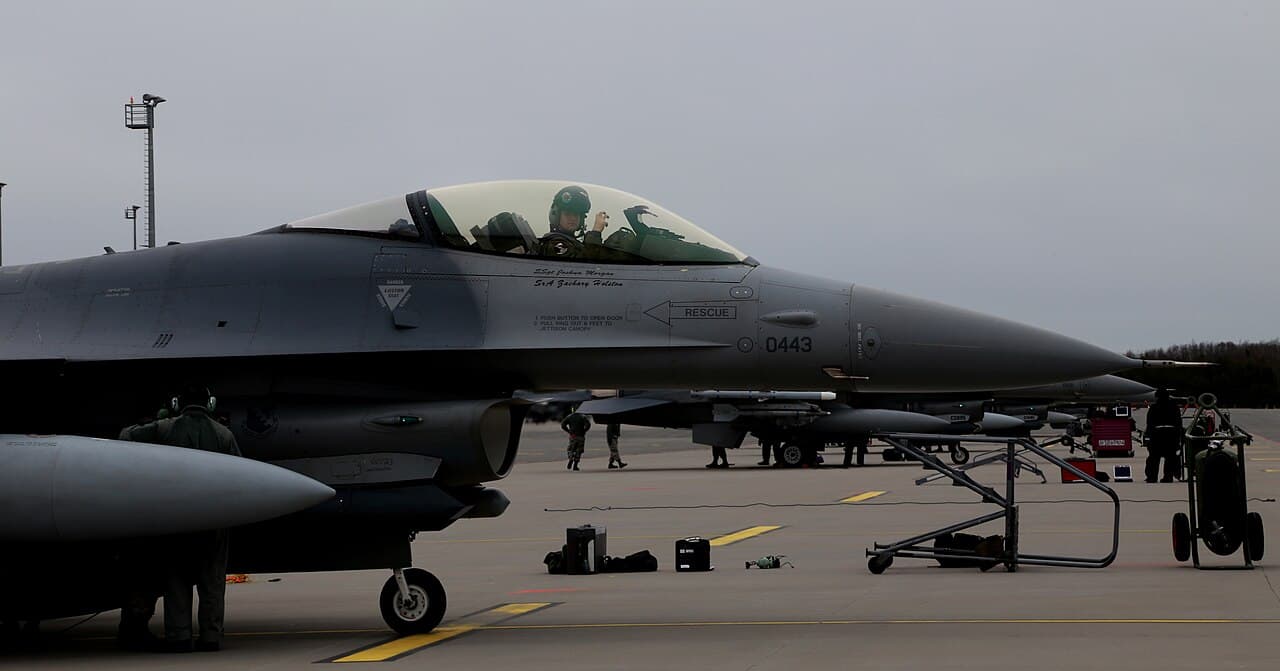
Overnight into Tuesday, September 1, 2026, Latvia and Estonia both issued airspace alerts and scrambled NATO fighters after drones tied to Russia's war on Ukraine approached or crossed their borders. In Latvia, the National Armed Forces (NBS) declared an air alarm over Aluksne municipality at 03:37 local time (00:37 UTC), according to LRT. In Estonia, Air Force commander Brig. Gen. Riivo Valge told public broadcaster ERR that Turkish Air Force F-16s stationed at Amari Air Base, flying NATO's rotational Baltic air-policing mission, took off after a drone turned toward the border city of Narva at around 03:00 local time (00:00 UTC). No drone was confirmed to have crashed or been shot down in either country.
Latvia's alert moved from Ludza to Aluksne within two hours
Latvia's first warning of the night reached phones in Ludza municipality at 02:00 local time (23:00 UTC, 31 August): a lower-tier "yellow" advisory over a possible airspace threat, cancelled 25 minutes later, per LRT and Lrytas. At 03:37 local time, NBS declared a stronger alert over Aluksne municipality in Latvia's northeast, and NATO Baltic Air Policing fighters scrambled in response. Residents were told to stay indoors, follow the "two-wall principle," close windows and doors, and call 112 if they spotted a low-flying or suspicious object. The Aluksne alarm was lifted at 04:17 local time (01:17 UTC).
Estonia tracked a dozen drones near the border before two crossed it
Valge told ERR's morning show "Terevisioon" that it became clear around 02:00 local time that Ukraine was carrying out a large-scale drone strike on Russian territory, with roughly a dozen drones detected moving close to Estonia's border. At about 03:00 local time, one drone turned toward Narva; Estonia issued a public warning to Laane-Viru and Ida-Viru counties, activated ground-based air defenses, and scrambled the Amari-based F-16s. That drone turned back toward Russia without entering Estonian airspace. Roughly 30 minutes later, a second drone crossed into southeastern Estonia and lingered near the border zone with what Valge called unpredictable behavior, prompting a second warning covering Tartu, Jogeva, Viljandi, Valga, Voru and Polva counties. The drone left Estonian airspace without crashing; the fighters did not fire. The Estonian Defense Forces confirmed the threat had passed by 05:58 local time (02:58 UTC).
The trigger was a Ukrainian strike on the Ust-Luga oil terminal
Both nights' alerts trace to the same source: a Ukrainian drone strike on Russian territory across the Gulf of Finland from Estonia. Leningrad Oblast governor Alexander Drozdenko said Russian air defenses destroyed 38 drones over the region and confirmed damage at the Ust-Luga port, per ERR; Lrytas separately reported, citing Drozdenko, that the strike also caused a fire. Finland's Defense Forces restricted aviation and shipping in the eastern Gulf of Finland the same morning in response to possible drones, ERR reported. The pattern matches the June 3, 2026 alert over the same Aluksne municipality and southeastern Estonia, which followed a comparable Ukrainian strike wave against the Ust-Luga and Primorsk oil terminals: Baltic capitals have said publicly since March 2026 that Russian electronic-warfare jamming along the coast pushes some Ukrainian drones toward NATO airspace during those strikes. This time the pattern reached further: eight Estonian counties under warning instead of six, a named air base and squadron (Turkish F-16s at Amari) confirmed on the record, and a third country, Finland, restricting its own airspace and shipping the same morning.
Wind conditions over Aluksne and southeastern Estonia
At 23:00 UTC on 31 August, close to the first Ludza and Narva-area drone detections, the 1,000 m layer over the Aluksne-southeastern Estonia border zone showed WSW wind at 30 km/h. At 2,000 m the wind held WSW at 40.1 km/h; at 3,000 m it shifted slightly to SW at 47.2 km/h, a stronger flow aloft than at the surface. This reconstruction is based on reporting by LRT, ERR, and Lrytas, and on AirVeto's wind-model data for the 23:00-02:58 UTC alert window. Estonian Foreign Minister Margus Tsahkna said NATO "reacted swiftly and exactly as planned" and called the incidents "a direct consequence of Russia's war of aggression against Ukraine." The full archive of Baltic drone and airspace-alert events is at the incident archive; Estonian events are collected at the Gulf of Finland location hub. AirVeto's model and its documented limits are on the methodology page.
Sources
- LRT - Latvia, Estonia issue airspace warnings after drones approach borders (1 Sep 2026)
- ERR - Drone crossed Estonia's border in southeast, says air force commander (1 Sep 2026)
- ERR - EDF: Drone threat warning lifted across Estonia (1 Sep 2026)
- Lrytas - Aliarmas dalyje Latvijos: del oro pavojaus pakelti NATO naikintuvai (1 Sep 2026)
- Methodology