
Skrudaliena tunnel, 10 Aug 2026 - Latvia's first
A tunnel dug from Belarus surfaced near Silene, Latvia, on August 10, 2026, the first found on this border; 15 people who crossed it were returned to Belarus.
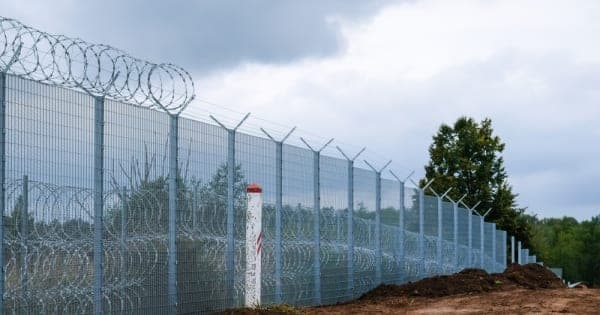
A tunnel dug from Belarus surfaced near Silene, in Skrudaliena Parish, on Monday, August 10, 2026, Latvia's State Border Guard said. It was the first tunnel of its kind found on the Latvia-Belarus border. Fifteen people who had crawled through it were detained and returned to Belarus, according to Euromaidan Press and LSM.
The passage ran 30 meters, reinforced with timber and a plywood cap
The tunnel ran approximately 30 meters, roughly 80 centimeters square, with wooden supports installed to keep it from collapsing and a plywood cover fitted over its entrance, per SBS News. Border guards removed about 28 cubic meters of soil to expose it. Interior Minister Jānis Dombrava said officers found the passage while trying to work out how the group had entered the country: "So far the first tunnel of its kind in Latvia," he said, per REFORM.news. The find came the same week Latvia launched Operation Vilkatis (Wolf), aimed at disrupting the transport networks behind organized crossings.
A second tunnel surfaced 11 days later, 30 km away
On August 20, 2026, per LSM, border guards in the Kaplava Border Guard Department's area near Krāslava, about 30 kilometers east of Silene, found a second tunnel, this one camouflaged with moss and undergrowth roughly 20 meters from the border. Twenty-eight people were intercepted crossing through it and returned to Belarus, per Euronews and Meduza, both citing LSM. Latvia's State Border Guard has now logged two tunnels on its own border with Belarus.
Border guard chief: Belarus 'undoubtedly' knew, and likely tracked Latvian patrols
Guntis Pujāts, head of Latvia's State Border Guard, said on 27 August that Belarusian authorities were aware of both tunnels as they were dug. "It is simply impossible to build such a tunnel without the Belarusian border guards being aware of it," he said, per SBS News. He called the construction extensive, adding, per LSM: "the services were clearly informed and provided with everything necessary to ensure that the Latvian border guards would not notice the excavation work." Pujāts said, also per LSM, that it was likely Belarusian guards had used thermal-imaging cameras to track the approach of Latvian patrols during construction.
That assessment builds on evidence Latvia's Armed Forces and Border Guard published in January 2026: documents and a radio recovered from a detained migrant were traced to a servicemember of the reconnaissance battalion of Belarus's 19th Guards Mechanized Infantry Brigade, and phones seized from other detainees held images of Belarusian State Border Committee officials alongside migrants inside military-type vehicles, per Euromaidan Press and OCCRP. Latvia's Prosecutor General opened a criminal case against Belarusian border-service officials in mid-July, alleging systematic organized facilitation of illegal crossings dating back to August 2021.
Prime Minister Andris Kulbergs framed the pattern as a matter of relative pressure rather than a one-off breach: "They migrate to where it's easier [to enter the EU.] So we must not be the easiest place," he said, per SBS News.
The pattern is already established on Lithuania's stretch of the same border
AirVeto has reconstructed three tunnels found on the Lithuania-Belarus border this summer: the Kabeliai tunnel (22 July, five meters long), the Pertakas tunnel (26 July, 11 meters, where VSAT's chief said Belarusian involvement was likely though probably passive), and the Latežeris tunnel (4 August). Lithuania's border guard puts its own total at 12 attempted underground crossings since the start of 2026, six times Latvia's count so far. The Silene tunnel is Latvia's first confirmed case of the same construction method, and the first where a serving border guard chief has said outright that Belarusian authorities did more than look away.
This reconstruction is based on reporting by Euromaidan Press, LSM, REFORM.news, Euronews, Meduza, SBS News, and OCCRP. A full archive of drone, balloon, and border incidents across the EU's eastern border is at the incident archive.
Sources
- Euromaidan Press - The Belarus border tunnels reached Latvia - guards turned back the 15 migrants who crawled underground (12 Aug 2026)
- LSM English - First illegal border tunnel found at Silene, Latvia (11 Aug 2026)
- REFORM.news - First Tunnel Found Under Belarus-Latvia Border (11 Aug 2026)
- Euronews - Latvia uncovers border tunnel, intercepts 28 migrants from Belarus (21 Aug 2026)
- Meduza - Latvia's border guard finds tunnel on Belarus border, 28 people tried to enter the country through it (21 Aug 2026)
- LSM English - Border Guard chief: Belarus knew about tunnels on Latvian border (27 Aug 2026)
- SBS News - How this 30-metre tunnel became the centre of a growing border dispute (28 Aug 2026)
- Euromaidan Press - Latvia exposes Belarusian military's direct role in weaponizing migration (15 Jan 2026)
- OCCRP - Latvia Says Belarus Helped Drive Migrants Into E.U. Using Military Vehicles (16 Jan 2026)
- Methodology
Last updated: