
Bulgaria's second F-16 batch slips three years, to 2030
Lockheed Martin told Bulgaria on 14 August its second batch of eight F-16 Block 70s, due in 2027, won't arrive before Q2 2030.
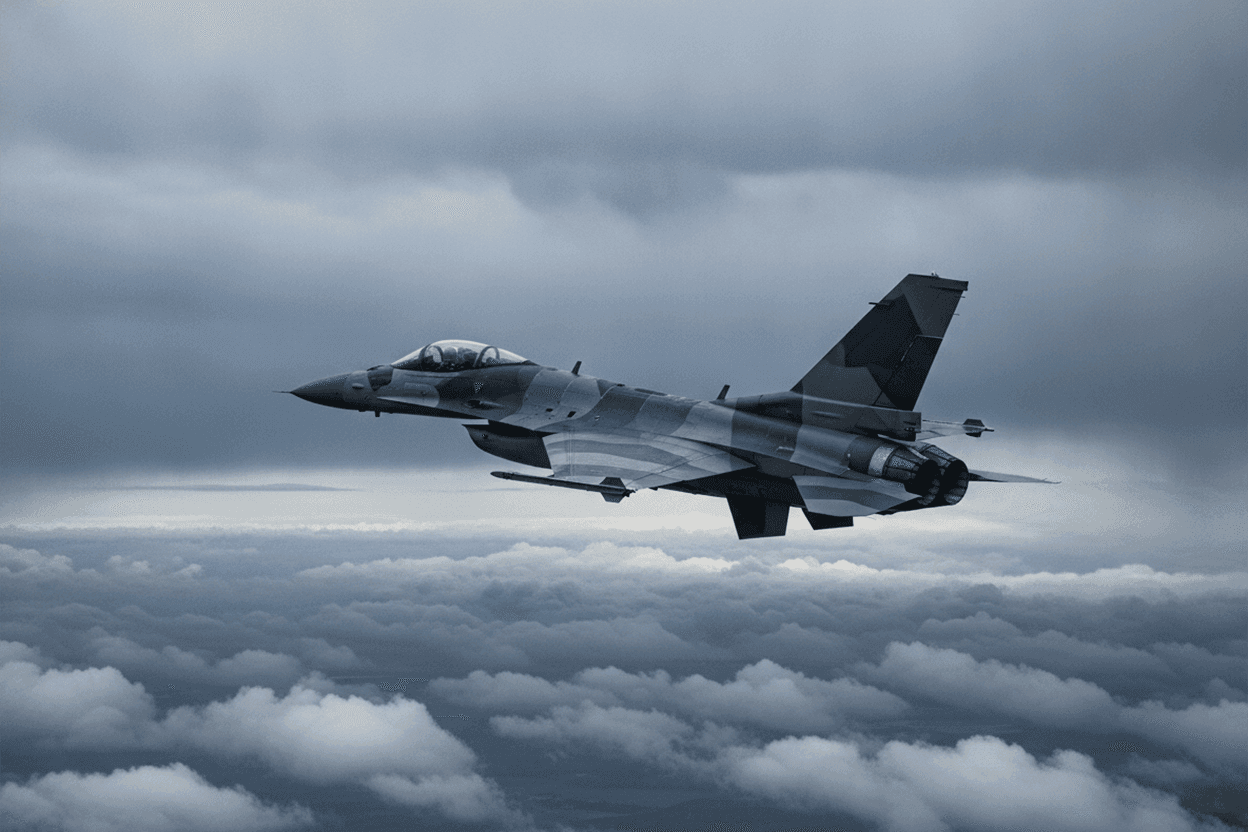
Lockheed Martin told Bulgaria's Defence Ministry on August 14, 2026 that its second batch of eight F-16 Block 70 fighters, ordered in November 2022 for $1.3 billion and originally due by the end of 2027, will not begin arriving until the second quarter of 2030 - a three-year slip the company attributed to unspecified production difficulties, per Bulgaria's official news agency BTA.
The delay leaves Bulgaria's fleet transition only half finished
Bulgaria's first batch of eight F-16 Block 70s, ordered in 2019 for $512 million, was fully built and delivered by December 2025. But those aircraft are still in the integration phase, not yet combat-ready - Defence Minister Dimitar Stoyanov said his goal is to have them "flying in Bulgarian skies" on combat duty "as early as next year," per BTA. The first F-16D, a two-seat trainer variant delivered in January 2025, arrived in Bulgaria in April 2025 and became inoperable on landing, unable to fly since while it waits on spare parts, according to Militarnyi.
With the second batch now pushed to 2030, Bulgaria's Air Force faces years of running a partial fleet against its ageing Soviet-built MiG-29s, the aircraft the F-16 order was meant to replace.
Bulgaria is already shopping for a stopgap
Stoyanov told Lockheed representatives that minimizing the delay, and making sure it carries no extra cost to the state, is Bulgaria's key priority - "we expect assurances that the delay will not affect the final contract price," he said, per BTA. In parallel, Sofia has sent the United States a formal inquiry about acquiring used F-16s, and per The Defense Post, has also asked about secondhand Swedish JAS-39 Gripens and sent inquiries on MiG-29 spare parts to Poland and Hungary. The defence ministry has not settled on which option to pursue and is still waiting on responses.
The meeting, held at Bulgaria's Defence Ministry, was also attended by the US Embassy's chargé d'affaires and the chief of its Office of Defence Cooperation - a sign Washington is treating the delay as a live diplomatic issue, not just a contractor scheduling problem.
Lockheed's production strain isn't confined to fighter jets
Neither BTA nor The Defense Post names the specific cause of Lockheed's F-16 production difficulties. Separately, and on a different production line, Lockheed is under well-documented strain building PAC-3 Patriot interceptors - the US Department of War signed a seven-year deal in April 2026 to triple PAC-3 seeker output amid a broader air-defence industrial-base shortfall. F-16s are built at Lockheed's Greenville, South Carolina plant; PAC-3 interceptors at Camden, Arkansas. No source ties Bulgaria's F-16 delay to the Patriot production crunch, and the two run on separate lines - but both point to the same underlying picture: NATO-wide demand for Lockheed's hardware is outrunning what the company can build on schedule, on more than one program at once.
For Bulgaria specifically, the gap lands at an awkward moment. AirVeto has already reconstructed a real airspace incursion on Bulgarian territory this year - a drone that crossed from Romania and exploded near the Trans-Balkan gas pipeline close to the Kardam border checkpoint in August. A fully modernised, combat-ready F-16 fleet was part of Bulgaria's answer to exactly that kind of event; that fleet is now three years further away than planned.
Lockheed's own statement to Bulgaria left the door open: the 2030 date "is not final," and the company says it will take steps to accelerate production. Whether that happens is not yet knowable from the public record.