

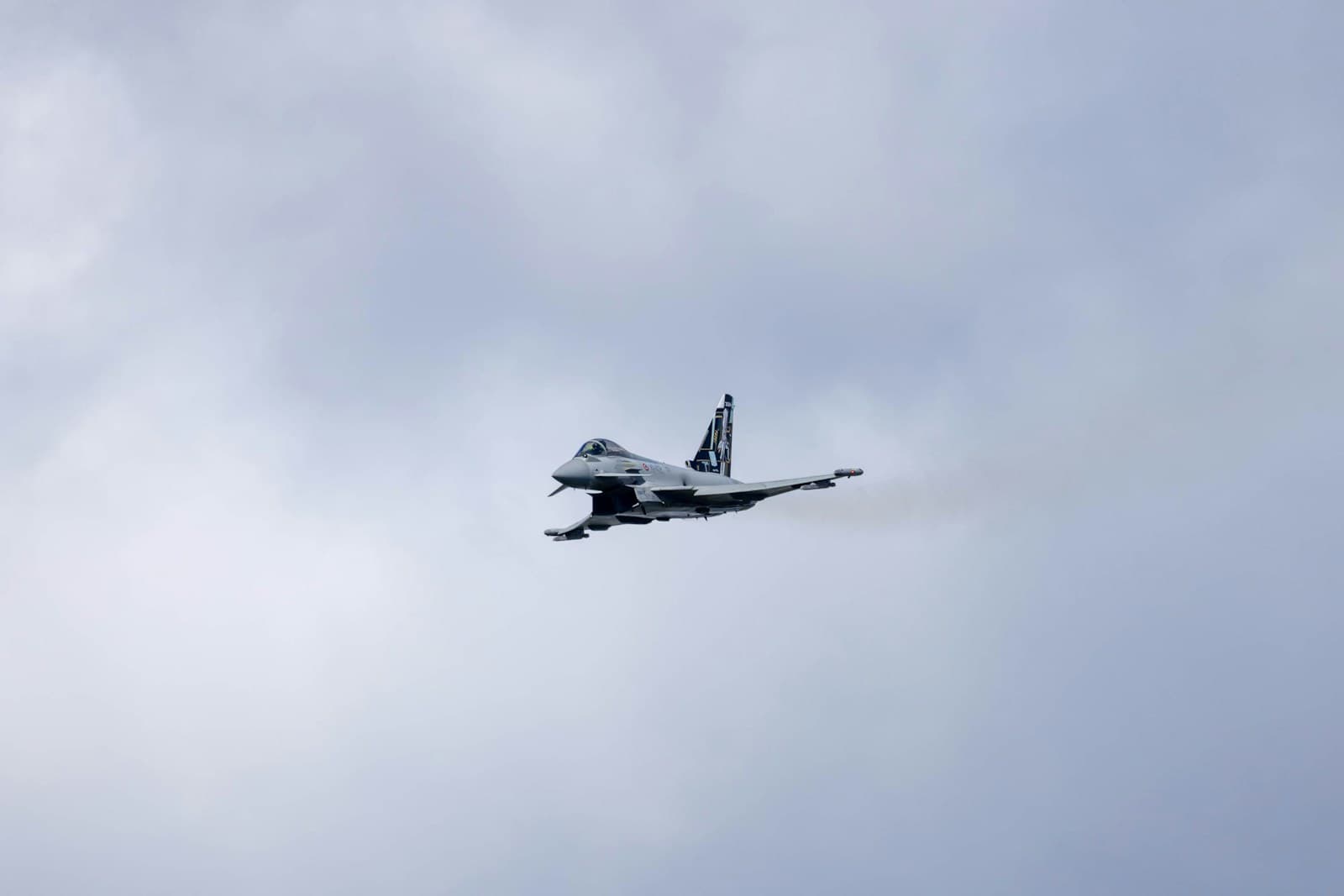
Multiple NATO activities are running in and around the Baltic states at once this month - a permanent German brigade standing up in Lithuania, national exercises in all three Baltic states, and a large multi-aircraft air exercise that flew near Kaliningrad in August - and NATO's own spokesmen describe the pattern as standing deterrence, not a reaction to a single event. Col. Martin O'Donnell, spokesman for Supreme Headquarters Allied Powers Europe, said allies are "constantly honing their defensive abilities," per Stars and Stripes.
The buildup is real and has a name: a permanent brigade, not a rotation
Germany is establishing a permanent brigade in Lithuania, based at Rūdninkai and Rukla with temporary sites near Vilnius and Kaunas - a deployment its own Bundeswehr calls "one of the most ambitious projects in the Bundeswehr's history," per The Financial. The German-Netherlands Corps has taken a NATO command role over forces in Estonia and Latvia. On July 3, German Chancellor Friedrich Merz met in Berlin with the leaders of all three Baltic states specifically on this buildup. This sits alongside the Baltic states' own concurrent national exercises already running this month - Latvia's Namejs 2026 and Lithuania's Thunder Strike 26 among them - which AirVeto has covered as they happened, not as a single coordinated signal.
NATO's own analysts are the ones cautioning against over-reading it
The August air exercise that drew the most attention - a large formation including U.S. and Norwegian fighters, Polish ground forces, AWACS command aircraft, and a U.S. EA-37B Compass Call electronic-warfare plane operating near Kaliningrad - coincided with a Russian frigate capable of carrying Zircon hypersonic missiles passing nearby in the Baltic Sea. Olga Lautman, a senior fellow at the Center for European Policy Analysis, said there is "no evidence the NATO exercise was in response to Russia's naval movements," since the alliance routinely runs surveillance and training in the region regardless. The Financial's own reporting draws the same line at the strategic level: NATO is "preparing for a possible future war with Russia, but that preparation is not evidence that an attack on the Baltic states is imminent."
One analyst reads the same month of incidents as pretext-building, not just pressure
AirVeto's own incident archive shows roughly eight drone, jet, or airspace events across Lithuania, Poland, and Moldova between September 11 and 19 alone. Separately, Germany formally blamed Russia on September 1 for an explosive drone plot targeting a Ukrainian cargo plane at Leipzig/Halle Airport in August - a case AirVeto has covered since it happened. Security analyst Julian McBride, writing in Modern Diplomacy on September 20, argues these incidents fit a deliberate pattern: with Russia's military "exhausted after nearly five years of full-scale war" and a repeat of 2022's mobilization backlash politically dangerous for the Kremlin, McBride writes that Moscow "is looking to stoke tensions in Europe to probe defenses, escalate the war onto the European continent, or justify nationwide mobilization if a NATO member were to become directly involved in the war." This is one named analyst's argument, not a confirmed Kremlin plan or an AirVeto finding - no government cited in this piece has stated that assessment as its own.
The pattern is deterrence-by-design, which is a different claim than an imminent-threat warning
That distinction matters for reading everything else AirVeto has covered this week - Estonia's stated border-closure trigger, NATO Military Committee Chairman Admiral Giuseppe Cavo Dragone's 4,000 pages of contingency plans, and the pattern of warnings that echoes 2022. NATO's own framing of the Baltic buildup is standing readiness against a worsened threat environment, stated openly and continuously, not a signal tied to any one incident. Stars and Stripes separately cites a U.S. intelligence assessment, reported first by The Wall Street Journal, holding that Russia is testing NATO's vulnerabilities in preparation for a possible limited move against an allied country. That assessment gives a window of years, not months - it is not a forecast for this fall.
The live map shows current conditions over the Baltic region.