
The Sonic Boom Over Northern Lithuania: NATO Air Policing
Lithuania's armed forces warned residents of sonic booms from a NATO fighter exercise on July 13, five days after Baltic Air Policing was upgraded to an air defence mission with new intercept authority.
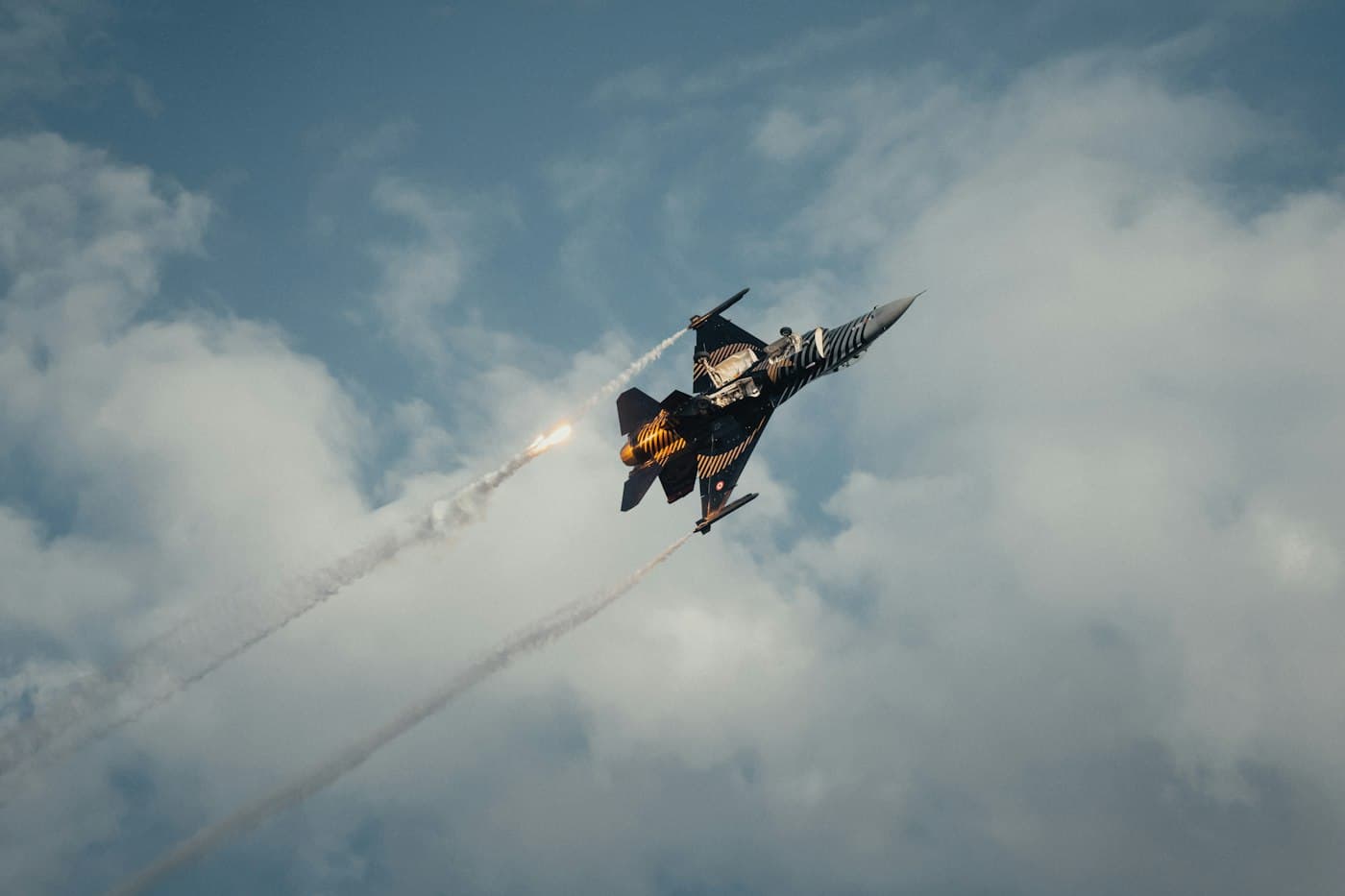
Lietuvos kariuomenė, the Lithuanian Armed Forces, posted a public notice on July 13, 2026 warning residents of northern Lithuania that NATO fighter training would produce sonic booms over the region that day. Supersonic flights inside designated training zones can sound like explosions; the Armed Forces asked residents to expect the noise and stay calm. The training ran over the northern part of the country, centred on Šiauliai Air Base, the Lithuanian hub for NATO's Baltic Air Policing mission.
The drill landed five days after that mission's rules changed for the first time since it began in 2004.
The mission behind the drill just got new authority
At an Ankara summit on July 8, 2026, NATO allies agreed to convert Baltic Air Policing into an air defence mission. The distinction is not cosmetic: engagement authority moves out of national capitals and into the Supreme Allied Commander Europe's chain of command, delegated down through the air operations centre at Uedem to the aircraft themselves. Under the old mandate, shooting down a drone that strayed into NATO airspace required political-level consultation first. Under the new one, it does not. Lithuanian President Gitanas Nausėda said after the summit that the change lets participating countries speed up decisions on destroying objects that threaten the population, with pilots' own authority also clarified.
That is the context the July 13 flights sit inside: pilots who may now be cleared to act faster than before, training the supersonic intercept profile that decision chain assumes they can fly.
Who is flying it
The jets making the noise over northern Lithuania are not a rotating abstraction. Since March 31, 2026, France's Air and Space Force has led the Šiauliai detachment with four Rafale fighters, alongside a Romanian F-16 detachment that replaced Spain's outgoing contingent. Allies take turns deploying to Šiauliai and to Ämari in Estonia on roughly four-month rotations, launched from NATO's Combined Air Operations Centre in Uedem, Germany, if a real intercept is called.
Why this is a drill, not an alert
Vilnius' June 13 air alert and the Nautrēni shoot-down were both responses to unplanned objects crossing into NATO airspace. The July 13 flights are the opposite: a scheduled exercise, announced in advance, with a stated purpose. A sonic boom happens when an aircraft crosses the speed of sound, about 1,235 km/h at sea level and less at altitude. The aircraft doesn't get louder as it approaches; the shockwave building in front of it arrives all at once, and on the ground that registers as a single sharp crack or a rolling double-boom. A resident who hasn't heard one before can reasonably mistake it for a blast, and given the run of drone incursions, contraband landings, and intercepts across the Baltics this year, checking the source before assuming the worst is the right instinct.
AirVeto's explainer on how Baltic Air Policing works covers the scramble-to-shoot-down decision chain that Latvia's government tightened after the Rēzekne and Nautrēni incidents, now folded into the broader SACEUR authority NATO granted on 8 July. A pilot who has never pushed an aircraft to supersonic speed before the day it matters is a risk nobody wants to discover during a real intercept, and that risk is smaller now than it was a week ago.
The live map shows current conditions over the Baltic region.
Sources
- Lietuvos kariuomenė (Lithuanian Armed Forces) - public notice, Instagram
- LSM - Baltic air policing mission switches to air defence mission (9 Jul 2026)
- ERR - NATO's Baltic Air Policing mission upgrades to air defense mission (9 Jul 2026)
- Militarnyi - NATO fighter jets in the Baltics authorized to shoot down aerial targets under updated mission (9 Jul 2026)
- NATO Allied Air Command - French Rafales deploy to Lithuania for Baltic Air Policing
- NATO Allied Air Command - Romanian Air Force assume NATO's Air Policing mission in Šiauliai, Lithuania