
Neris River: Hexagonal Raft Seized With 2,090 Cigarette Packs
Lithuanian border guards pulled a snowflake-shaped metal raft from the Neris on July 27, 2026, the second identical seizure in two months at the Pavoverė post in Švenčioniai district.
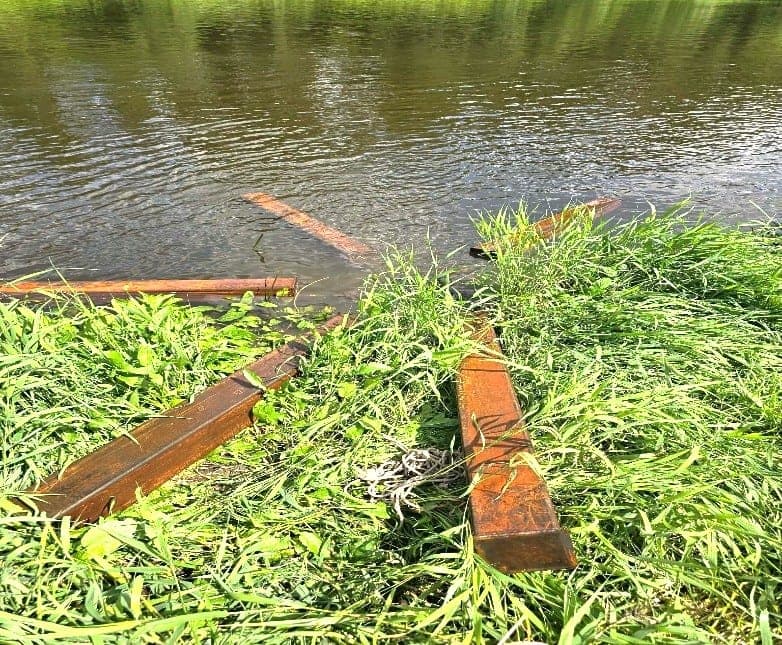
On Sunday July 27, 2026, a video surveillance operator at the Pavoverė border post in Švenčioniai district spotted a suspicious object drifting on the Neris river near Moliai village. Guards pulled a hexagonal metal frame from the Lithuanian bank and cut open its hollow arms: 2,090 packs of NZ Gold cigarettes with Belarusian excise stamps, wrapped in black polyethylene film. Declared value in Lithuania with all taxes applied: €11,411. The operator ran this route before. Two months earlier, the same post pulled an identical raft from the same stretch of the Neris.
The same post, the same river bend, the same construction - two months apart
In late May 2026, officers at Pavoverė intercepted a structurally identical hexagonal raft on the Neris carrying 2,250 packs of NZ Gold with Belarusian excise stamps. Both seizures occurred at the same river segment. Both cargoes used the same cigarette brand. Both metal frames are now stored at Pavoverė as evidence ahead of prosecution.
A pre-trial investigation for illegal possession of excise-taxable goods is open at State Border Guard Service (VSAT) Vilnius Border District, led by a prosecutor from the Vilnius Regional Prosecutor's 2nd Criminal Prosecution Department. The penalty under Lithuanian law: a fine or up to four years' imprisonment.
Two identical operations on the same crossing in eight weeks is not coincidence. The operators mapped a gap in surveillance coverage, ran the route once, and ran it again. The July 27 catch came from passive video surveillance rather than a physical patrol - which is what the raft design is engineered to evade.


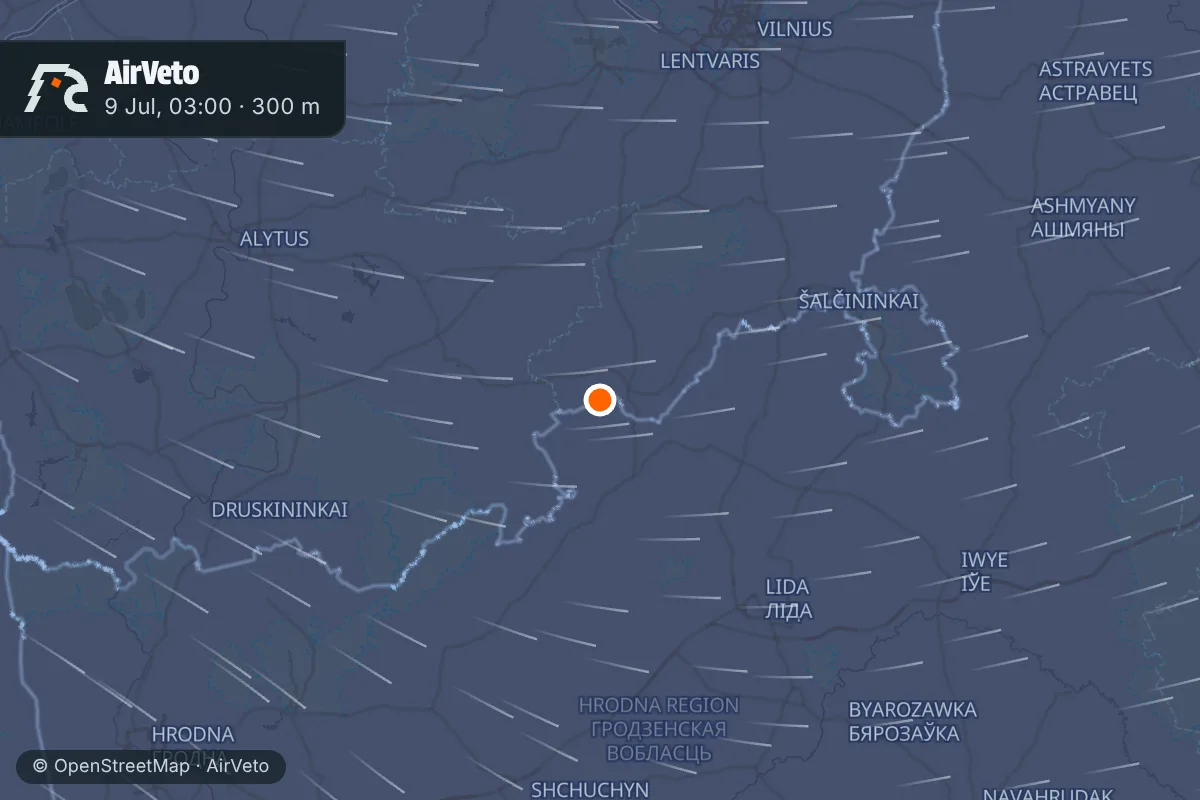
The map shows Lithuania-Belarus border incidents referenced in this brief. Each pin links to the corresponding incident page.
The hexagonal frame keeps the load low in the water and spreads the weight across six arms
The snowflake geometry is deliberate. A hexagonal frame with hollow arms distributes cargo weight evenly across the structure. Loaded correctly, the frame sits low enough that, from the bank, it reads as river debris rather than a packaged consignment. Receivers on the Lithuanian side track it by GPS transmitter; there is no crew in the water.
In cold months the technique becomes more elaborate. Operators wrap the same metal frames in white polyethylene film or medical gauze and pack frozen snow, ice, mud, and ballast (bricks, concrete blocks, paving slabs) around the load to adjust buoyancy. The camouflaged package passes for a drifting ice floe. GPS and remote-call devices pinpoint the frame's position for Lithuanian-side receivers once it clears the border.
The Neris is wide enough and flows fast enough at this stretch that the crossing takes minutes. No boat, no swimmer, no crossing of the actual boundary.
NZ Gold is the dominant brand on the Lithuania-Belarus smuggling route because Belarusian excise tax is a fraction of the Lithuanian rate
The cargo in both Pavoverė seizures - NZ Gold with Belarusian excise stamps - is not random. Belarusian state-owned tobacco manufacturers produce cigarettes sold domestically at prices far below EU-taxed equivalents. Lithuanian excise duty on cigarettes is among the highest in the Baltics. The declared tax value of the July 27 cargo was €11,411 for 2,090 packs - roughly €5.46 per pack in taxes alone. The arbitrage margin funds the logistics, the frames, the GPS hardware, and the personnel on both sides of the river.
NZ Gold is the same brand recovered at Druskininkai on July 7, 2026, where VSAT landed four contraband drones in a single night carrying over 5,000 packs, and at Bobrowniki on the Polish-Belarusian border in April 2026. The brand appears consistently across aerial and river-borne delivery. Its availability in the Belarusian domestic market drives that pattern.
River-raft delivery has largely given way to drones and balloons, but the Neris crossings keep recurring
VSAT's Vilnius Border District states that river-raft encounters have become rare in recent years, displaced by aerial delivery. Contraband balloons, released on the Belarusian side and carried by wind into Lithuanian territory, now dominate this route. Lithuania authorized shooting down smuggler balloons in autumn 2025 and the contraband balloon interdiction route into Švenčioniai and surrounding districts remains active.
Drones running the same route are intercepted at a higher rate than balloons because they must return to altitude after dropping cargo. VSAT has recorded 35 drone interceptions on the Lithuania-Belarus border as of July 26, 2026. River rafts appear rarely in that count, but two seizures at the same Pavoverė crossing in eight weeks suggests the route is not abandoned. It may be running alongside aerial methods as a parallel channel, chosen when drone interception rates rise and operators want a lower-signature option.
This brief is based on the VSAT press release of July 28, 2026.
Sources
Last updated: